About us
Trips planned by the people who took the photographs.
Doug Silvester arrived in Germany in January 1991, aged seventeen, three months after reunification — and crossed the country by rail that summer. Thirty-five years later, Personal Euro Tours is what came of it.
Most European travel is sold the same way: a fixed departure, a guide with a flag, and forty people you have never met. It works, and plenty of people enjoy it. It is simply not what we do.
Every trip we plan is for one party — yours. You choose the dates and how long you want to be away. If you want three days in one valley because you liked it, that is the itinerary. If you would rather see six towns, we will tell you honestly whether that is a holiday or a route march, and then plan whichever you choose.
The name is the whole idea. Personal, as in built for you specifically — and personal as in there is a real person on the other end of the email, who has walked the places being recommended.
How we work
-
Only your party. Ever.
You are never combined with strangers and never moved along on someone else’s schedule. We do not run large group departures — only bespoke trips for individuals, couples, families and small groups who already know each other.
-
Budget is the first question, not the last.
It shapes the hotels, the pace and the plan from the outset. Every inclusion is listed in your proposal before you pay anything, and we tell you plainly when something is not realistic.
-
We have stood where we send you.
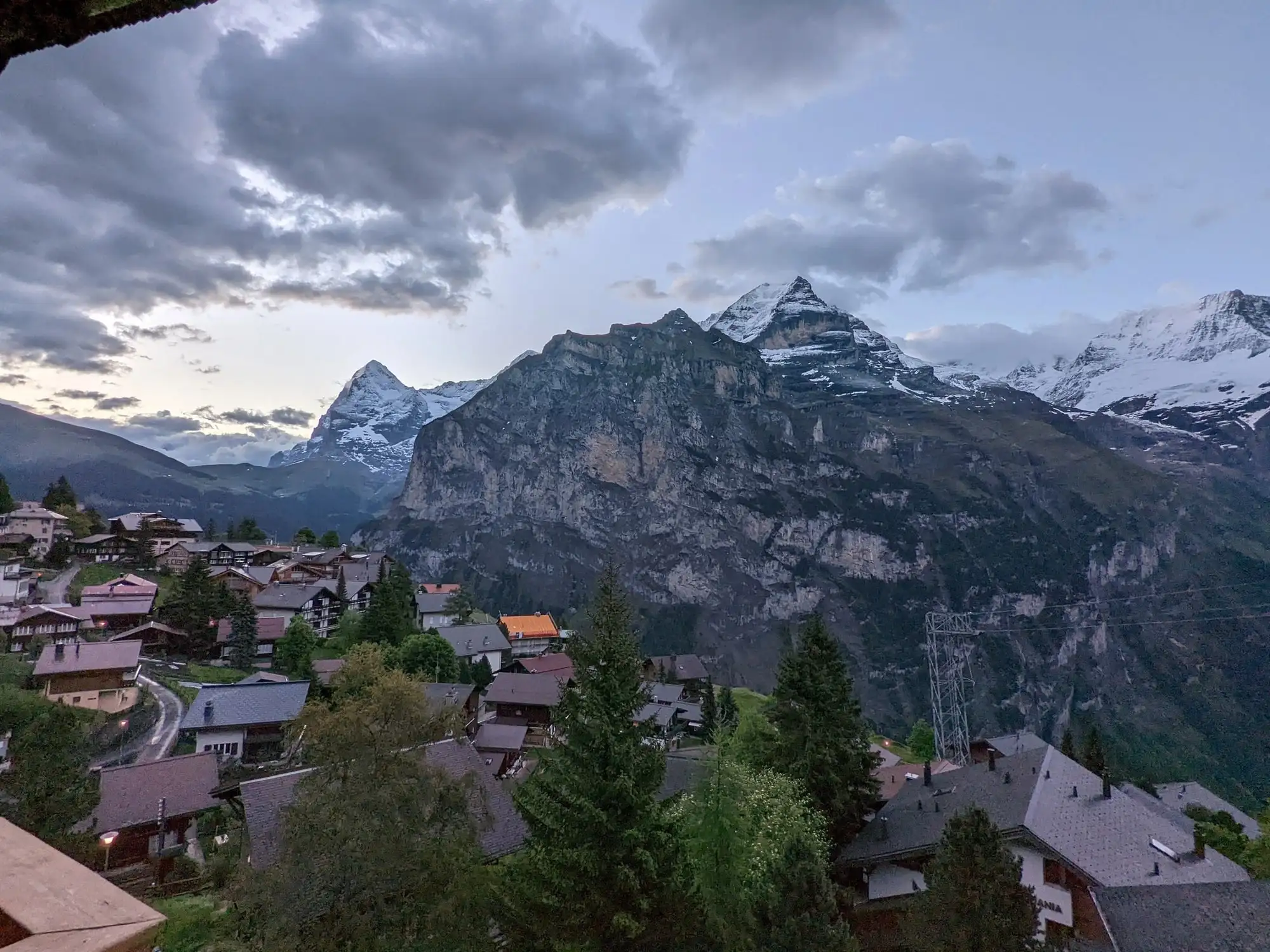
All 1278 photographs on this site were taken on our own trips. That is why the Swiss guides can tell you which cable car is worth the fare — we have paid for it and stood at the top.
What we are known for
Telling you where not to spend.
Anyone can spend your money for you. The harder and more useful thing is knowing which single expense in a day is worth it, and which four are not.
Our Swiss guides carry budget notes for every part of the day — which viewpoints cost nothing, when to buy lunch at the Coop instead of a terrace, which one cable car justifies its fare. That is not a marketing position. It is written into all 15 itineraries on this site, and you can read them before you ever contact us.
Your budget determines the trip, whether you want to travel like a prince or a pauper.
Where we know best
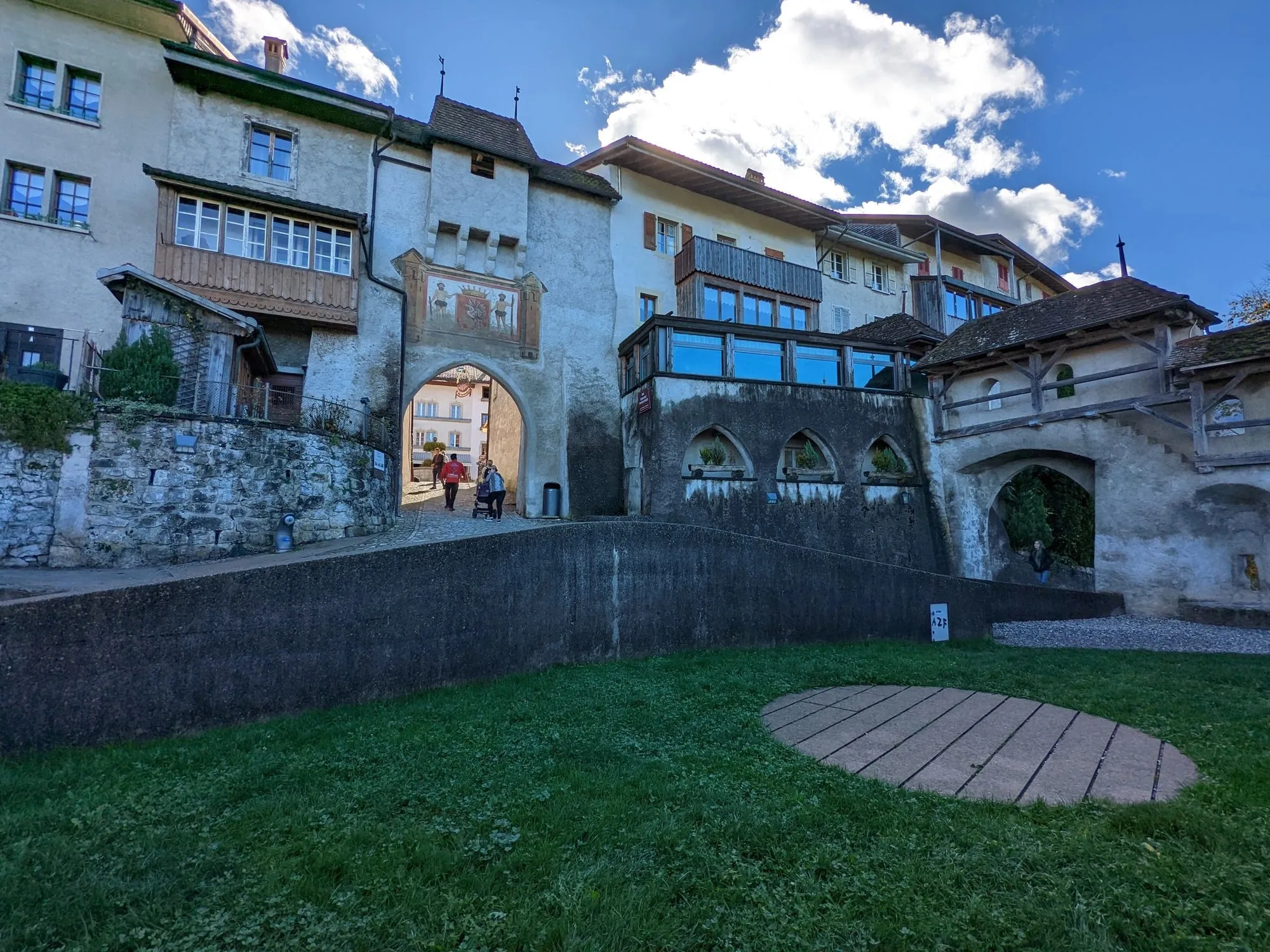
We plan across most of Europe, but we will not pretend to equal depth everywhere. Switzerland is the country we have walked most: 419 of the photographs here were taken across 15 Swiss regions, and every one of the 1278 images on this site is ours.
- 48 Lauterbrunnen
- 39 Brunnen & Schwyz
- 34 Lucerne
- 34 Grindelwald First
- 34 Mürren
- 33 Fribourg
- 32 Grindelwald
- 30 Zermatt
- 27 Zurich
- 27 Montreux
- 21 Männlichen
- 19 Gruyère & Cailler
- 18 Zug
- 15 Basel
- 8 Bern
Beyond Switzerland we arrange custom itineraries in most major European destinations — Italy, France, Spain, the UK, Ireland, Greece, Germany, Austria and more — subject to season and availability.
Where else we planWhat the planning does
Three trips, and what changed because somebody planned them
A list of countries proves where we have been, not what we do. These are our own trips, with the figures as they were actually recorded — what they cost, what moved, and what came out.
-
June 2026
Six of us, twelve days, Germany to Austria to Switzerland
Munich · Salzburg · Berchtesgaden · Oberammergau · Lucerne · Habkern · Täsch · Brunnen
The first version of this trip came to $25,813. The one we took came to $21,716 — $4,097 less, $683 a head, across the same twelve days and the same three countries, with nothing dropped.
It was not one big cut. Flights came down $1,080, paid attractions $1,342, hotels $1,400, driving $425. Food went up $150, because that is the part worth keeping.
-
February to March 2023
Three of us, sixteen days, four countries
Basel · Lauterbrunnen · Jungfraujoch · Munich · Neuschwanstein · Hallstatt · Salzburg · Vienna · Innsbruck · Garmisch · Brescia · Milan
Six of the sixteen nights were paid with 215,000 Hilton points. Every other hotel together came to $1,431. Car, food and trains ran $2,210 each.
What makes sixteen days survivable is not the landmarks. A laundry day is written into the ninth, in Vienna. Every drive carries its real length — four and a half hours to Munich, three and a half to Vienna, five to Innsbruck — because knowing that beforehand is the difference between a good day and a wasted one. The opera tickets were bought before we left home.
-
October
A week in Switzerland, in the shoulder season
Basel · Zurich · Lucerne · Brunnen · Lauterbrunnen · Mürren · Bern · Fribourg · Gruyère · Montreux · Milan
Seven nights, seven towns, moving forward each day rather than driving out and back from one base — so no evening ended with an hour of retracing.
October is when the mountain weather becomes a coin toss and the prices stop being one. The route is built to work either way, and finishes over the Italian border instead of doubling back to where it started.
None of these were bought off a shelf. Each was built around who was going, how long they had, and what they were willing to spend — which is the whole of the job.
The part you cannot book
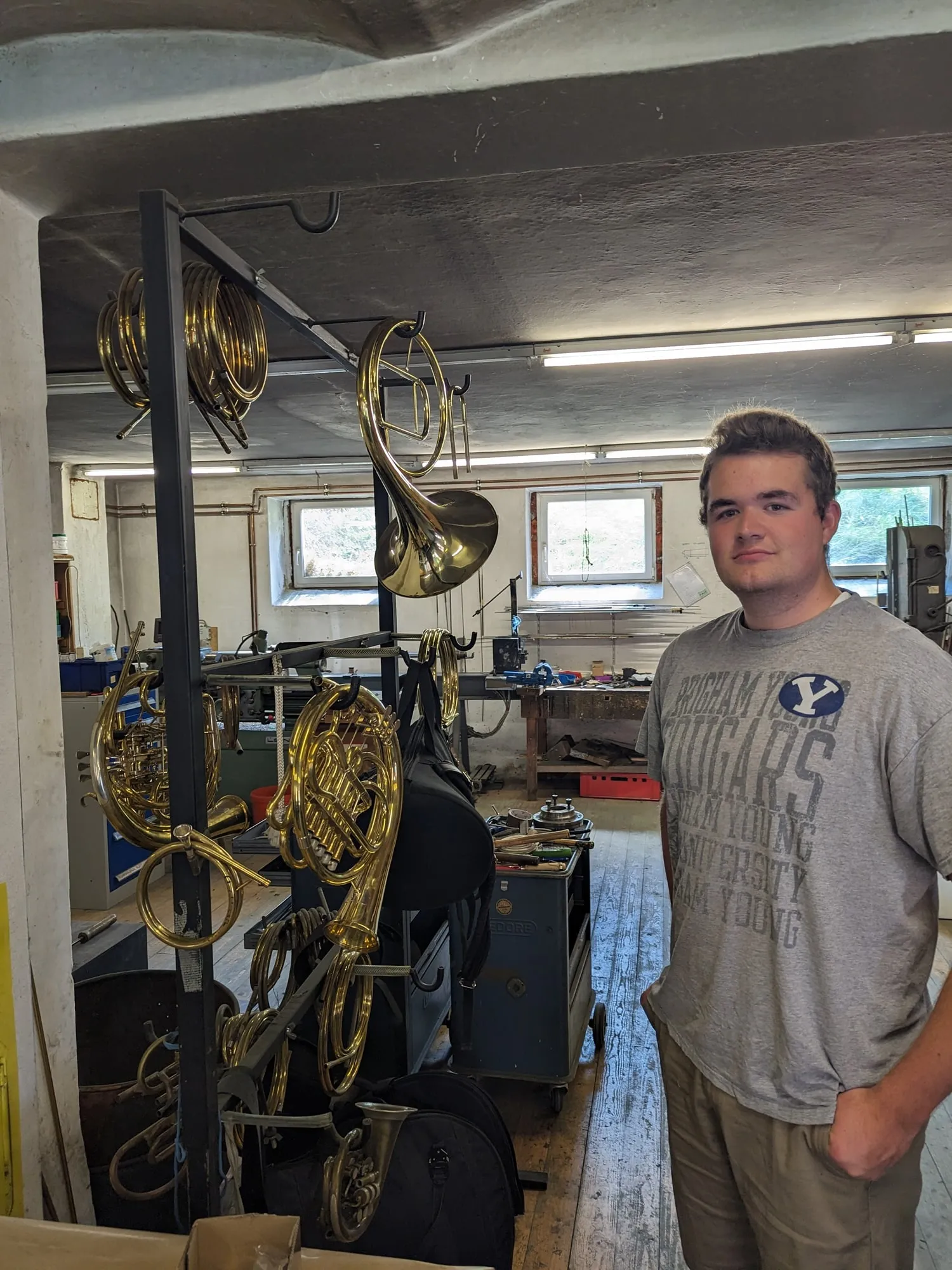
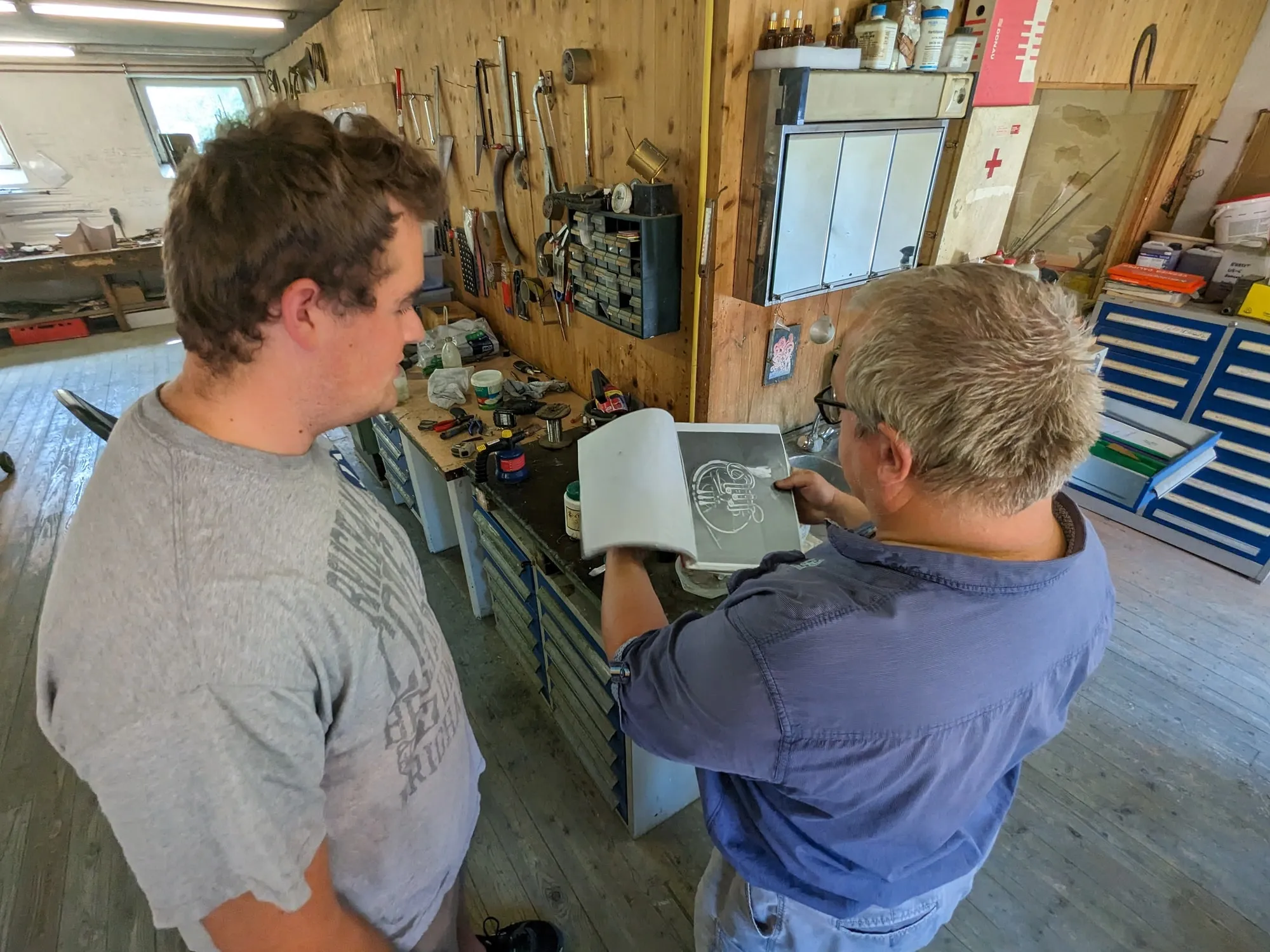
My son plays the horn. So we spent a morning in the workshop where the Vienna horn is still made by hand.
Andreas Jungwirth's workshop is in Freischling, a village of eighty-nine people in the Kamptal, north-west of Vienna. He is one of the few people left who builds the Wiener Horn by hand — the instrument the Vienna Philharmonic has played since 1870, and a good part of why that orchestra does not sound like any other — and he develops his models with its players.
No ticket desk, no opening hours, not on any list of things to do in Austria, because it is not an attraction. It is a working shop. The nearest town up the road is called Horn.
We watched a bell worked at the bench. Jarom held a finished horn. It took one morning of the trip and it is the part he still talks about.
I arranged it because I knew what he cared about. That is the whole method, and it is the one thing on this site you could not copy from a published itinerary — you can read every page here and still not get through that door.
Tell me what the person travelling is actually interested in — an instrument, a kitchen, a railway, a printing press, a particular painter — and I will find out whether there is a door, and whether it opens. Sometimes there isn't one. When there is, it is usually the day everybody remembers.
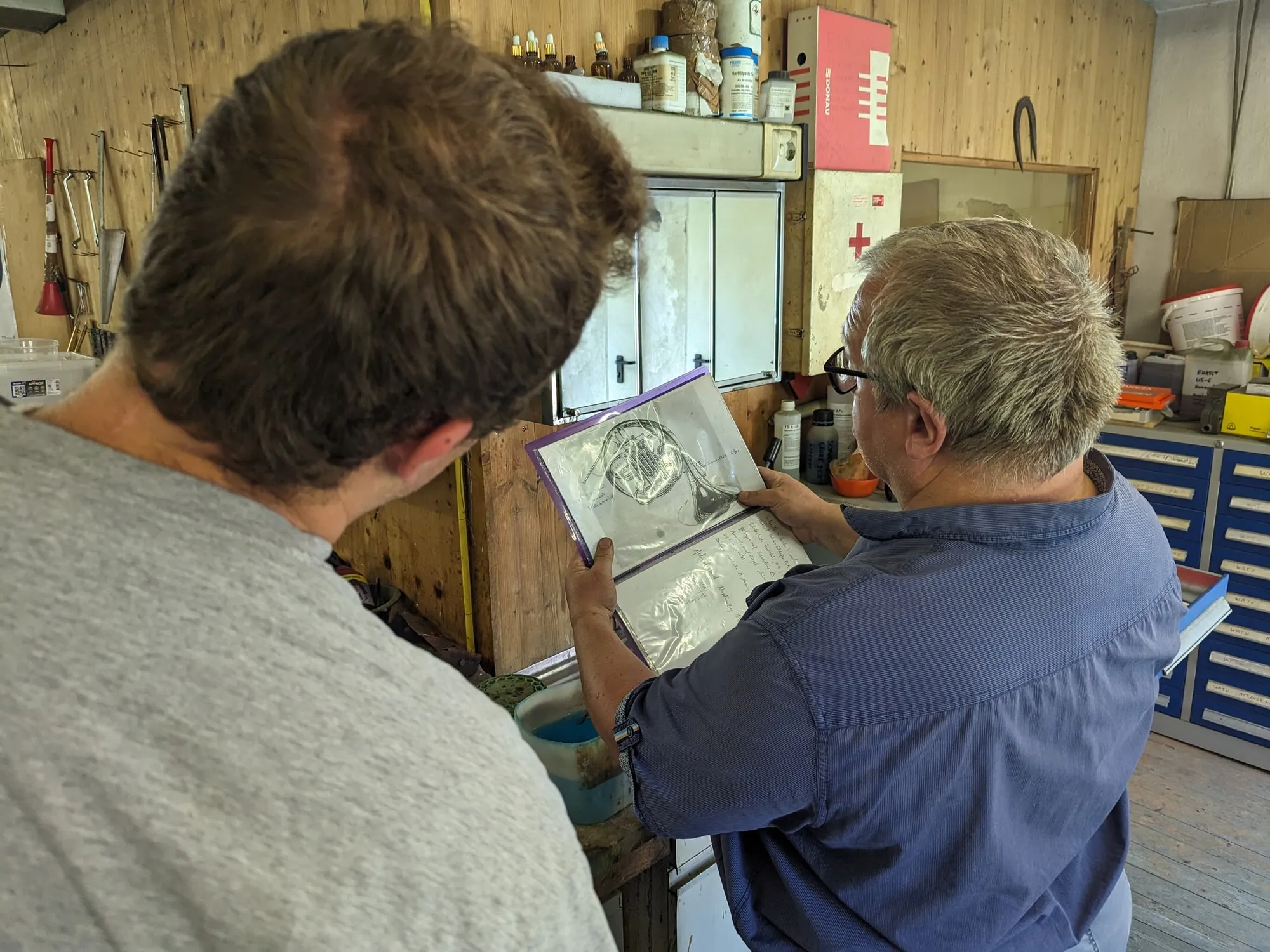
And a family who wanted to see where they came from. So we drove to the village and knocked.
In the summer of 2026 I took a family whose name came out of Müllheim, a small place in Thurgau in the north-east corner of Switzerland that no itinerary has ever included and no coach has ever stopped in. We went anyway. We found the farm. Standing in the yard, they met relatives they had never met.
That morning was not on any list of things to do in Switzerland, and it was the reason they went home changed. It is the same method as the horn workshop: find out what actually matters to the person travelling, then go and see whether there is a door. A surname is a door. So is a trade, an instrument, a regiment, a recipe.
- A horn maker in Austria. Andreas Jungwirth's bench at Freischling, for a son who plays.
- An alphorn maker in Switzerland. Bernatone, in the village of Habkern above Interlaken — the second instrument workshop, and not a coincidence.
- A knife you build yourself. Victorinox has made the Swiss Army knife at Ibach since 1884, and you can sit down and rivet your own together. On the Brunnen page.
- A farmyard in Thurgau. The family above, and the relatives they had never met.
The short version
Thirty-five years of getting this wrong so you don't have to.
In the summer of 1991 I was seventeen years old and spent thirty days straight on the railways of a country that had just stopped being two countries.
East and West still ran separate railways then — they would not merge until 1994 — so you crossed between systems as you went. Chemnitz had officially shed the name Karl‑Marx‑Stadt the year before, but nobody had told the station boards. The map of the continent was being redrawn while I was standing on it, and I have never really left.
I had arrived that January, three months after the two Germanys became one, and I finished high school in Hamburg. Then two years living and working across southern Germany — Stuttgart, Munich — and over the border in Salzburg. Not visiting. Living there, in German, in ordinary places, at an age when you have no money and therefore learn exactly what things cost.
In the decades since I have gone back more times than I can count. With family. With friends. For a stretch, living in Switzerland. And a great deal of it alone, which is how you find the things that are not in the guidebook — because nobody is waiting on you and you can afford to get lost.
Somewhere in there, enough people told me the same thing that I finally listened: you should be doing this for a living.
Nobody should pay thousands of dollars to be driven past the best part of their own holiday.
That is what I kept seeing. People spending serious money to be moved around with forty strangers, trapped in a timeline somebody else wrote, being marched past the thing they actually came for because it was not on the schedule. Paying a premium, and getting less.
I know what those trips cost, and I know what the same trip costs when it is built properly for the people taking it. The gap runs into thousands. Not because anyone is being cheated — because a package has to be identical for everybody, and identical is expensive when only half of it is what you wanted.
So that is the whole business. Your dates. Your pace. Your budget, asked about first rather than last. And the nooks and crannies I have spent thirty-five years collecting — the terrace with the view that costs nothing, the town everyone skips, the day worth slowing down for.
I love every minute of it. That is not a sales line — it is why the guides on this site are as detailed as they are, and why I would rather tell you a plan is not realistic than quietly take the booking.
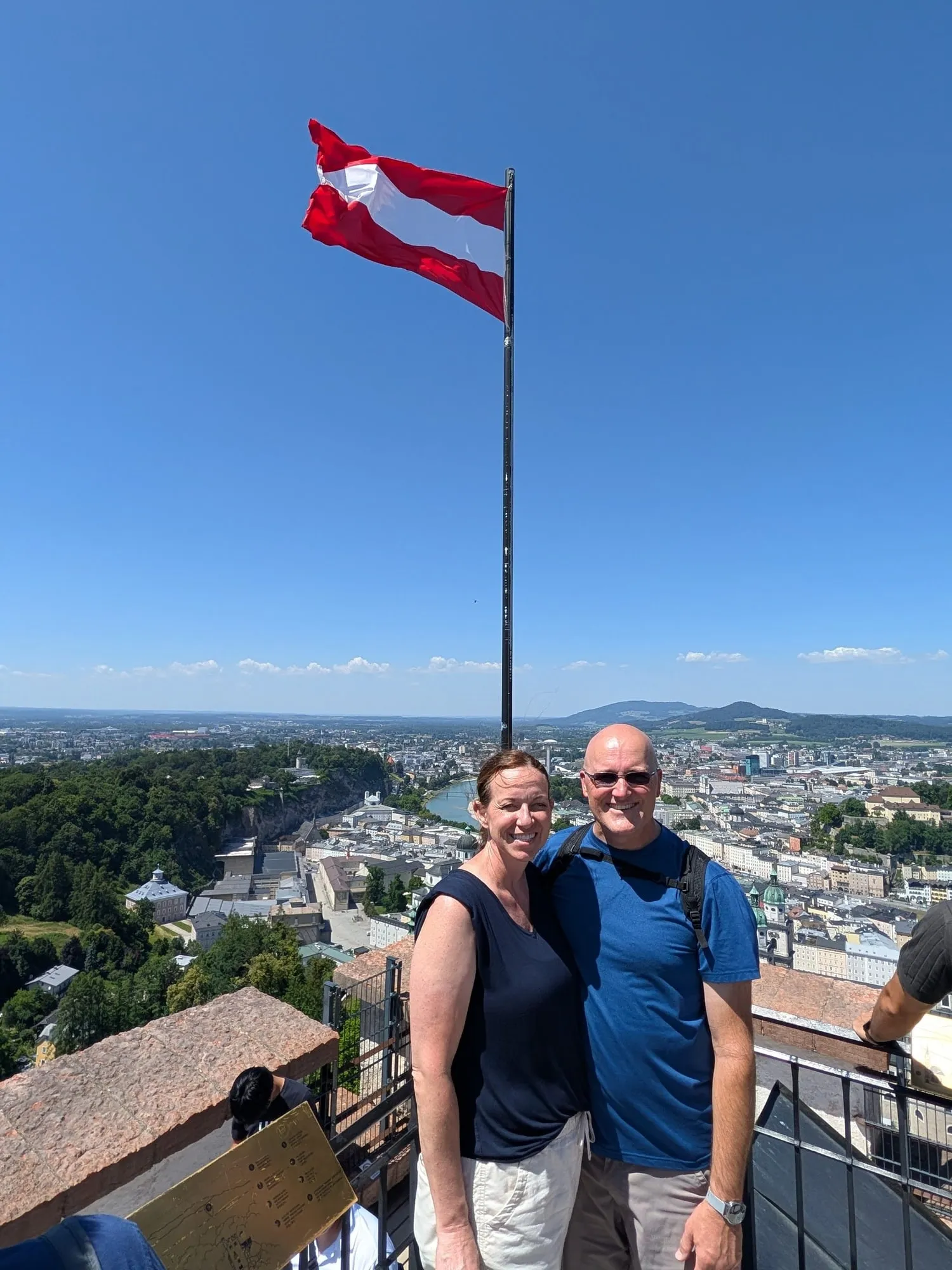
Doug Silvester
Founder, Personal Euro Tours
Twenty years in the auto industry before this one — which, if nothing else, is a long education in the difference between selling somebody something and helping them get what they came for.
Still going back every year. The photograph is from this summer.
Start 4–9 months ahead
For the best choice of hotels, guides and special experiences — earlier still for peak season or a popular event. Asking early costs nothing and commits you to nothing.
Everything itemised
Accommodation, selected local experiences, transfers and day-by-day planning support. Exact inclusions are listed in your proposal before you pay, and any deposit terms are stated before you confirm.
Support while you travel
We handle the arrangements and stay reachable while you are away, so a missed connection or a change of plan is our problem to solve rather than yours.
Tell us what you have in mind
Rough dates, rough budget, and roughly where. We will come back with honest advice about whether it works — and if it is a trip we can plan well, a no-obligation quote.
Start planning