Before you go — the two things that save real money
- Fly into Basel. EuroAirport is one of the cheapest arrival points in the region, and using it as your way into Switzerland rather than Zurich or Geneva can take a serious amount off the cost of getting here in the first place.
- Book a night in Basel, even if you are passing through. Every hotel, hostel, B&B and apartment in the city gives you the BaselCard at check‑in, and it covers all public transport in the city free for your whole stay — including the ride in from the airport, and your booking confirmation is the ticket for that first journey before you have even checked in — plus 25% off many attractions. Take it at the desk before you buy a single ticket. Checked 22 September 2026 against basel.com’s own BaselCard page: still 25%, still free transport for the stay, and the airport is inside the covered zone. One catch worth knowing — each discount is good once per attraction, not every time you go back.
Morning — Marktplatz, the red Rathaus, and the Old Town lanes
- Start at Marktplatz in front of the Rathaus. The town hall is startlingly red, painted and gilded, and it stops people mid‑sentence the first time they come around the corner into the square.
- Walk the market stalls if it is a market morning. This is the cheapest good food in the city and it is right in front of you.
- Wander up through the lanes towards the Münster, past the guild houses and the small squares that open up without warning.
Budget tips
- Marktplatz, the Old Town walk and the market are free, and a pastry from a stall is a fraction of what the same thing costs sitting down.
- Skip the café terraces on the main square. A bakery one street back is half the price and better bread.
- Buy your souvenirs anywhere but Basel. A fridge magnet that is three euros over the border in Germany or France is closer to six here, and nothing about it is different.
Midday — The Münster, the tower, and the Pfalz terrace
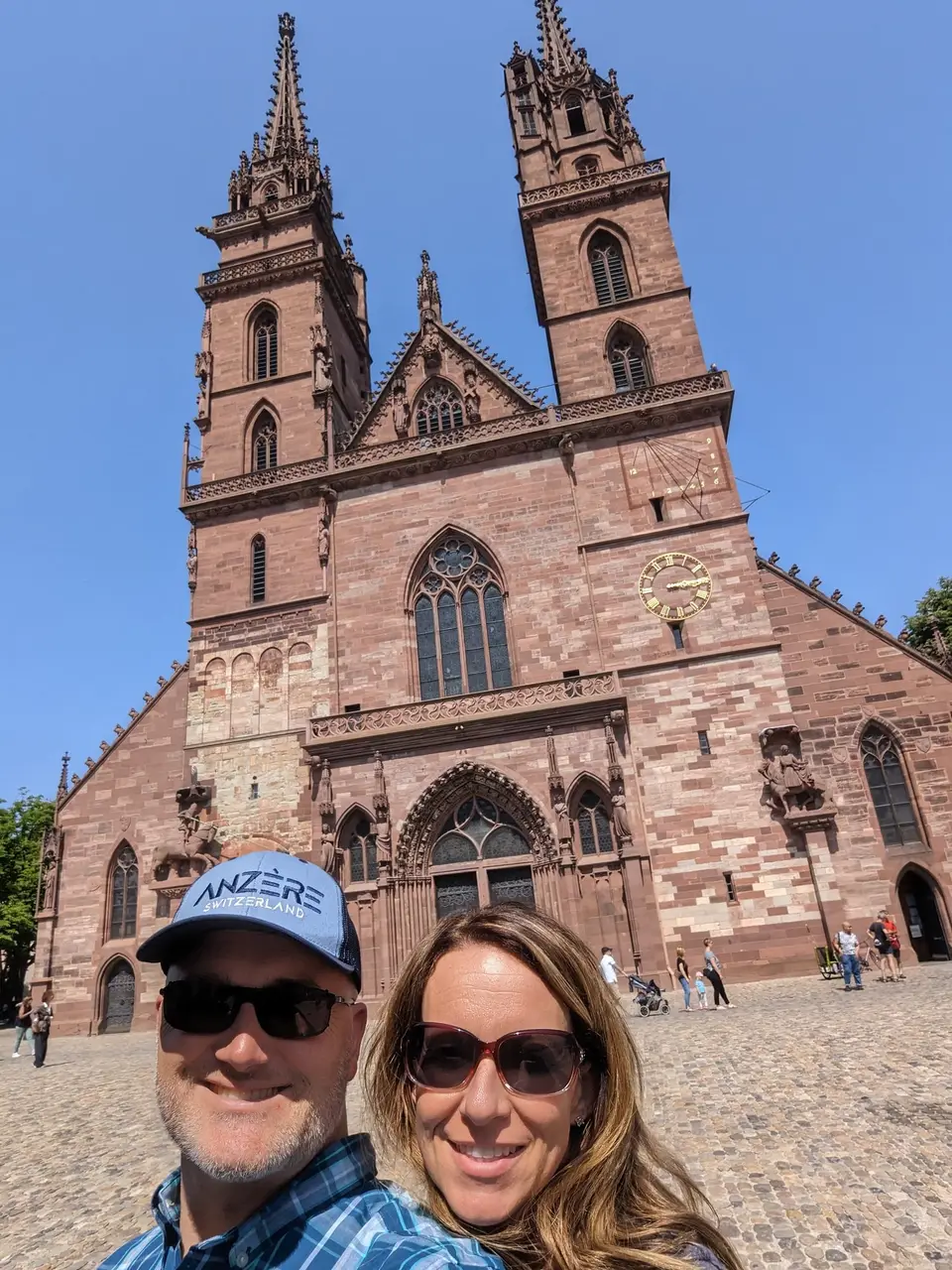
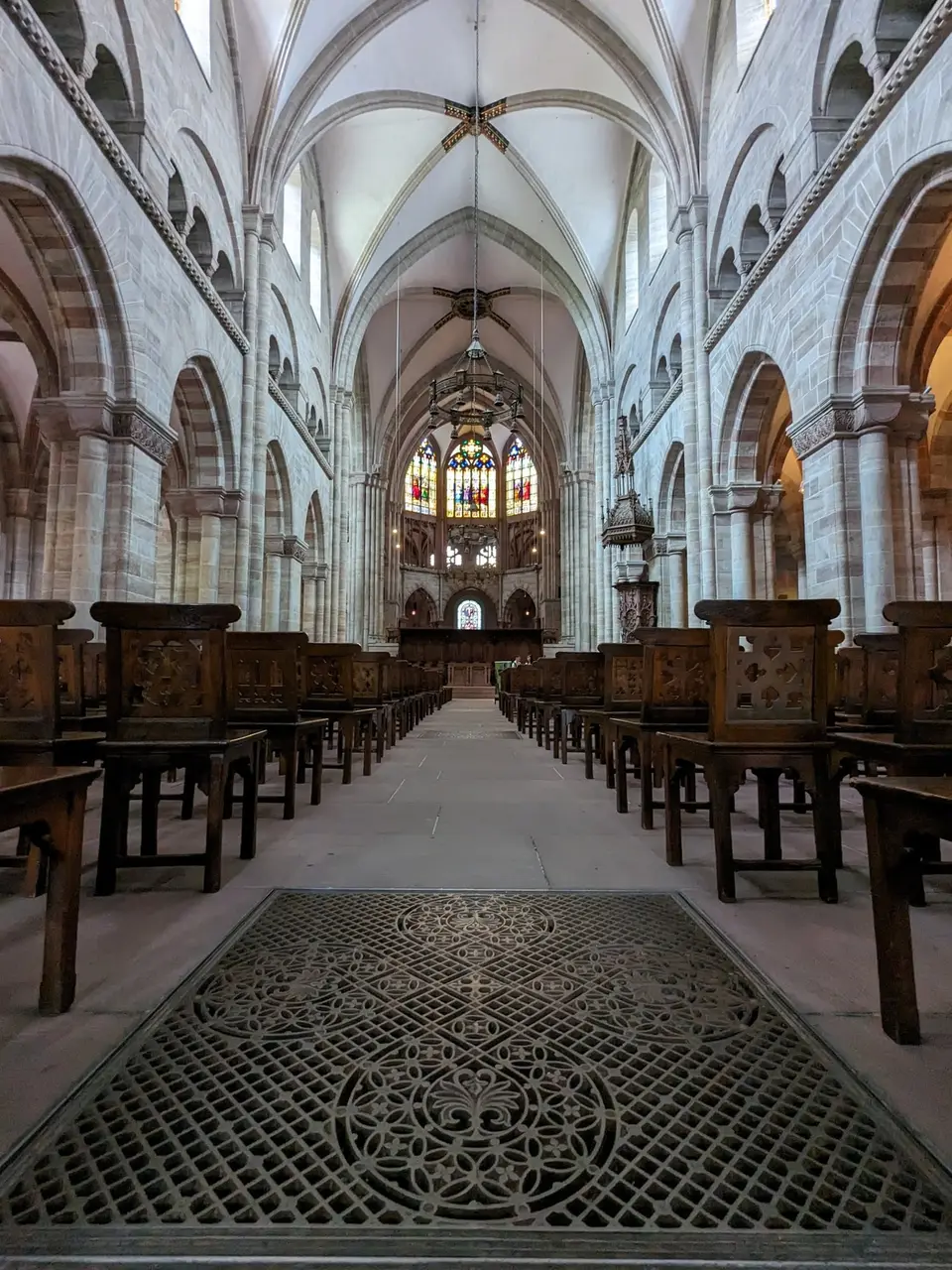
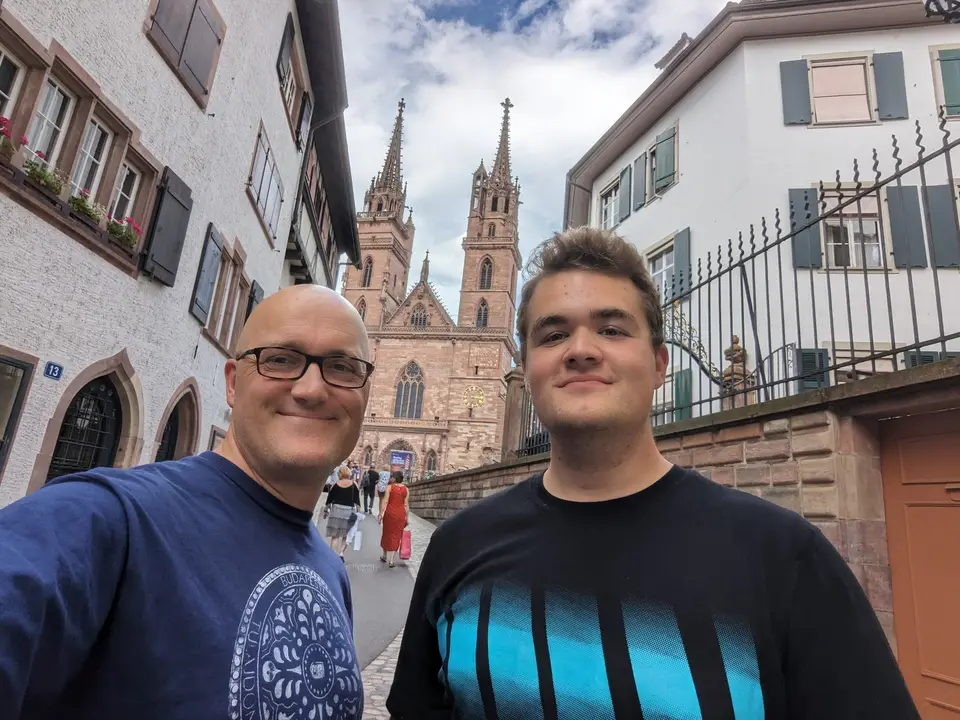
- Cross to Münsterplatz and go into the cathedral. Free to enter, red sandstone, and much older than it first looks.
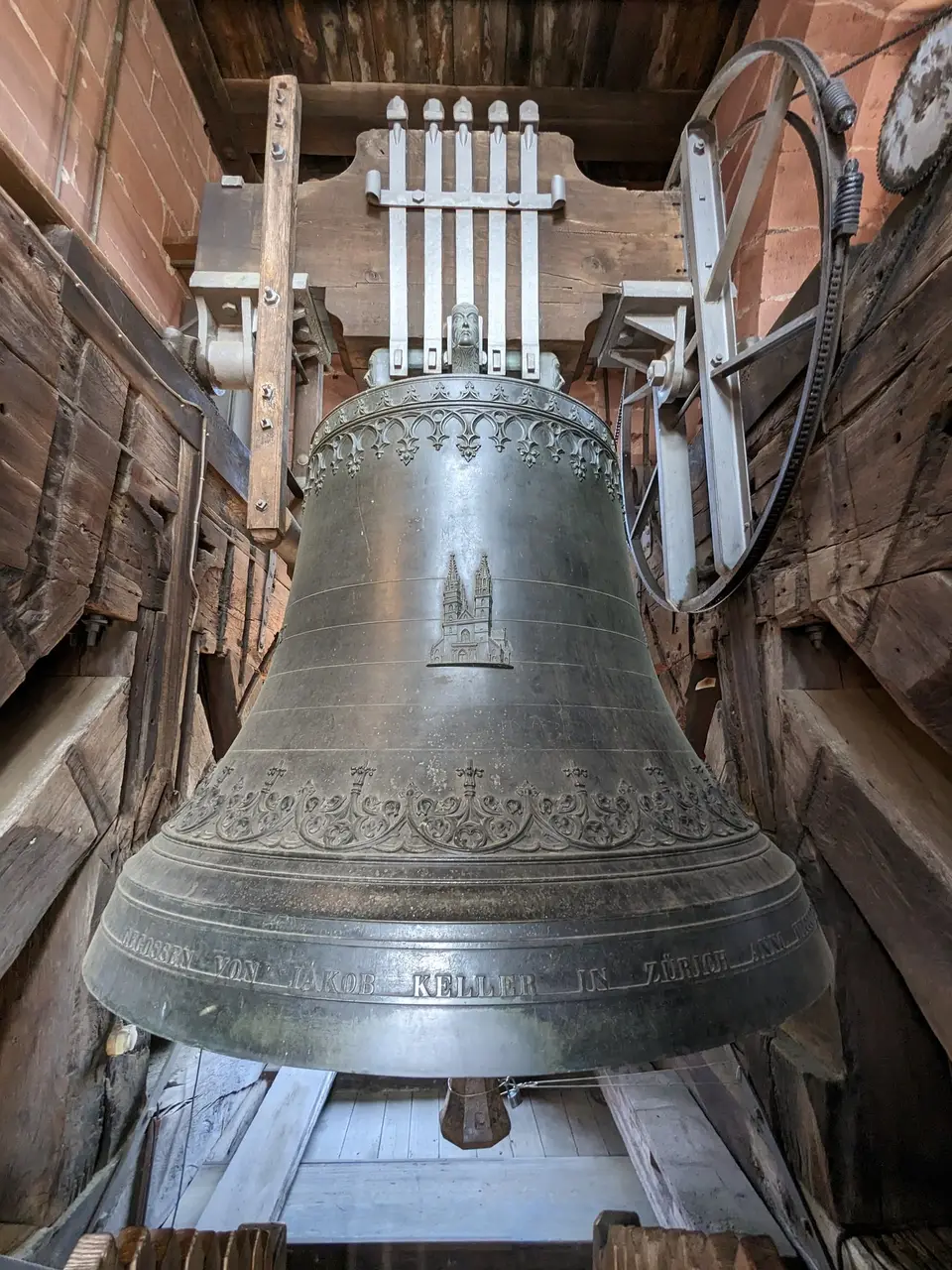
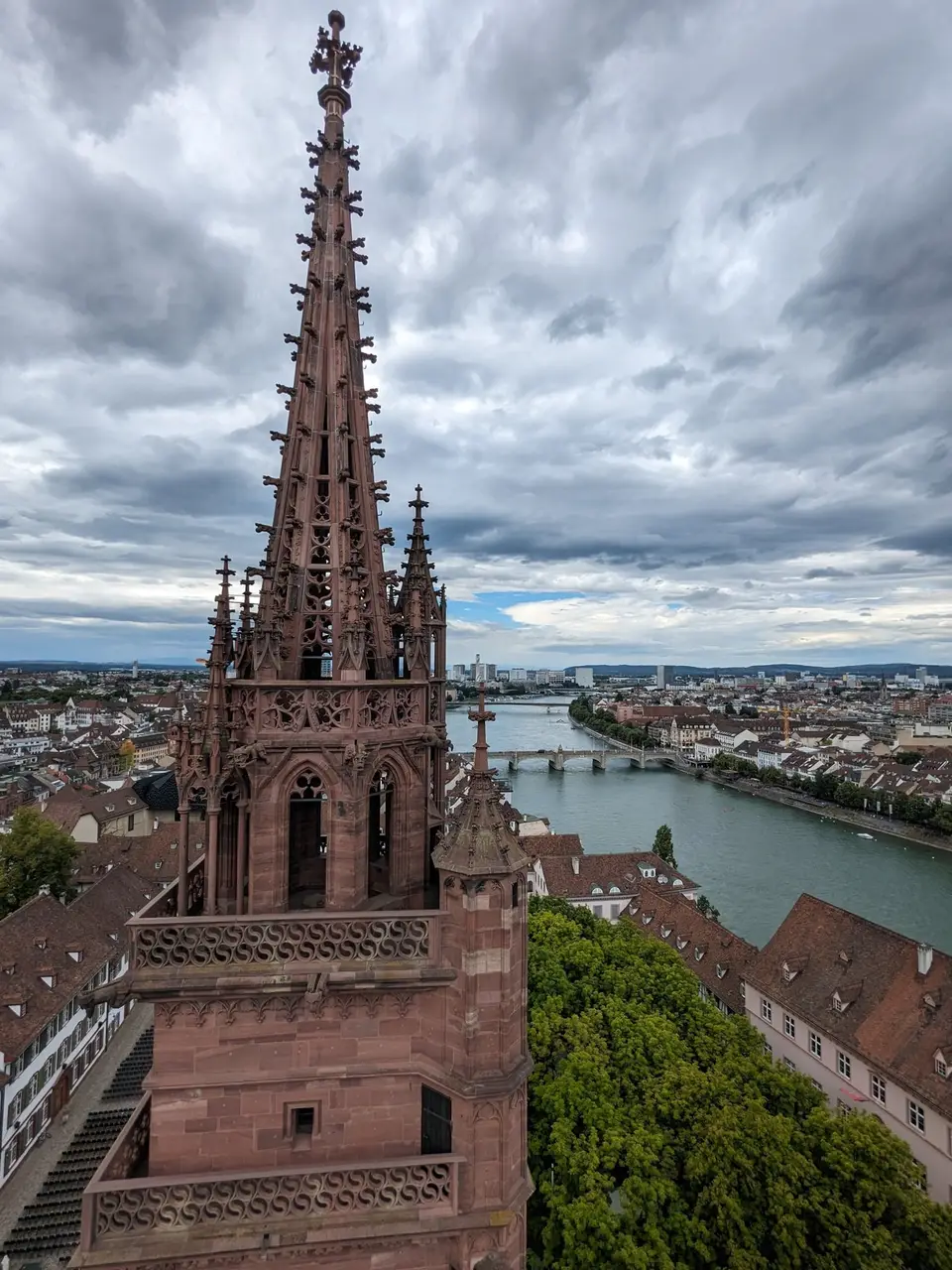
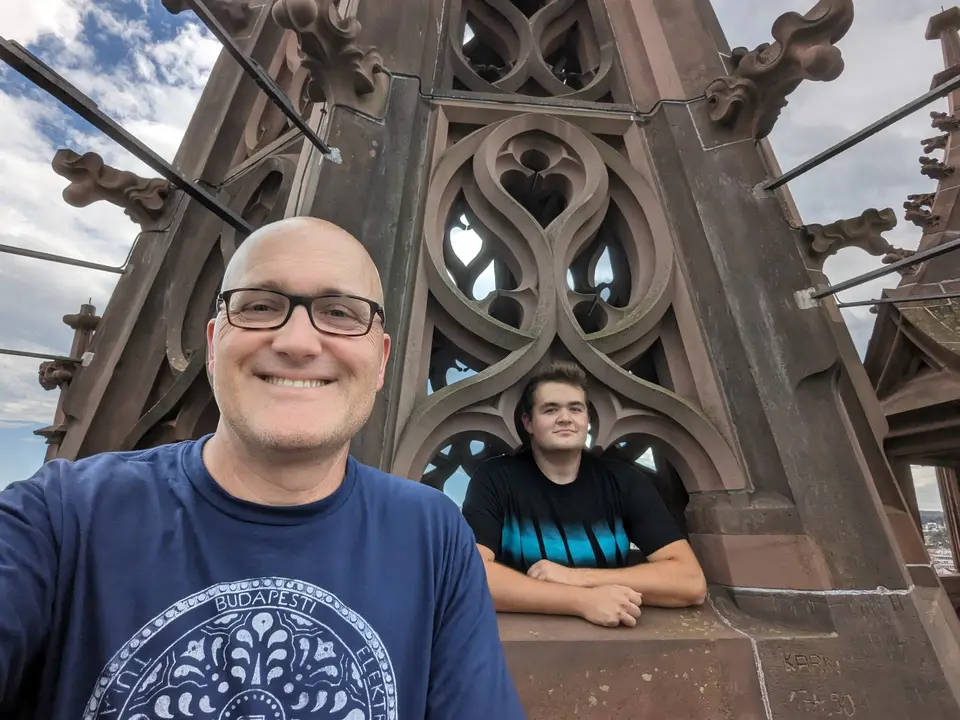
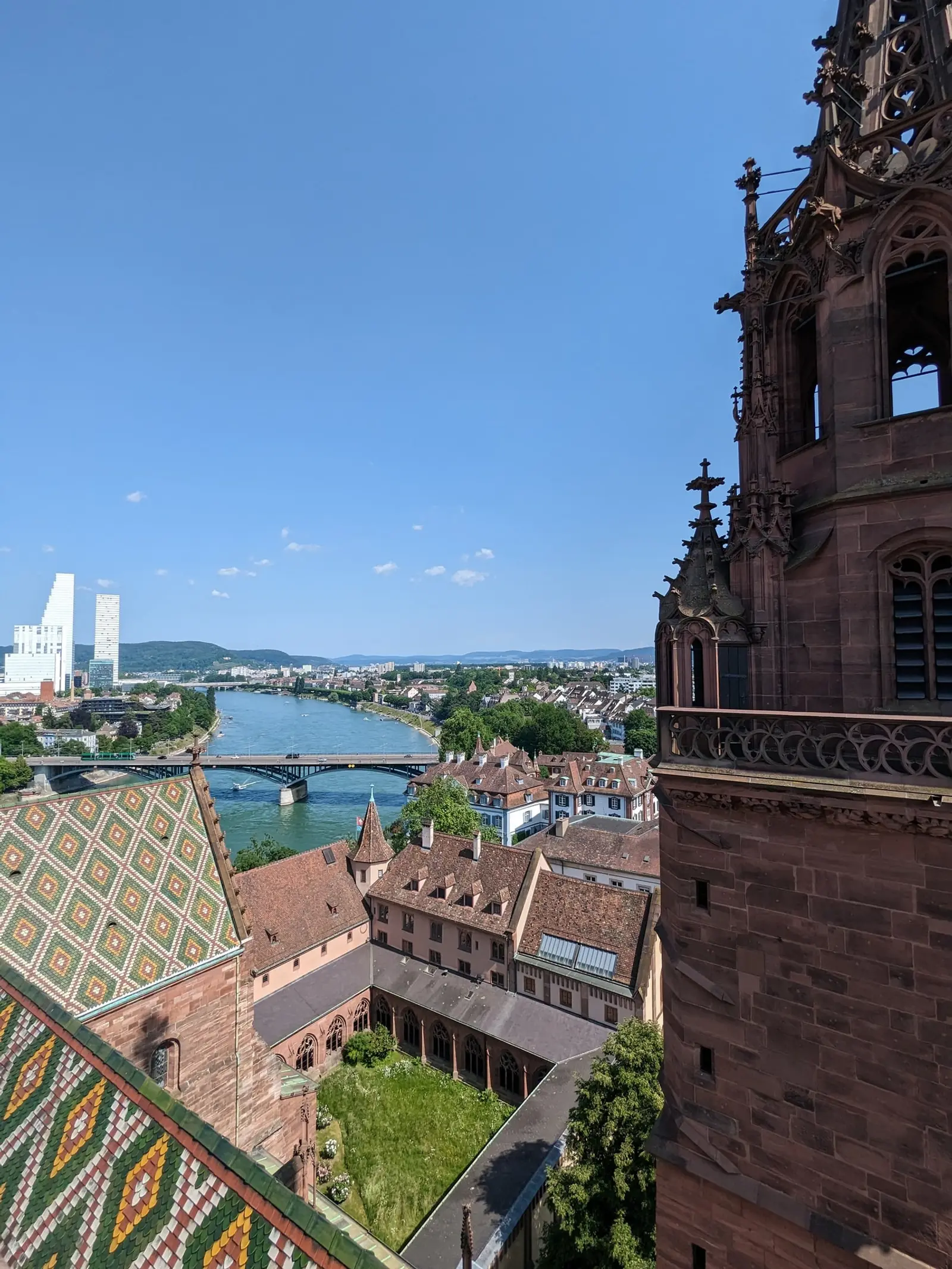
- Climb the tower. This is the one paid thing in Basel we would tell you to do without hesitating, and if you can time it for late afternoon in winter or evening in summer, do — the sunset from up there is the best view you will get of this city. The stair passes the bell chamber on the way up, which is worth the climb on its own.
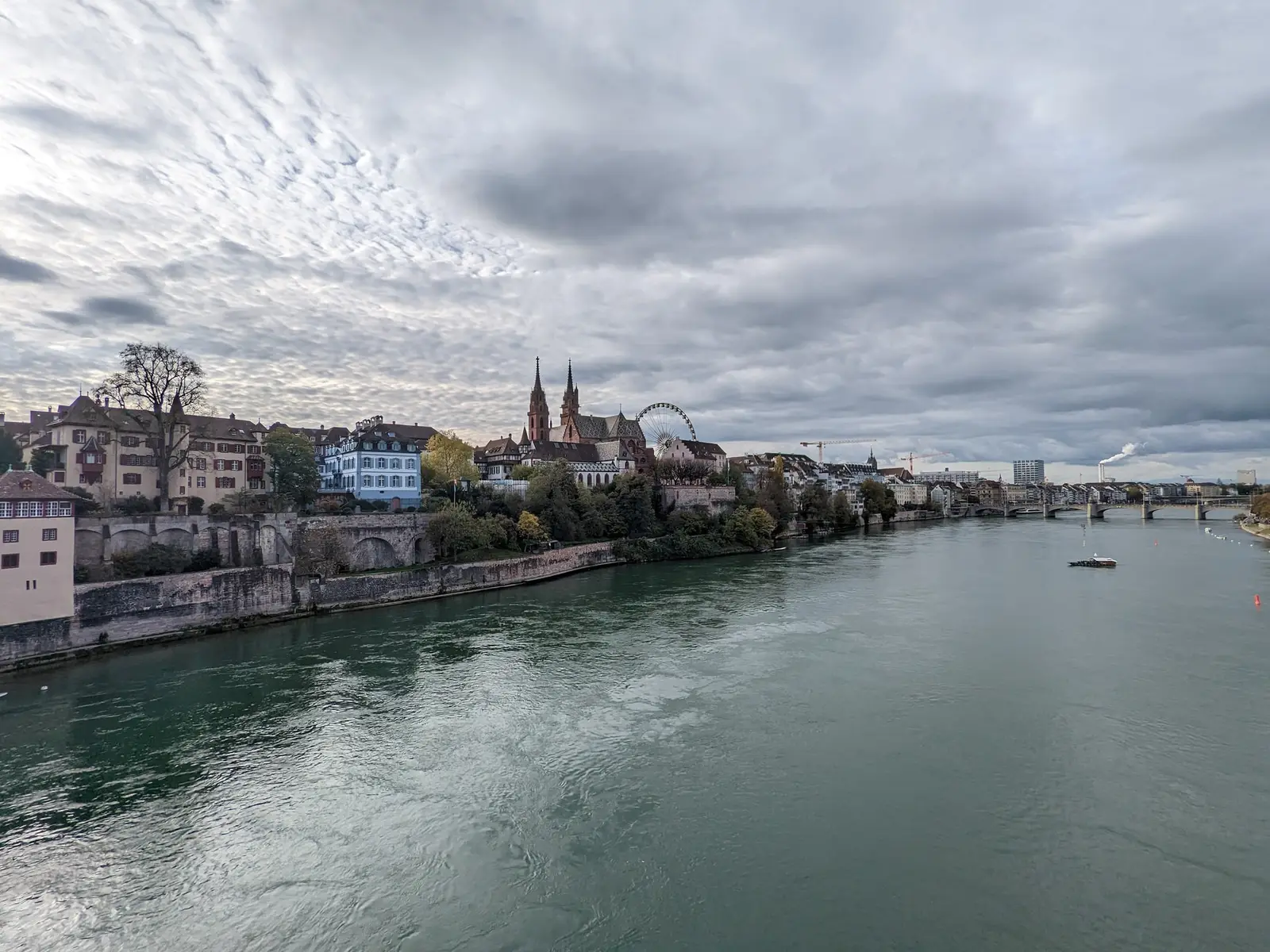
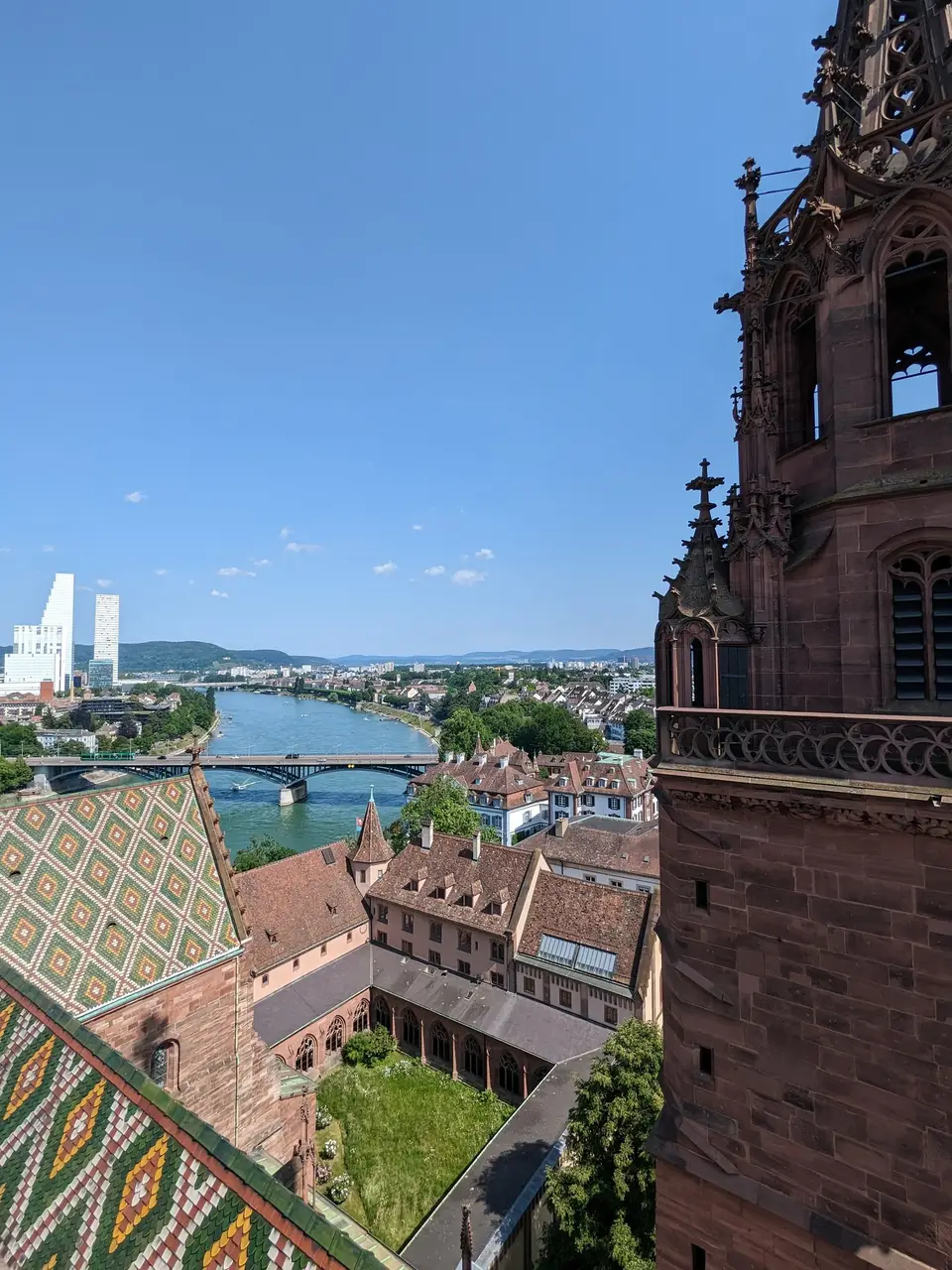
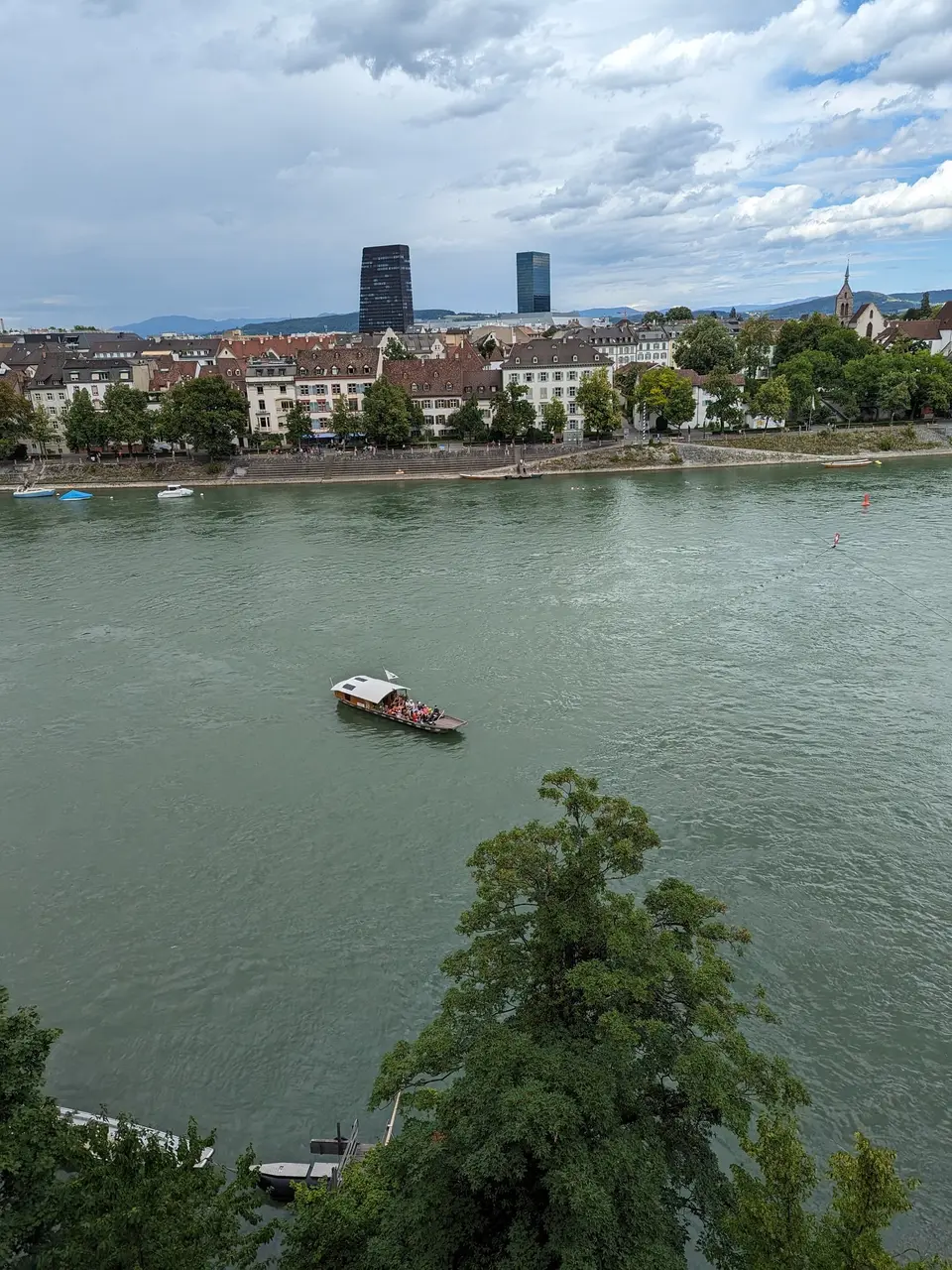
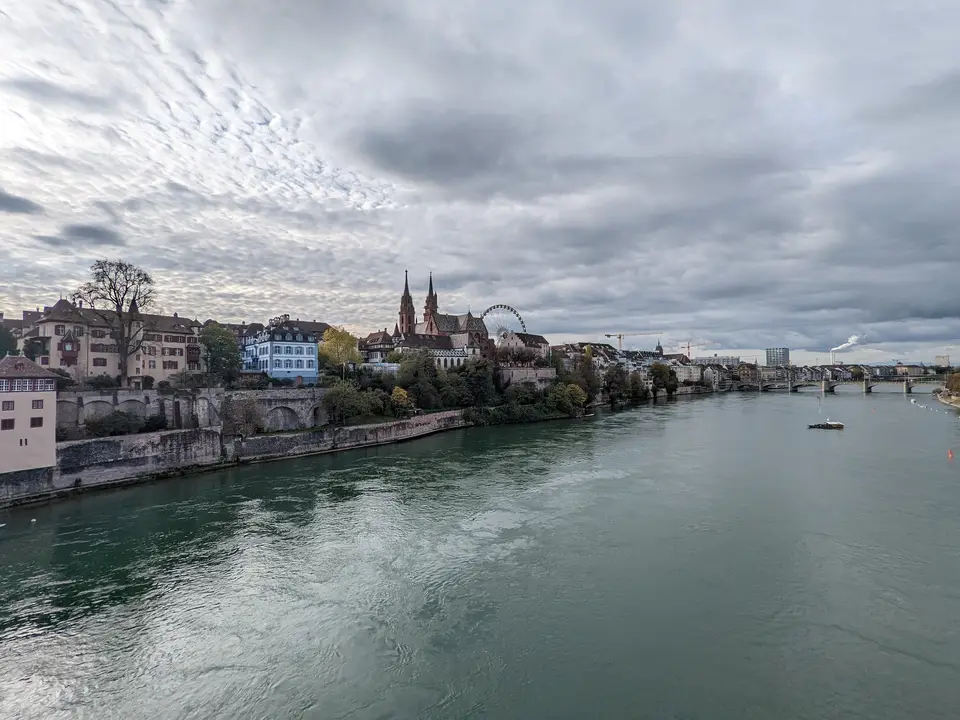
- Come out onto the Pfalz, the terrace behind the Münster, for the view over the Rhine to Kleinbasel.
Budget tips
- The Münster interior and the Pfalz terrace are both free. The tower is the only ticket and it is inexpensive. Do not count on the BaselCard here — the card’s 25% covers the museums, the zoo, the theater, the boats and the city tours, and the tower is not on that list.
- The Pfalz costs nothing and is the best free view in Basel. If you only stand still once here, stand still there.
- Eat lunch from the market or the Markthalle rather than a restaurant. The Markthalle under the dome does proper food from a dozen kitchens for roughly ten to fifteen euros — against thirty to thirty‑five for a pizza, a salad and one drink in a normal Basel restaurant.
Afternoon — The Rhine, and the water itself
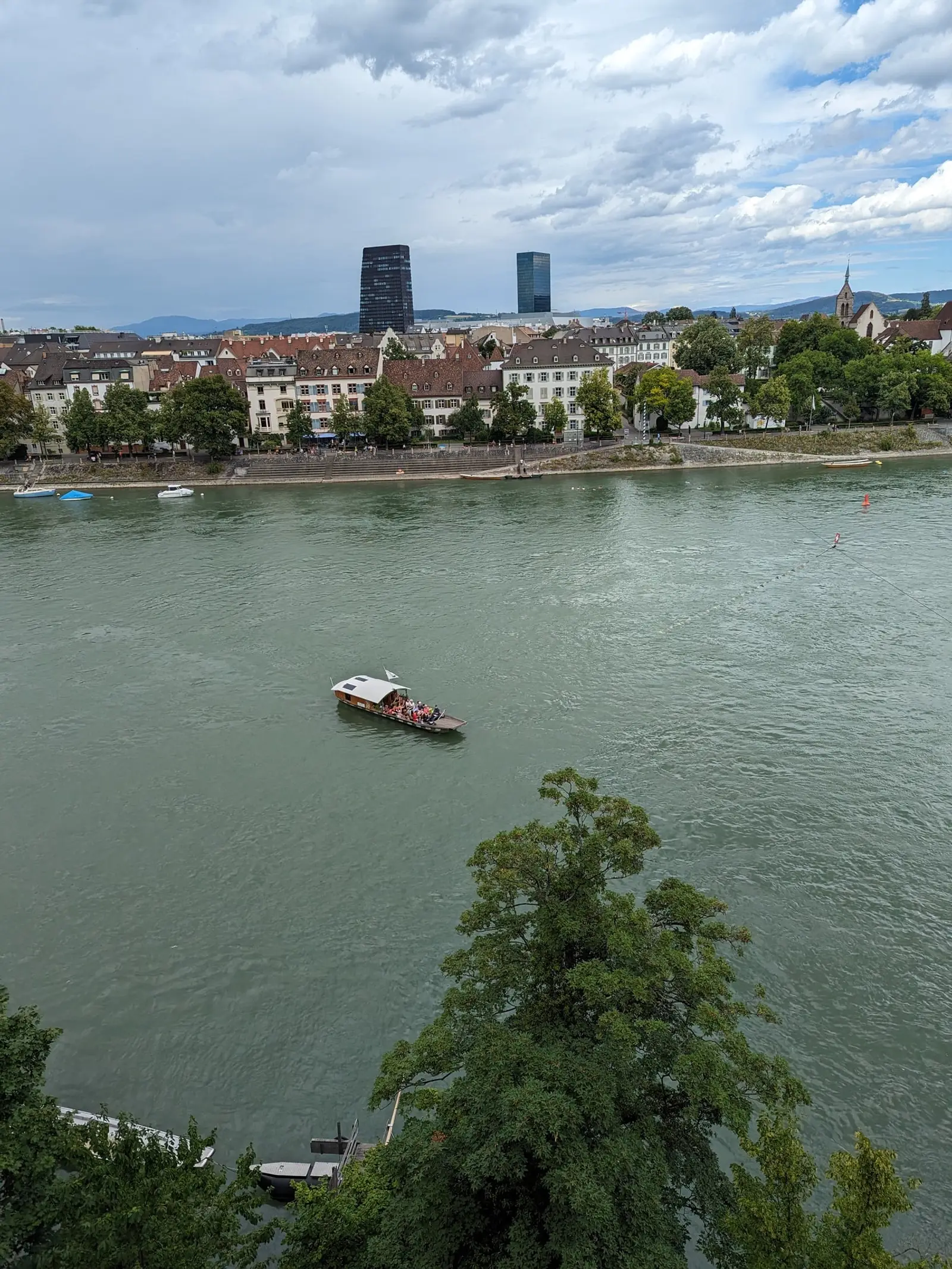
- Walk the Rhine on both banks and cross on the bridges. The little cable ferries are charming and every guidebook tells you to take one; we would not bother — you pay for a two‑minute crossing you can make for free on a bridge with a better view. If you have small children with you, that is the one argument for doing it once.
- The Rhine boat tours are the thing to say no to in Basel. They are the most overpriced thing in the city for what you actually get, and people book them because they are the obvious thing to book. The city‑and‑port round trip is CHF 20 a head for 75 minutes, and Basel to Rheinfelden and back is CHF 48 — real money for a view of banks you can walk along for nothing, seen from further away and through other people. Your BaselCard takes 25% off the scheduled cruises, which makes it cheaper without making it worth it. If you are going to get on a boat anyway, the evening cruise is CHF 15 and the ticket is good for the whole evening, which is the only one of these that looks like value. Prices checked 22 September 2026 against Basler Personenschifffahrt’s own summer timetable.
- Cross into Kleinbasel, which is quieter and less polished than the Old Town, and walk back along the water.
- In summer, get in the river. Basel swims the Rhine. You put your clothes in a waterproof Wickelfisch bag, get in upstream and let the current carry you down through the middle of the city. It is completely normal here, everybody does it, and it is the single best thing about Basel in warm weather. It costs nothing but the bag.
Budget tips
- Walking both embankments and crossing on the bridges is free and gives you the whole city from the outside.
- The Rhine swim is the best afternoon in Basel in summer and the only cost is a bag you will use every day of the trip.
- If you want a museum, pick one. Basel has more of them per head than almost anywhere and the entry fees stack up fast — your BaselCard discount applies to many of them.
Evening — Barfüsserplatz, and the two places we send people
-
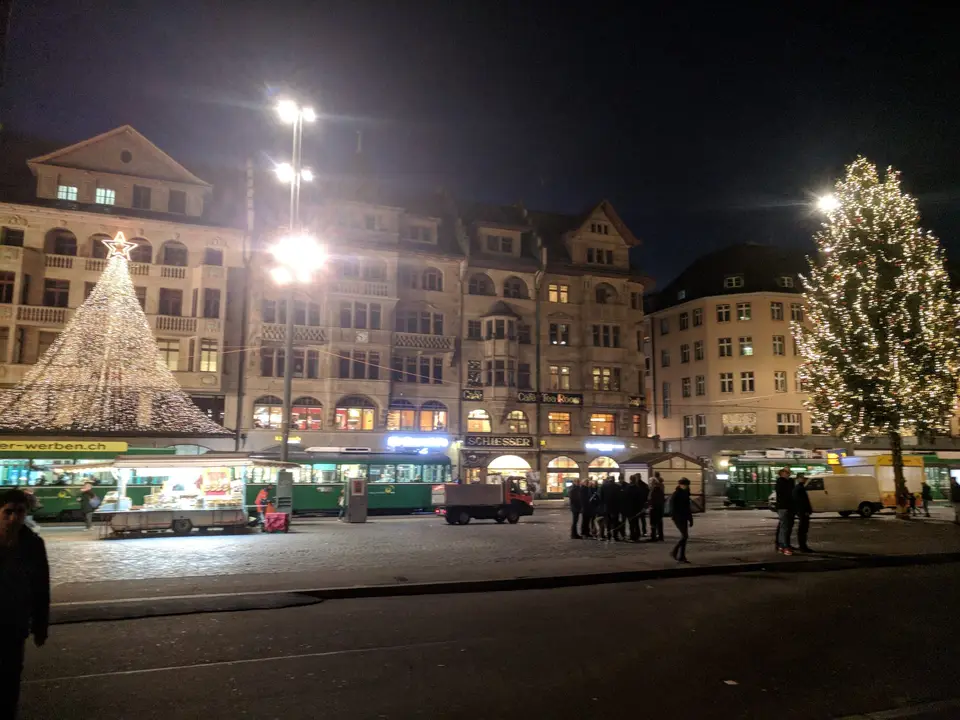
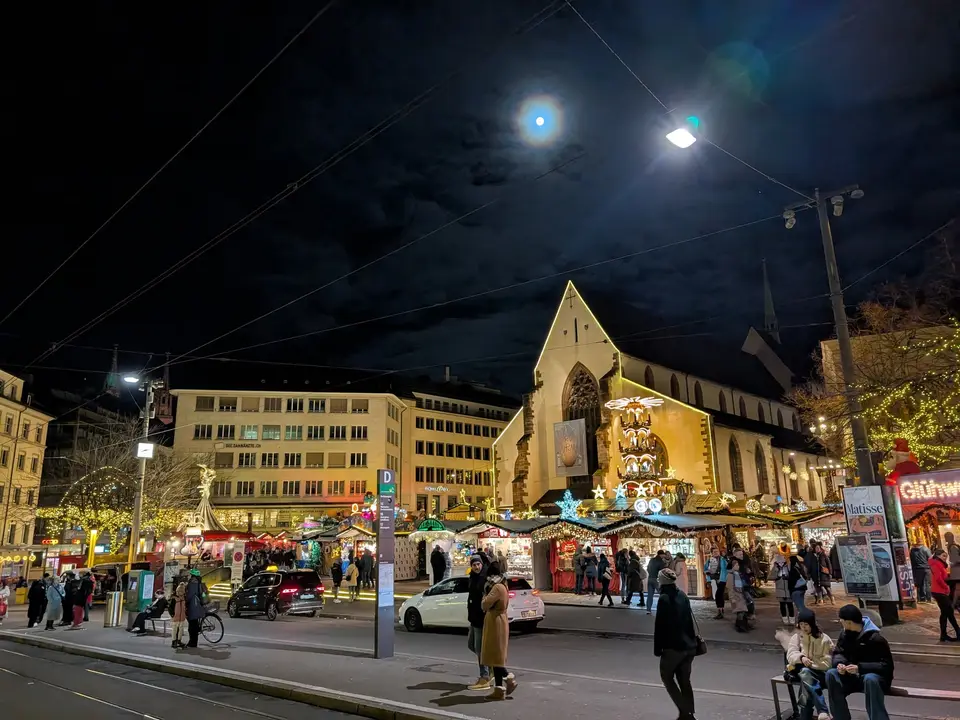
Come back to Barfüsserplatz, the square in front of the Barfüsserkirche, where the city gathers in the evening.
-
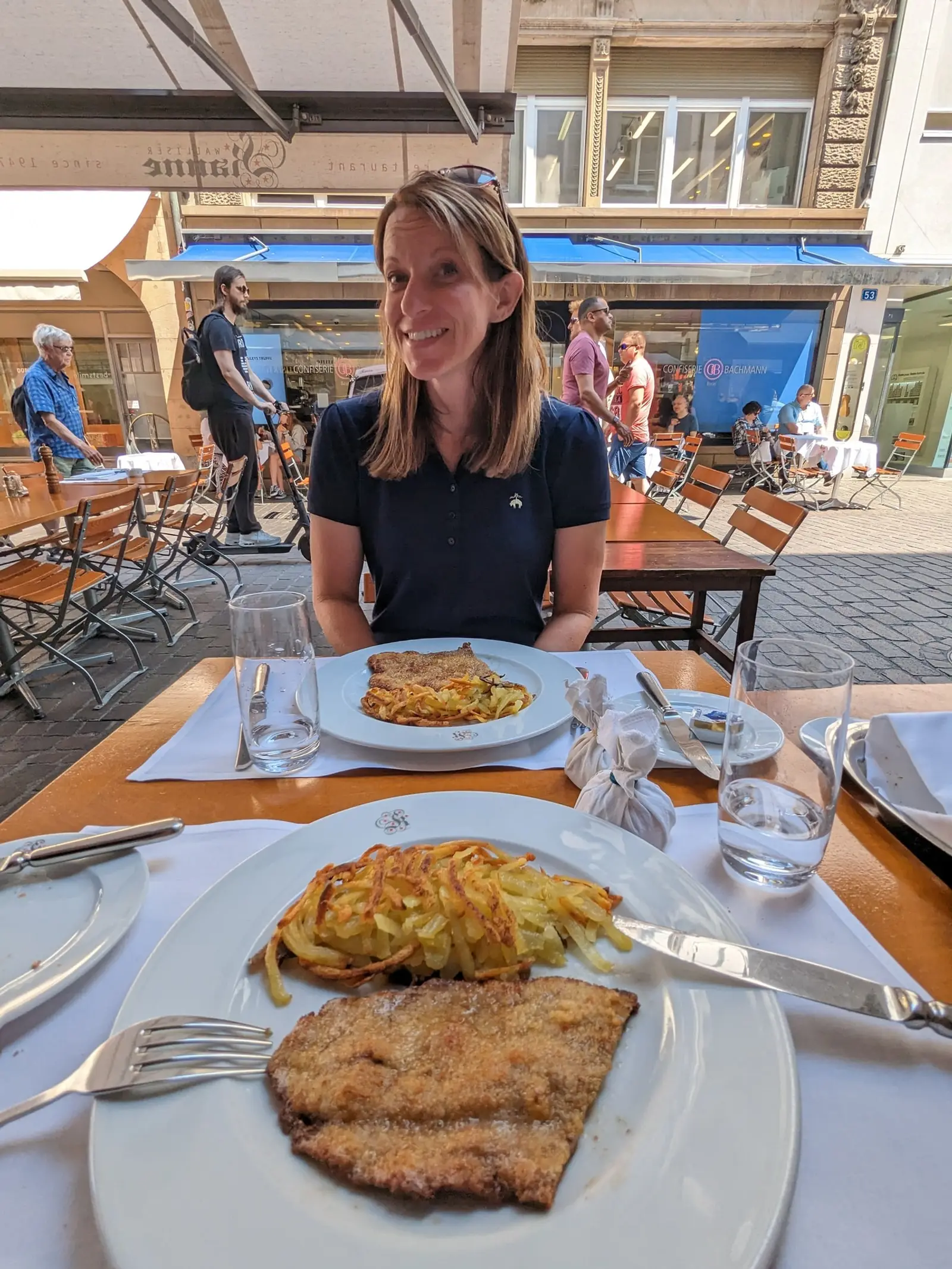
Eat at the Walliser Kanne on Gerbergasse, two minutes from the square. Fondue and raclette done properly, the schnitzel finished at the table, and the kind of low wooden room that makes a cold evening worth it. Book ahead in season.
-
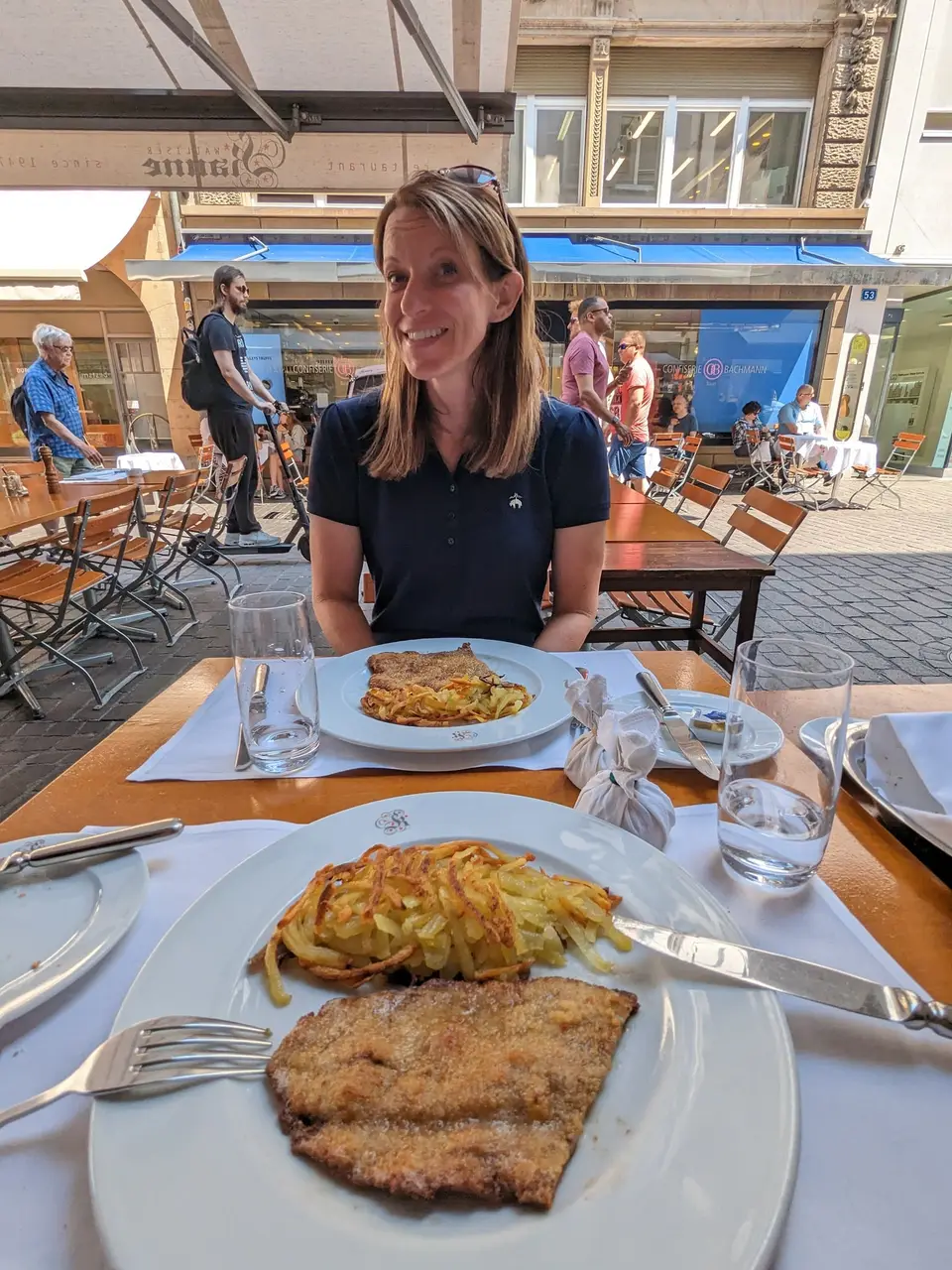
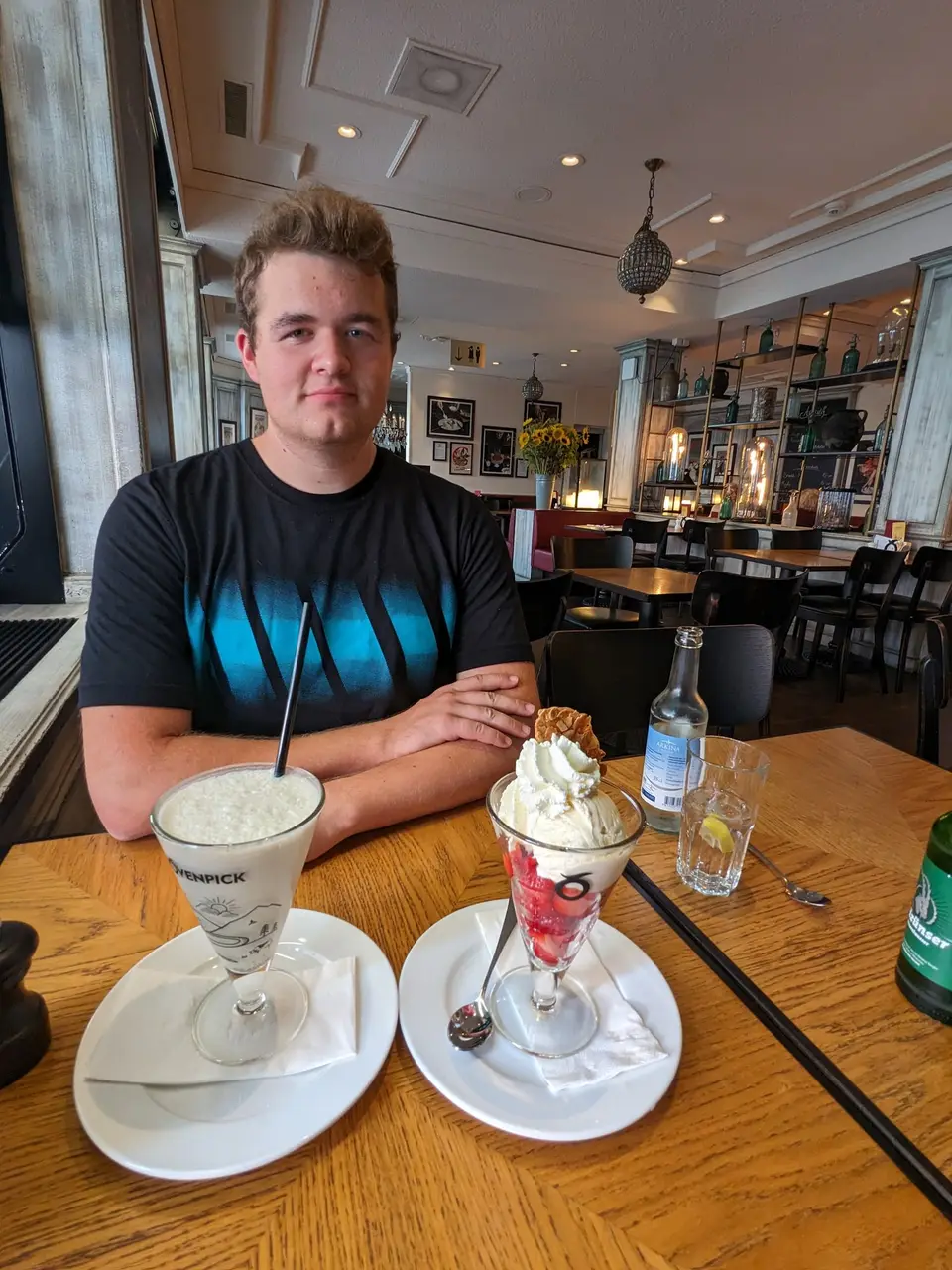
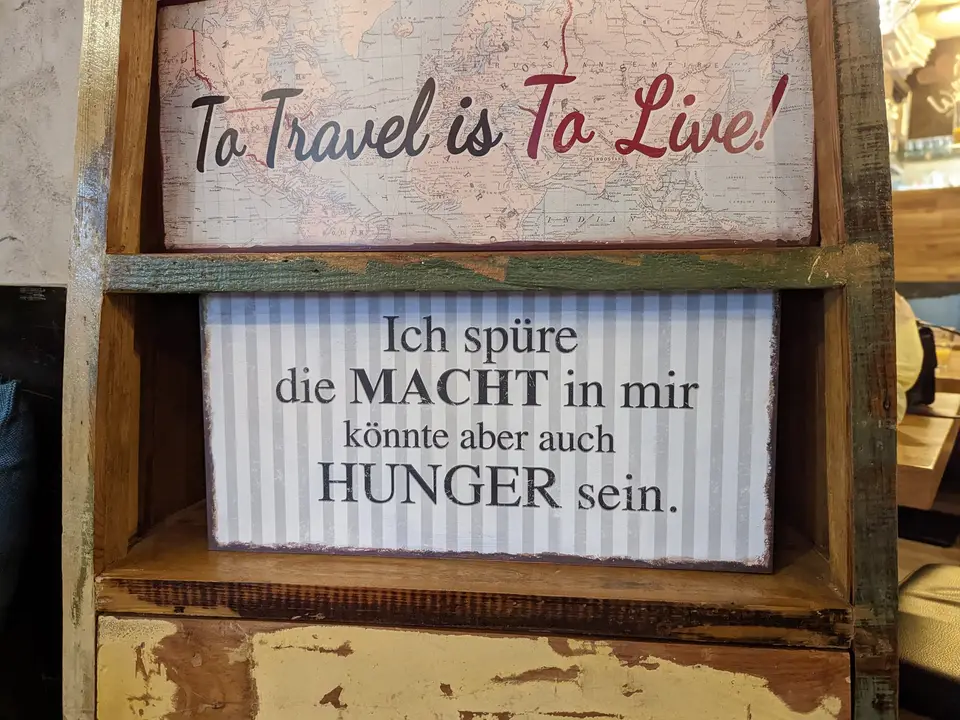
It is not only an evening place. There are tables out on Gerbergasse and it does lunch on weekdays — schnitzel with a pile of rösti, in the sun, with the Old Town going past. The photograph of that lunch on this page was taken at the table. Reckon on roughly 40 francs a head and up, which is Basel’s going rate for a proper sit-down meal either way.
-
The other one we send people to is Rhyschänzli, on Lichtstrasse in the St. Johann quarter. It is out of the Old Town, which is the point — a short tram ride and you are eating where Basel eats rather than where Basel’s visitors eat. Swiss and regional rather than international: fondue, cordon bleu, polenta, dry-aged beef from the region, and seasonal set menus that change through the year, with a vegetarian run alongside the meat. Roughly CHF 40–100 a head.
-
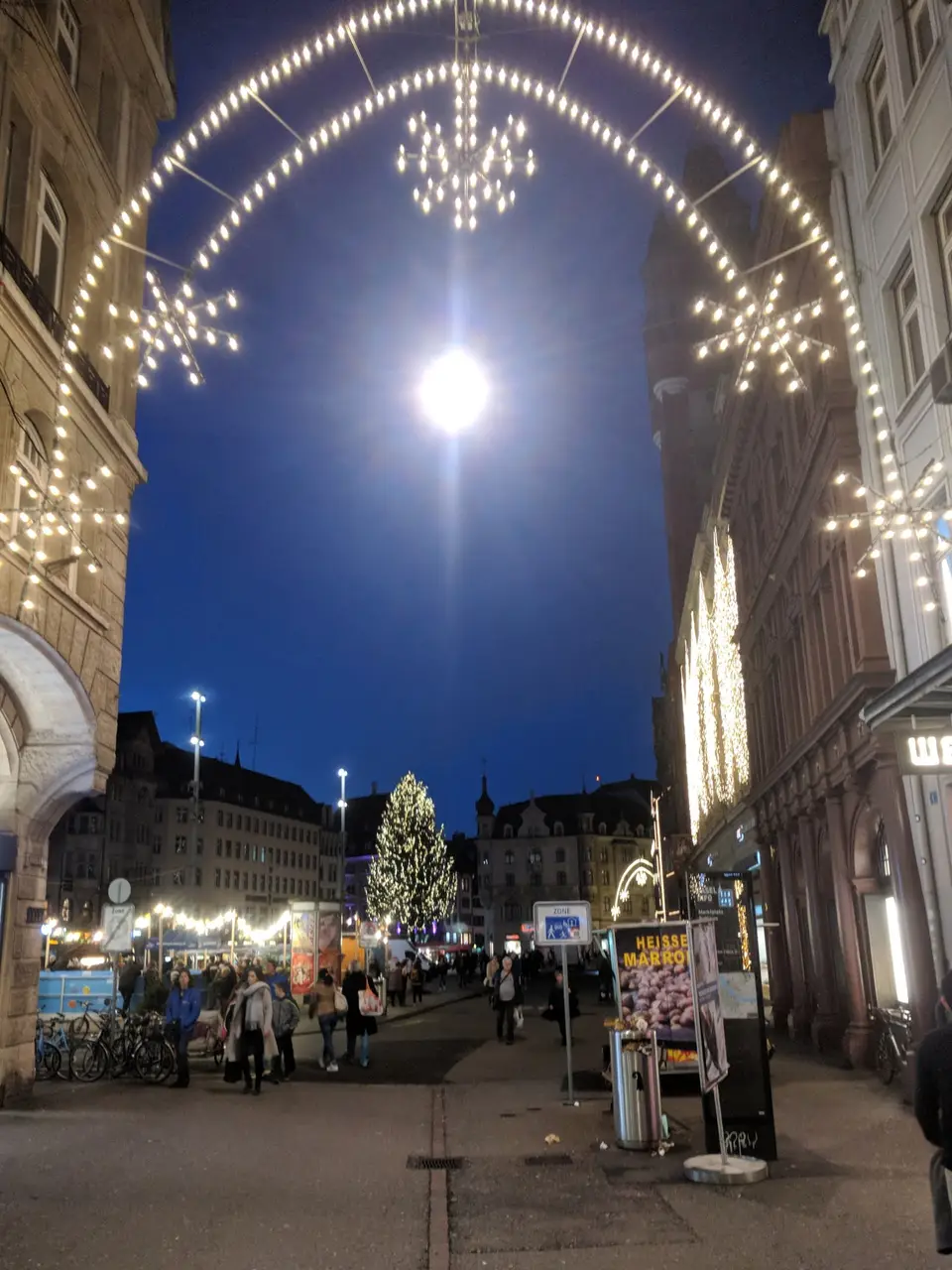
Walk the Old Town again once the lights are on. Basel is better at night than it is at midday.
Budget tips
- Rhyschänzli does lunch on weekdays only, and it is the cheaper way into a kitchen that is otherwise an evening proposition. Evenings from six, Saturday evenings only, closed Sunday — book, and do not turn up on a Sunday expecting either of these two to feed you.
- Make lunch your main meal and keep dinner lighter. A mid‑range dinner in Basel starts around forty francs a head before you have ordered anything to drink.
- Drink tap water. Swiss tap water is excellent and free, and it will be brought if you ask.
- If you are eating on a tight budget, remember Germany and France are both a tram ride away and food there costs about half what it does here. Plenty of people in Basel do exactly this.
When to come
Whenever suits the rest of your trip. Most cities have a season you are supposed to see them in and a season you are told to avoid. Basel does not. It is beautiful in all four, and each one has something the others do not — the market in December, Fasnacht in spring, the fair in autumn, the river in summer. We would not move a trip for any of them. We would build the trip and then find out which one we had landed in.
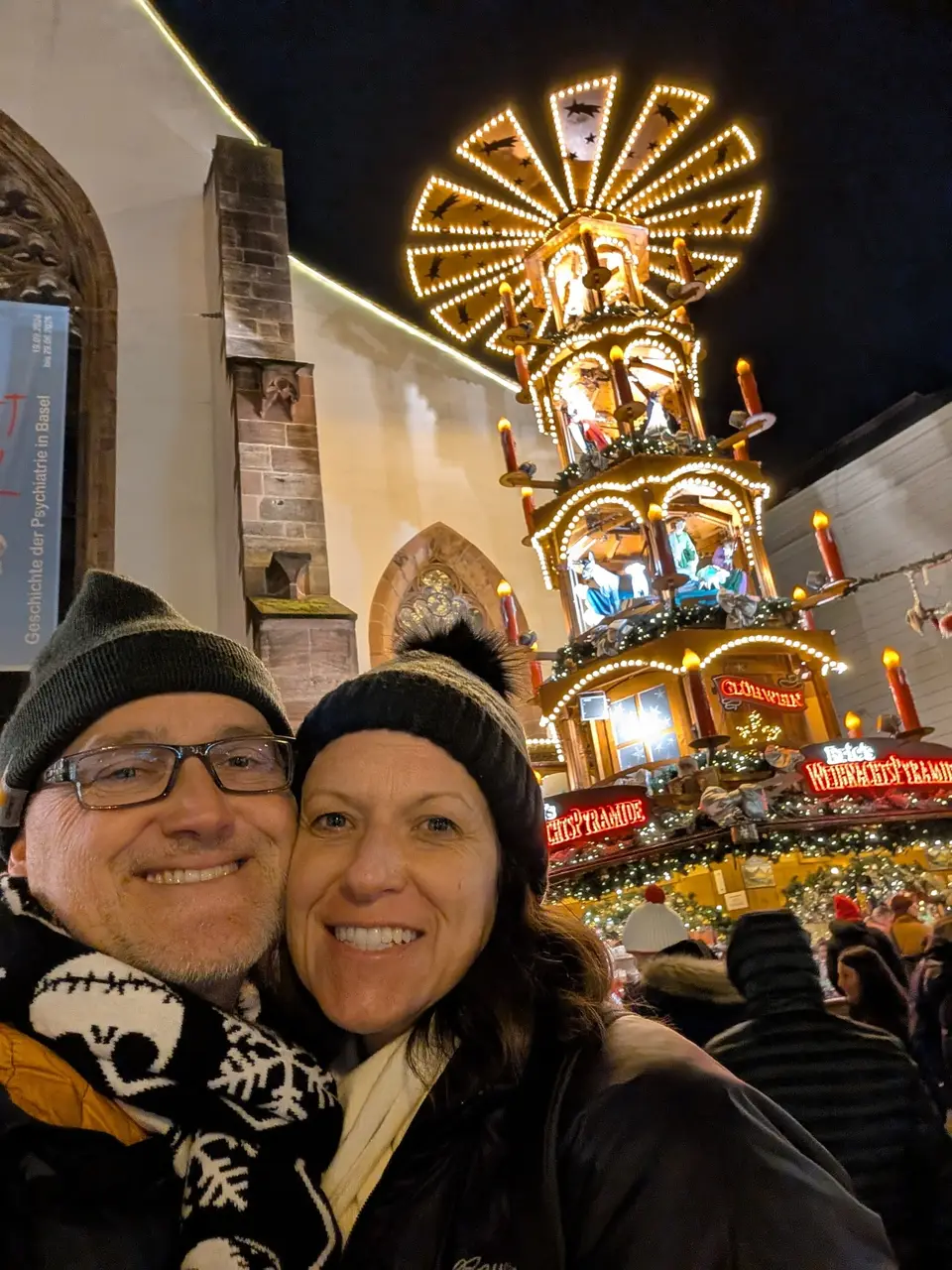
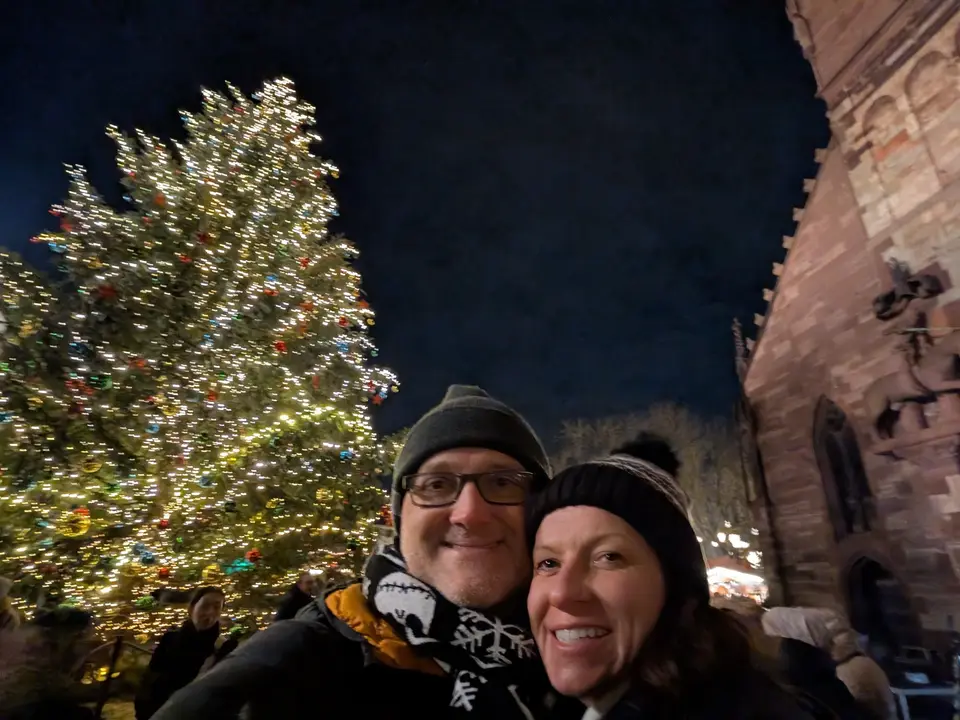
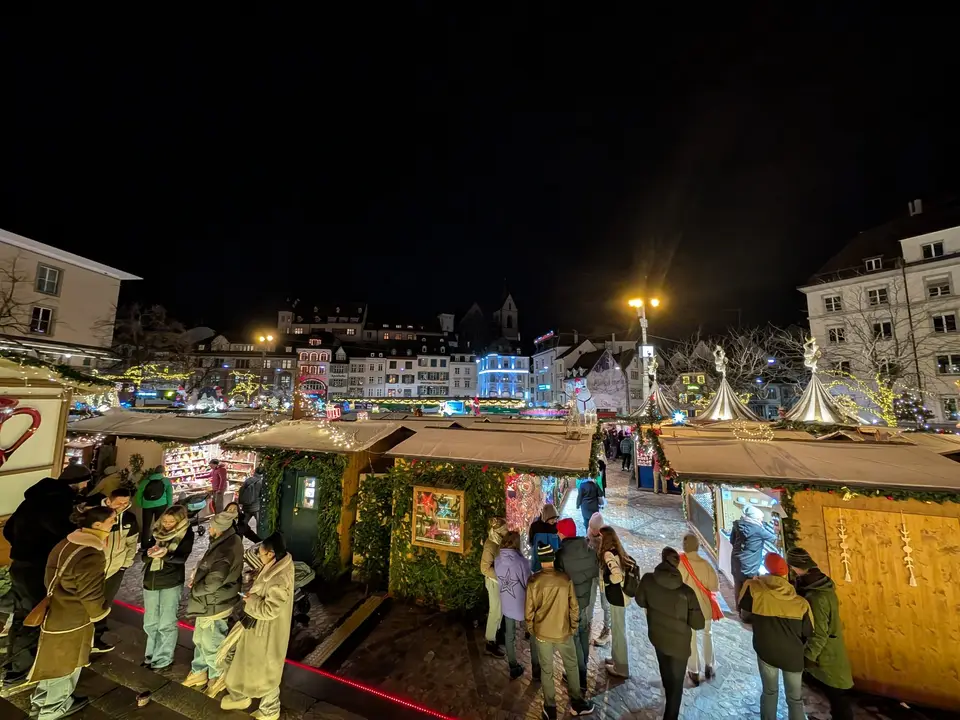
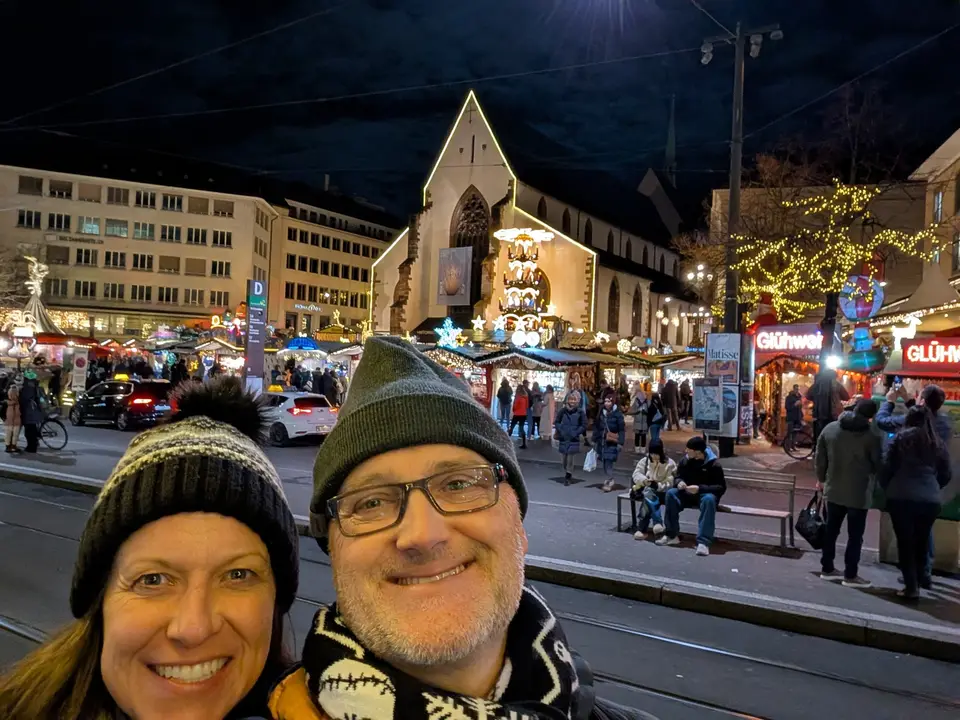
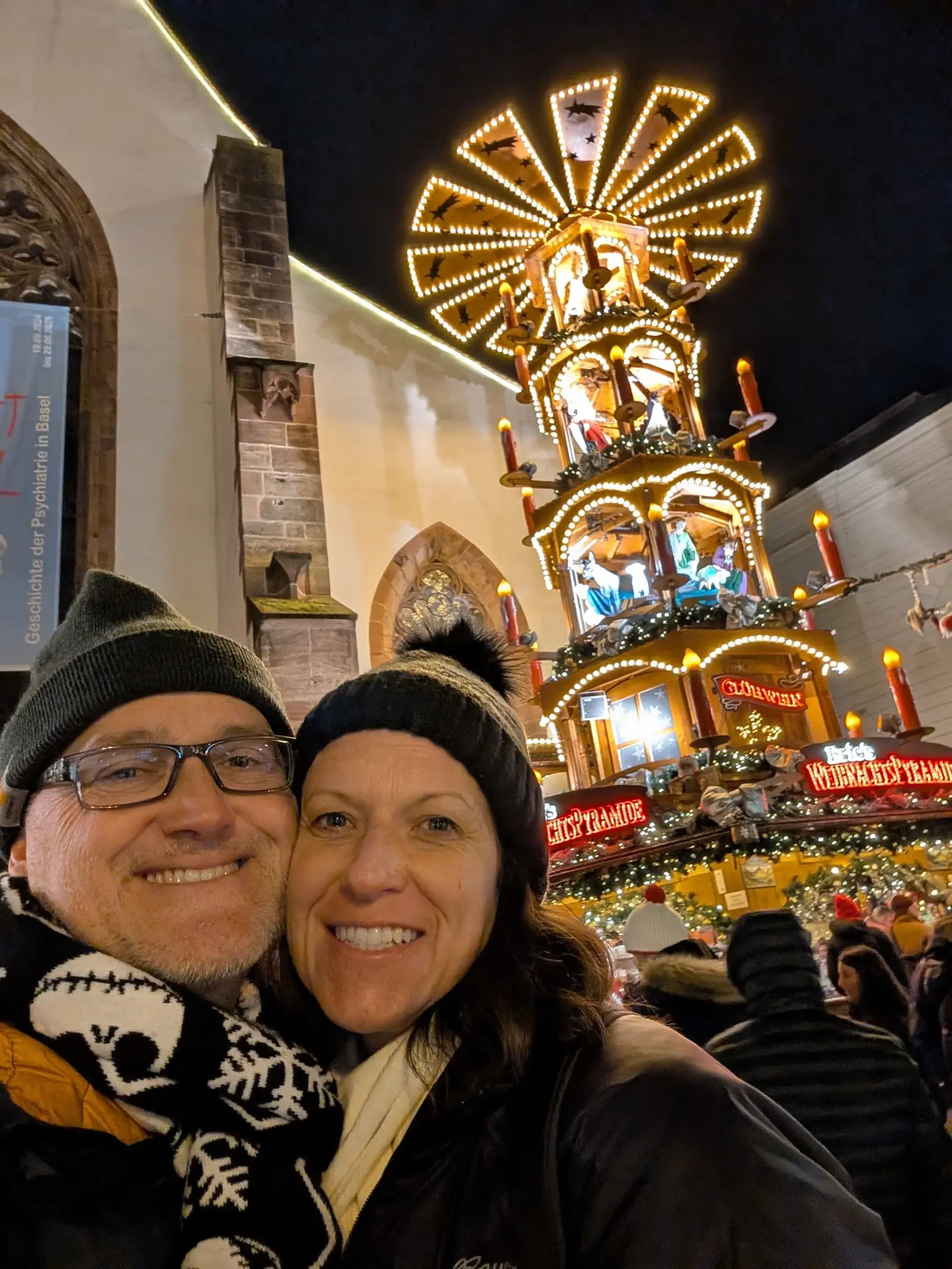
- Christmas. The market on Barfüsserplatz is one of the best in Switzerland, and Basel is an easy and cheap place to fly into for a December trip — it makes a good first or last stop on a markets route.
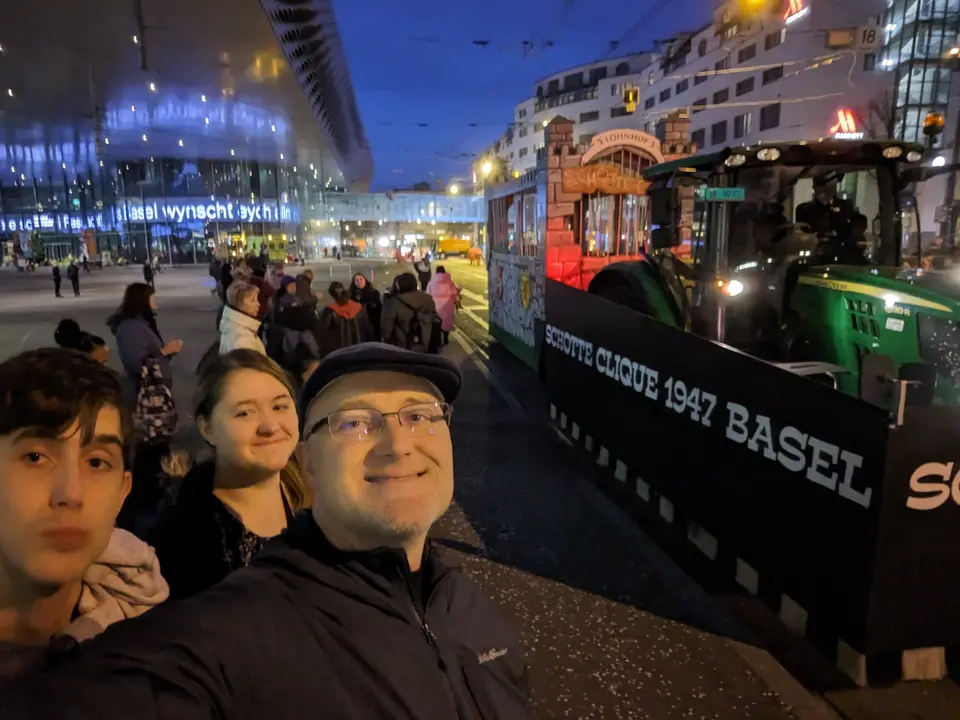
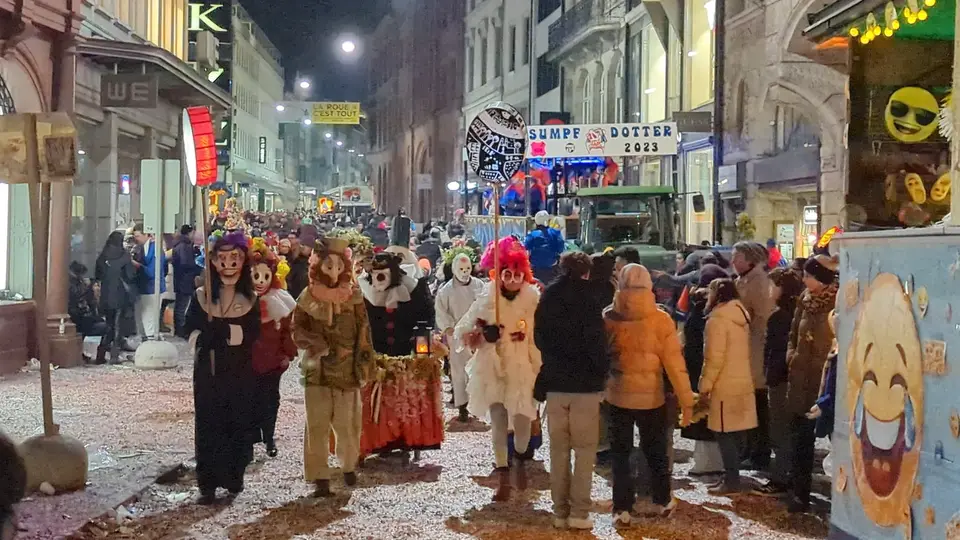
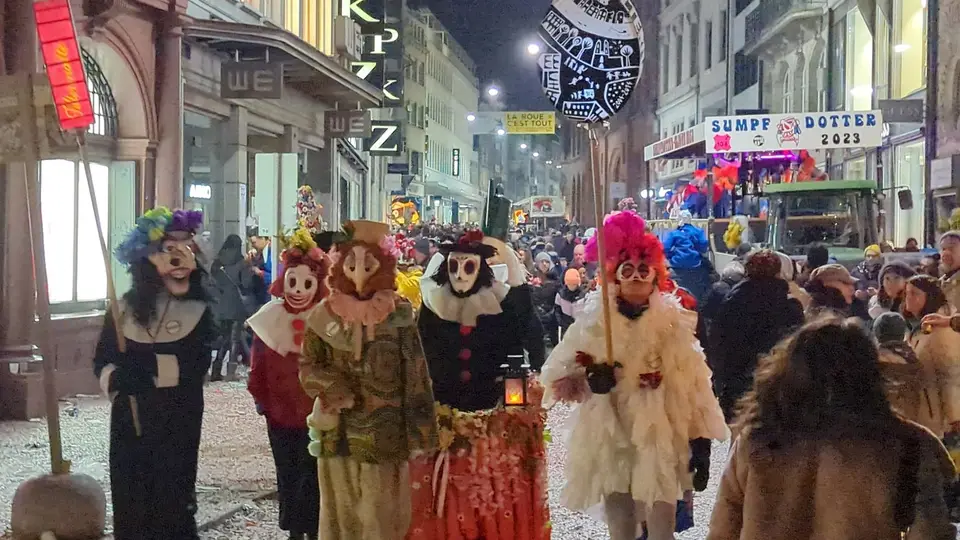
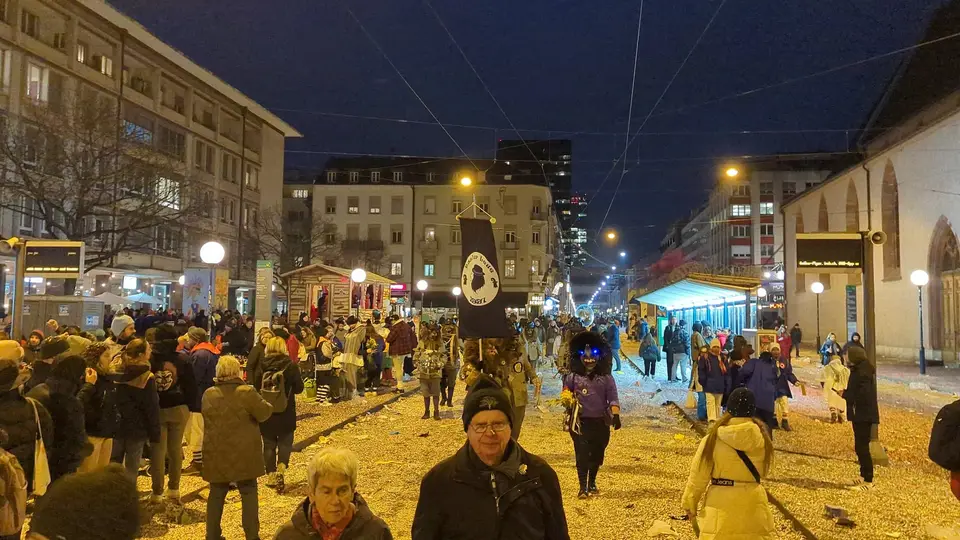
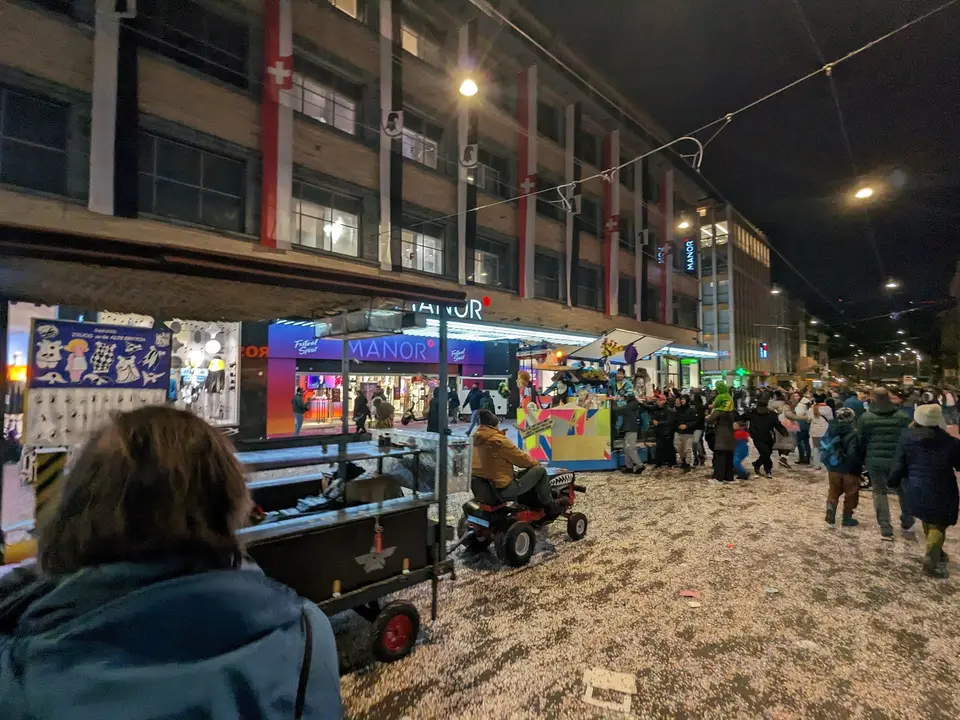
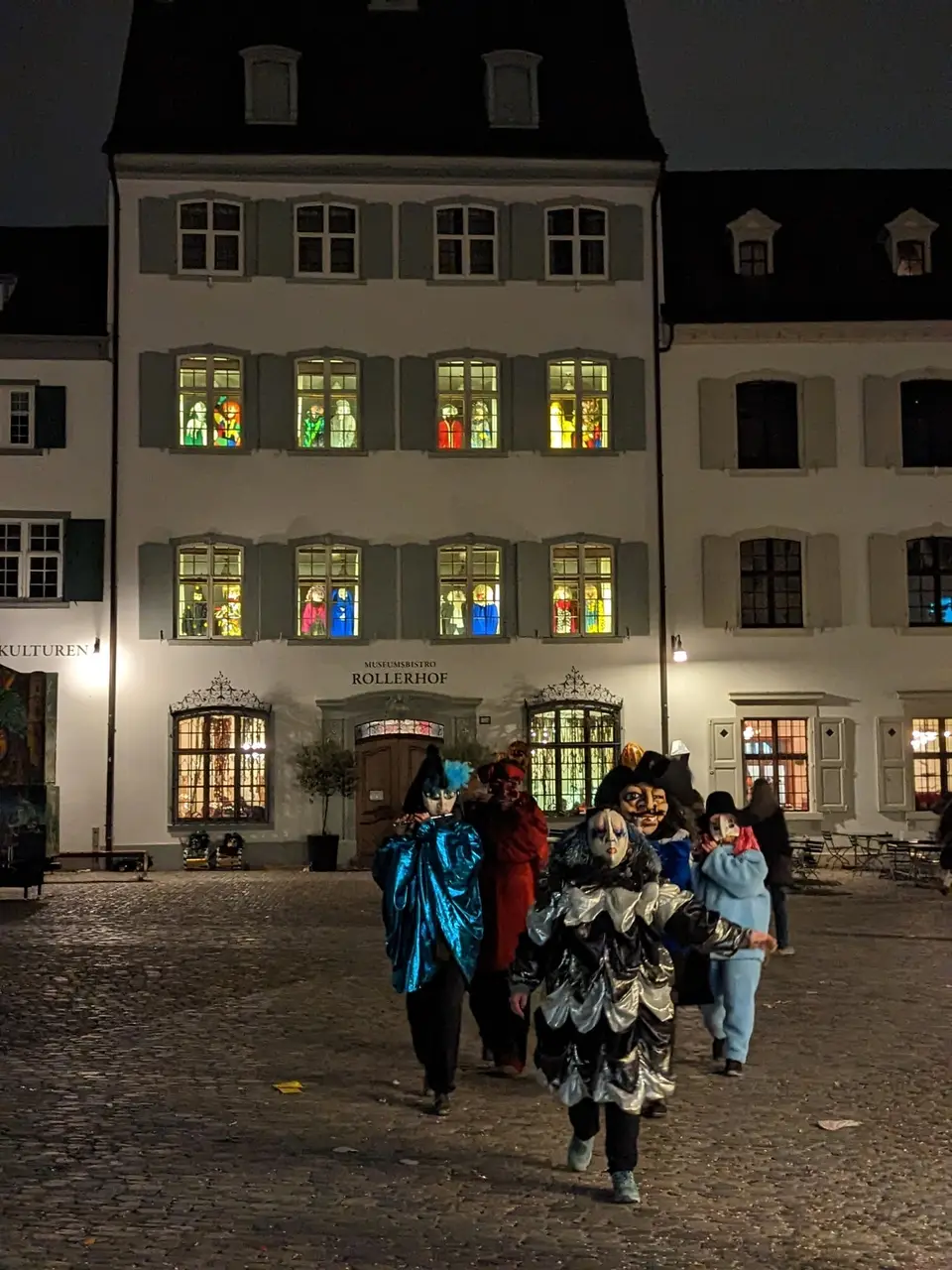
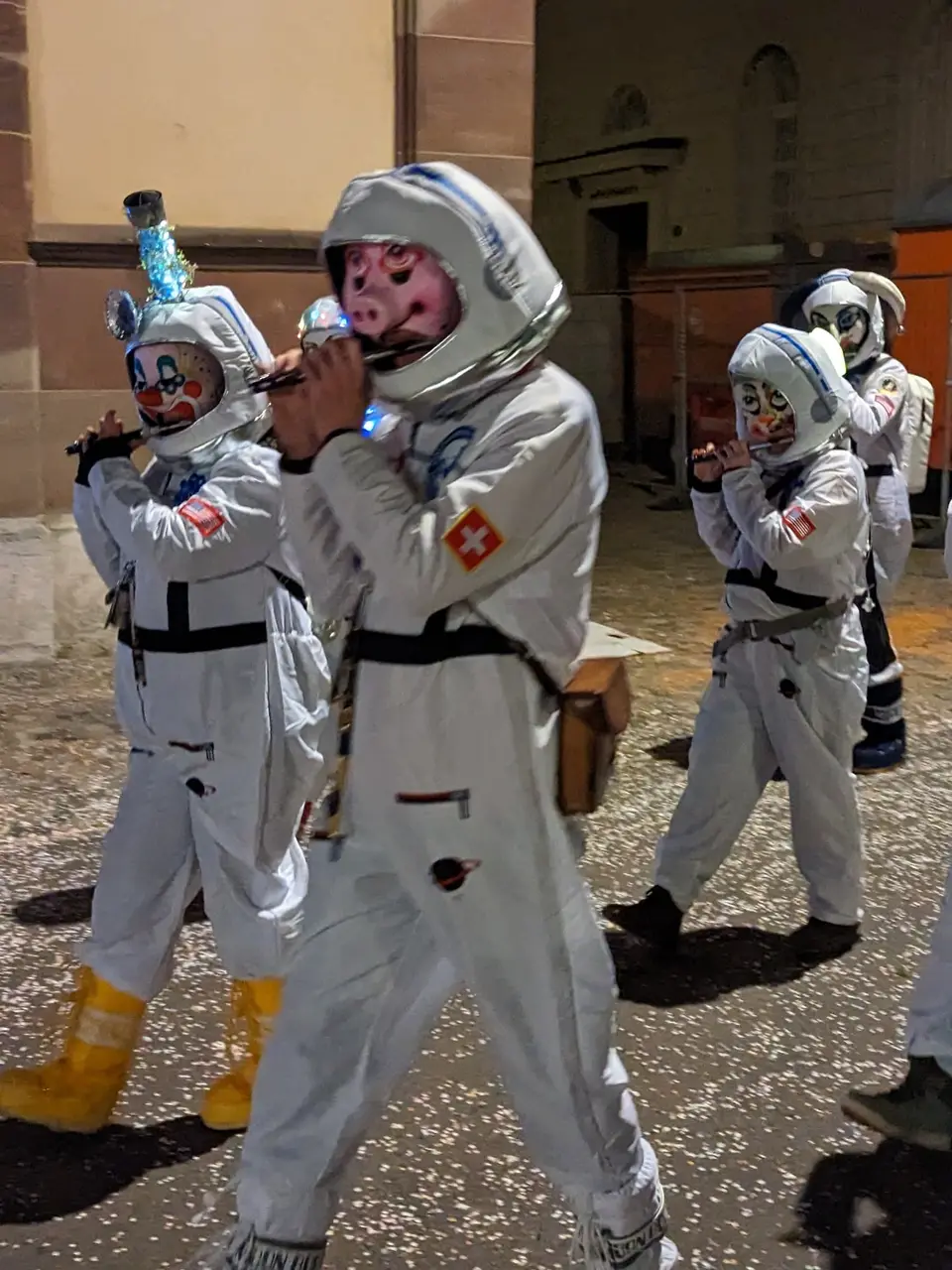
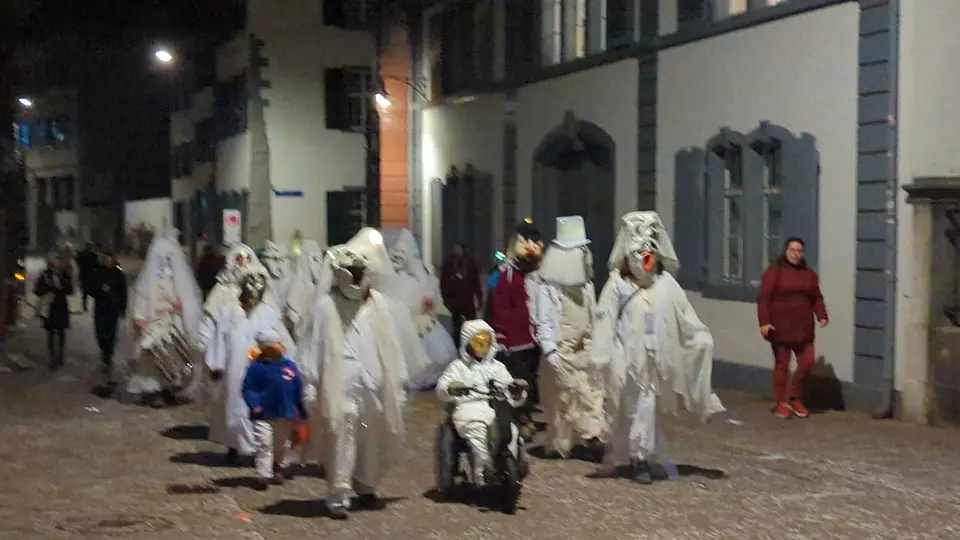
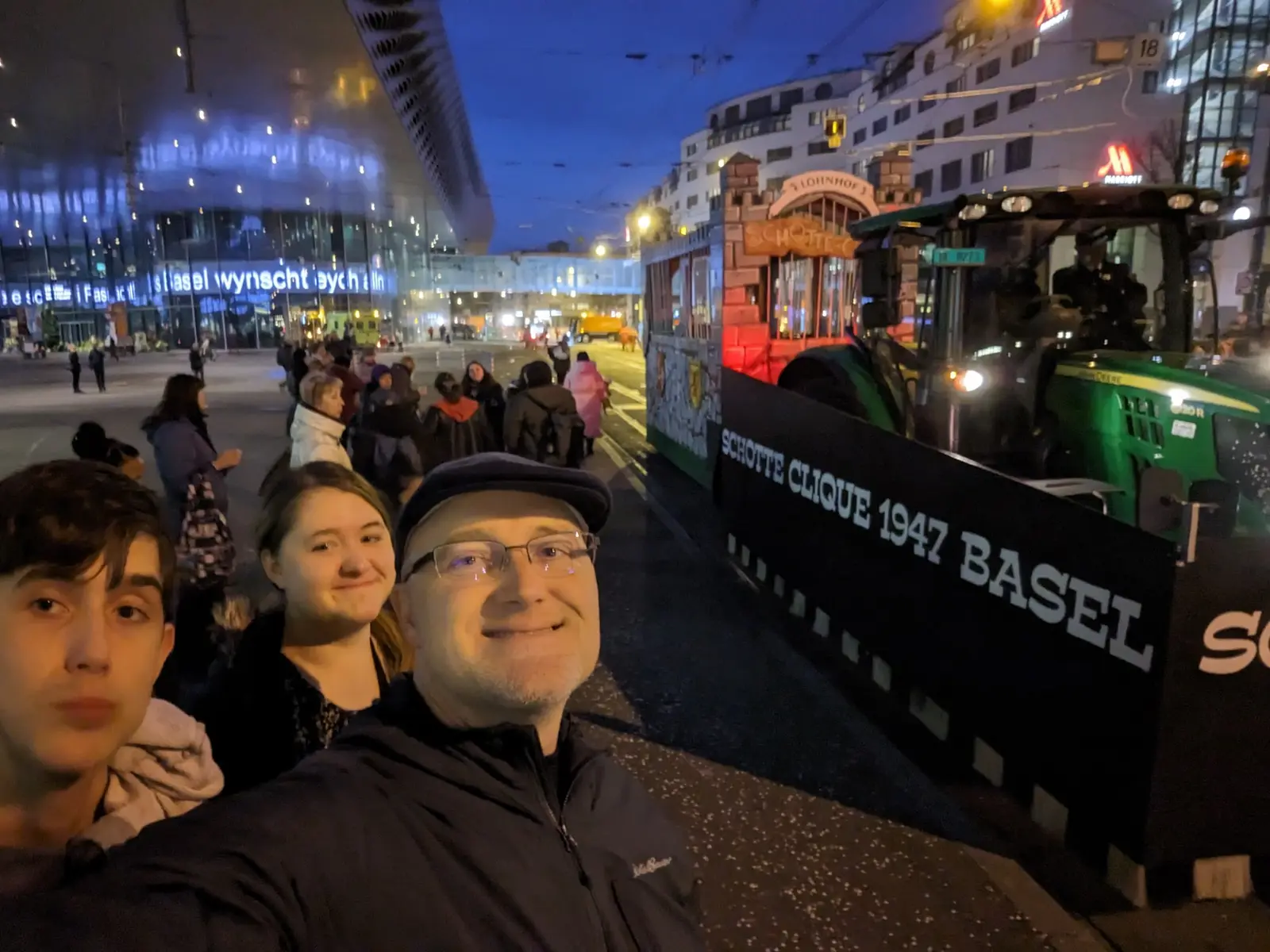
- Fasnacht, the week after Ash Wednesday. Three days of the entire city out on the street in masks, lanterns and pipe bands. There is nothing else like it in Switzerland and it costs nothing at all to stand in it.
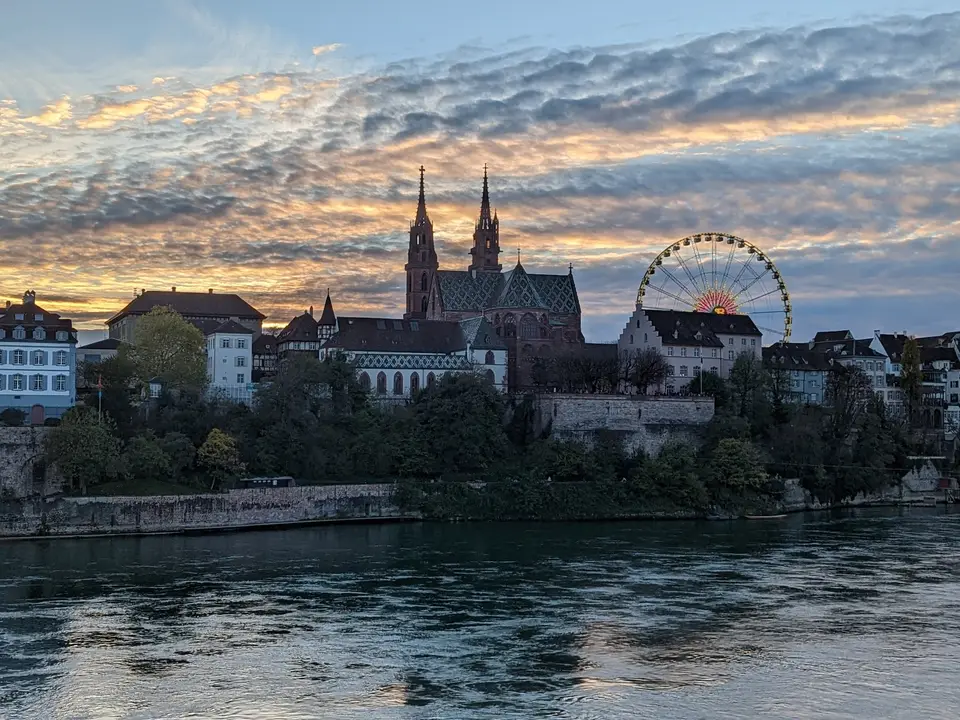
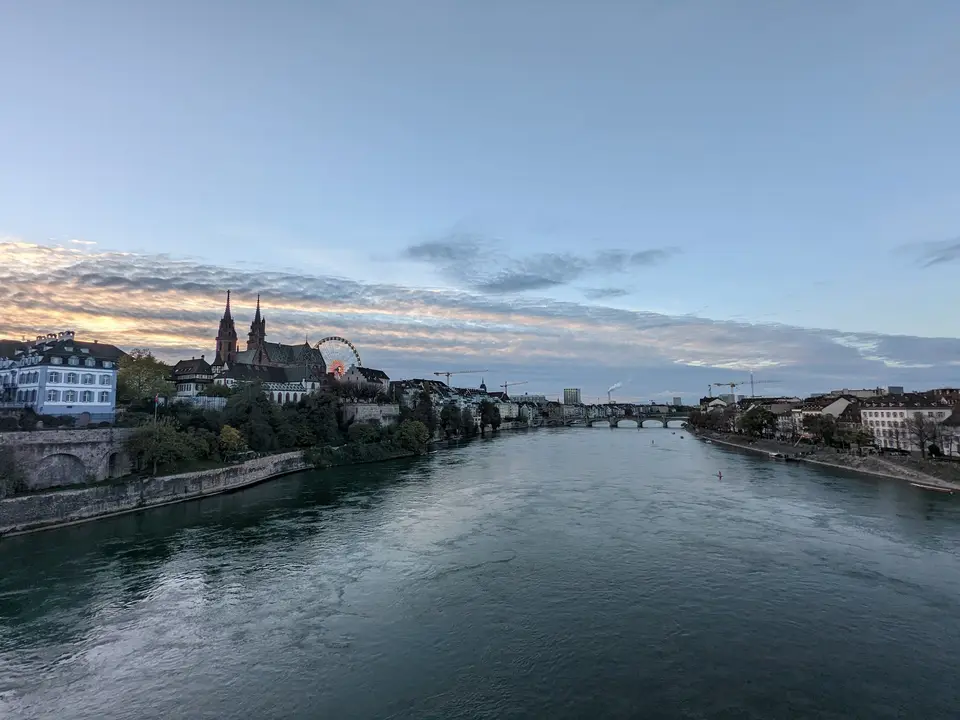
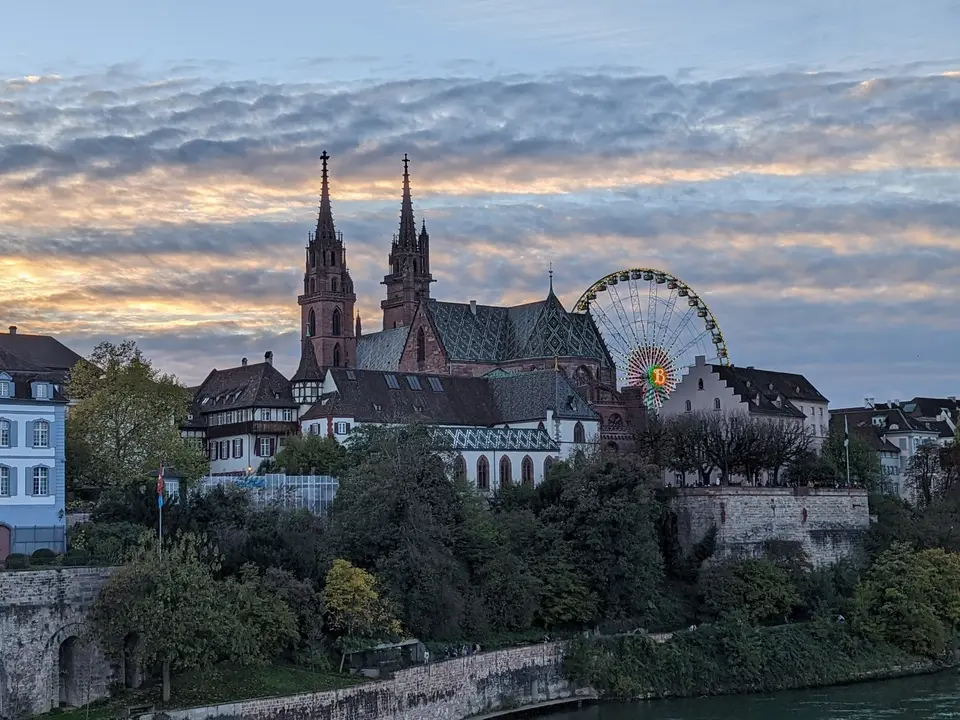
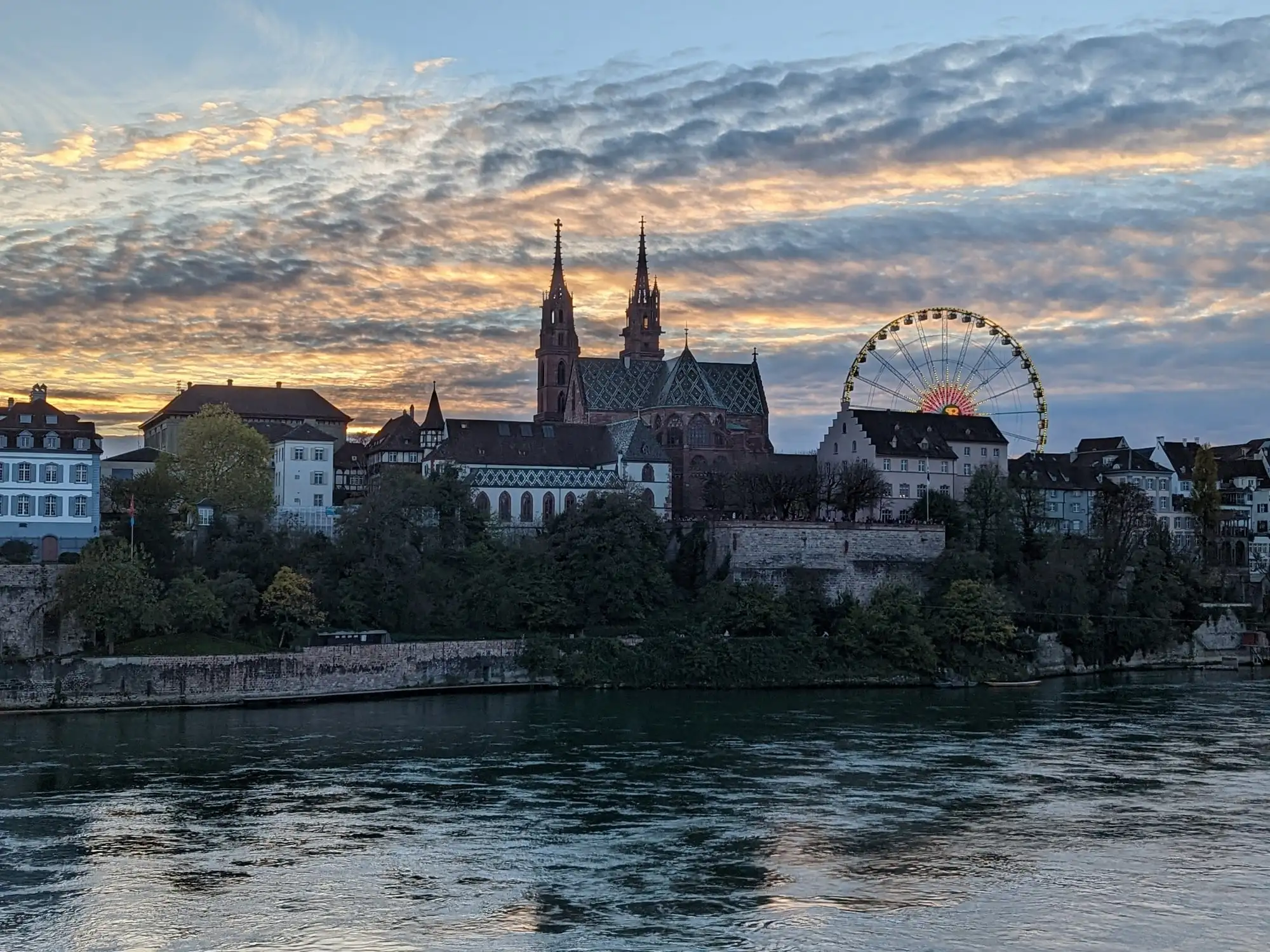
- The Herbstmesse, late October into early November. This is the oldest fair in Switzerland — it has run since 1471 — and for two weeks it takes over seven squares of the city at once. It opens at midday on the Saturday before 30 October, when the fair bell is rung in the tower of the Martinskirche, and a ferris wheel goes up on Münsterplatz. In 2026 that is 24 October to 8 November. The photograph on this page of the Münster at sunset with a ferris wheel beside it is exactly that, from across the Rhine.
- Go to the Herbstmesse for the food as much as the rides. Mässmogge are thumb-sized sugar cones filled with hazelnut praline and you will not meet them anywhere else. Magenbrot is a soft glazed spice cake — cloves, cinnamon, star anise — and it is worth eating warm from the stall, which is the only place it is any good. Roasted chestnuts out of a paper cone once it goes dark.
- The ambience is the reason to plan around it rather than stumble into it: fairground rides and stalls packed into medieval squares, everything lit, the cathedral standing over the top of it, and the whole city out. Walking through it costs nothing.
- Summer, for the river. The Rhine swim alone is worth planning a day around.
What Basel is really for
- It is a base, not a stop. This is the argument for Basel that nobody makes, and it holds in every season: almost nothing worth seeing in this corner of Europe is more than an hour and a bit away, and you sleep in the same bed all week.
- Colmar is about forty minutes on the fast trains and there are more than thirty a day. Strasbourg is an hour and a quarter. Zurich is about seventy minutes with a departure every twenty. Lucerne is about eighty minutes, with trains all day.
- That is Switzerland, France and Germany reachable before lunch from one hotel room — which is also why the BaselCard and the EuroAirport arrival at the top of this page matter more here than they would anywhere else.
- It is the reason we will put a family in Basel for four nights and not move them, when the obvious itinerary would have had them packing every second morning.