Before you go — the thing that catches people out
Pilatus stands at 2,132 meters directly above Lucerne, and there are two completely separate ways up it. They do not run at the same times of year, and almost every disappointed visitor we have met got that wrong rather than got the weather wrong.
- The cogwheel railway from Alpnachstad runs roughly May to November. In 2026 it is 11 May to 29 November. Outside that it does not run at all, because the track is under snow.
- The gondola and cableway from Kriens runs all year, apart from maintenance. In 2026 that is 30–31 March and — this is the one to note — 19 October to 27 November.
- The Golden Round Trip, which uses both, therefore has the shortest season of the three. In 2026 it runs 11 May to 18 October.
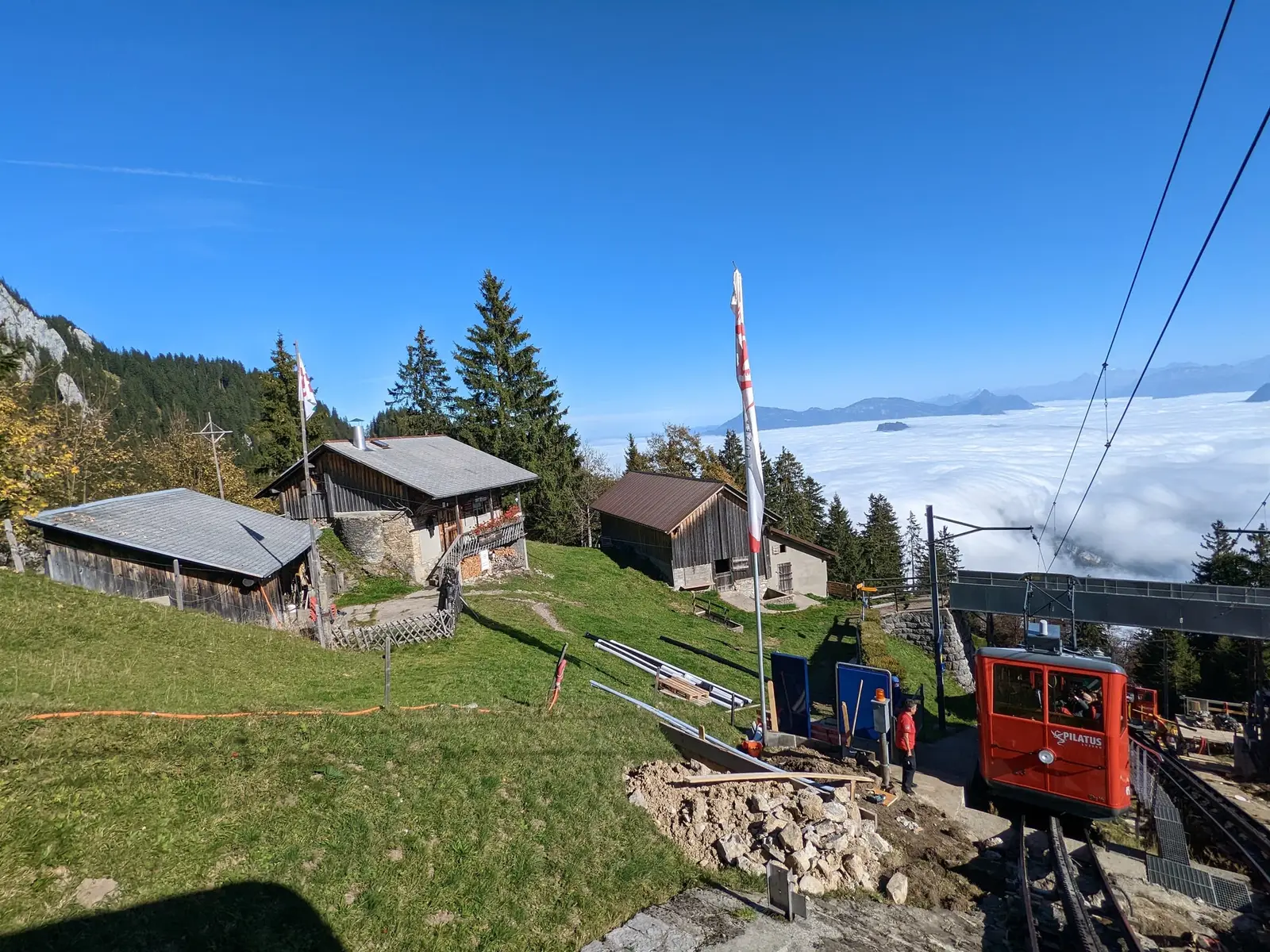
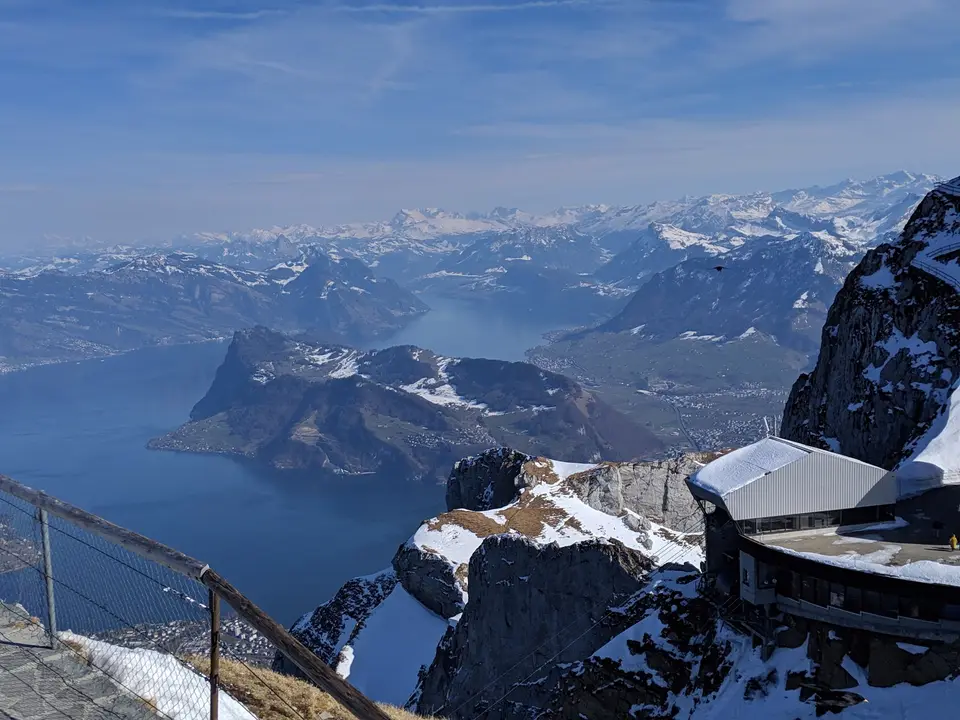
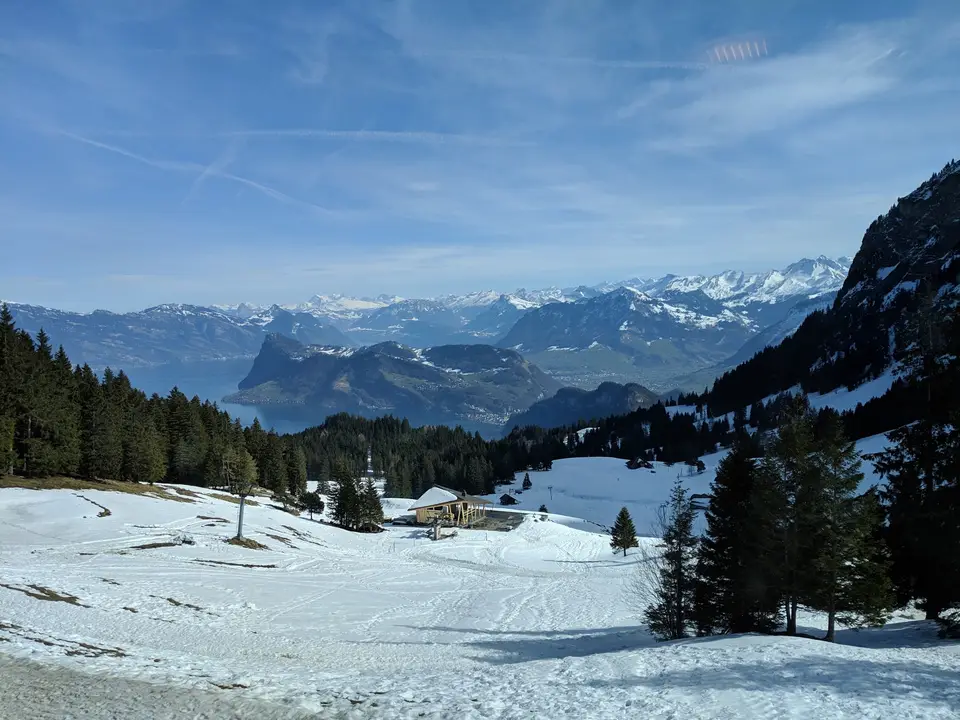
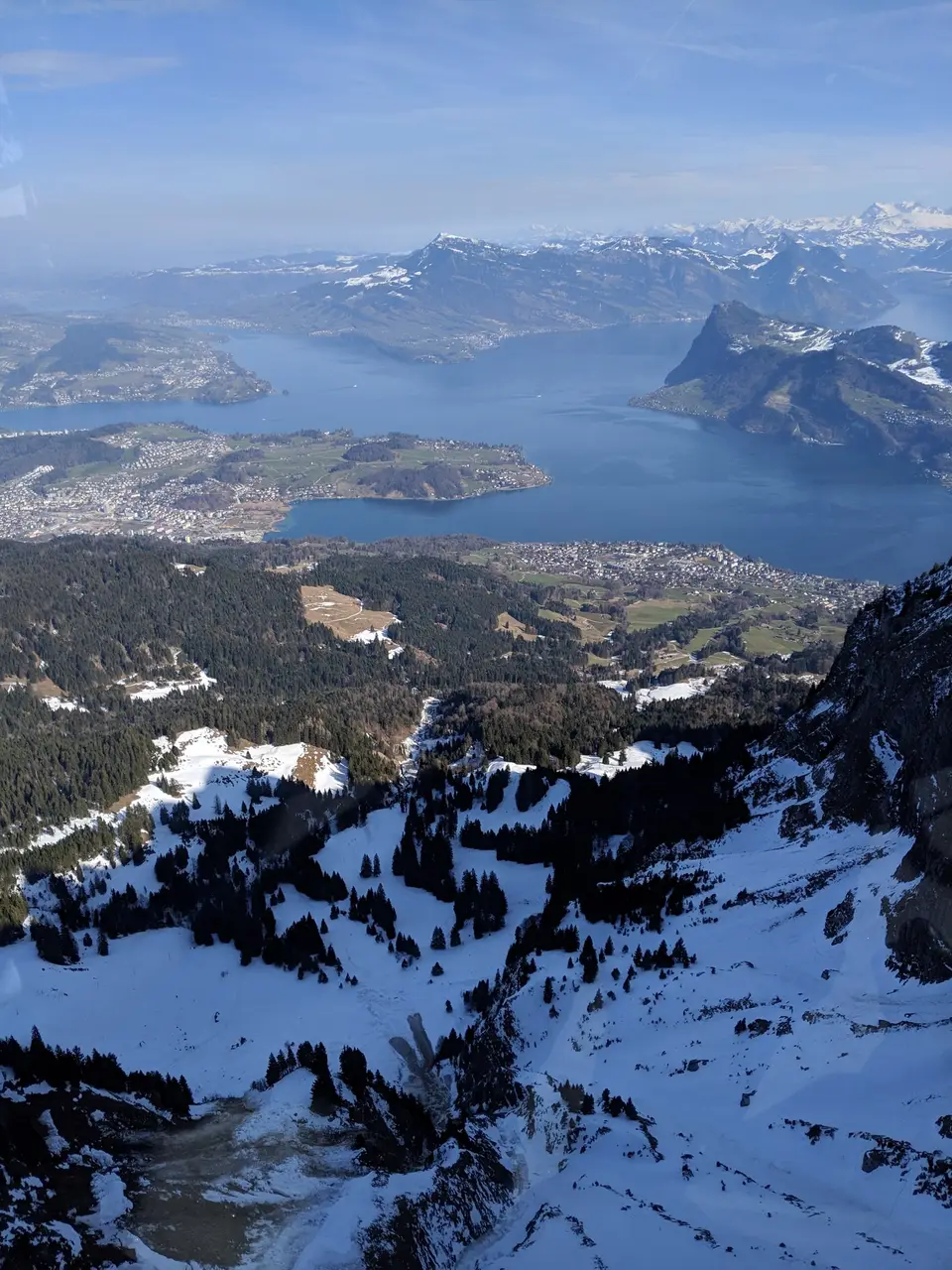
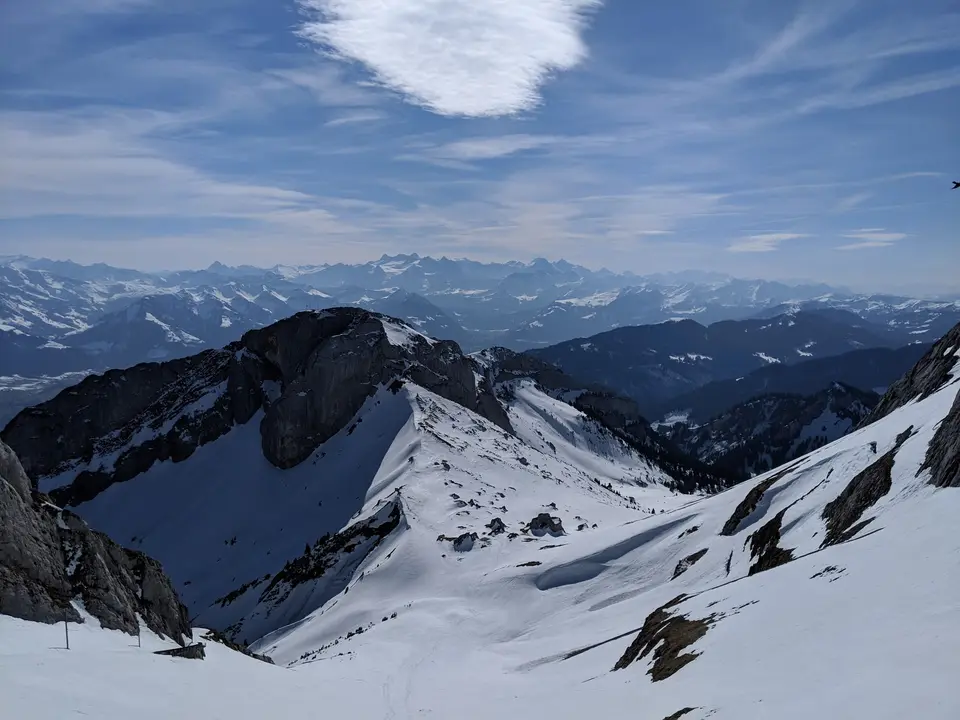
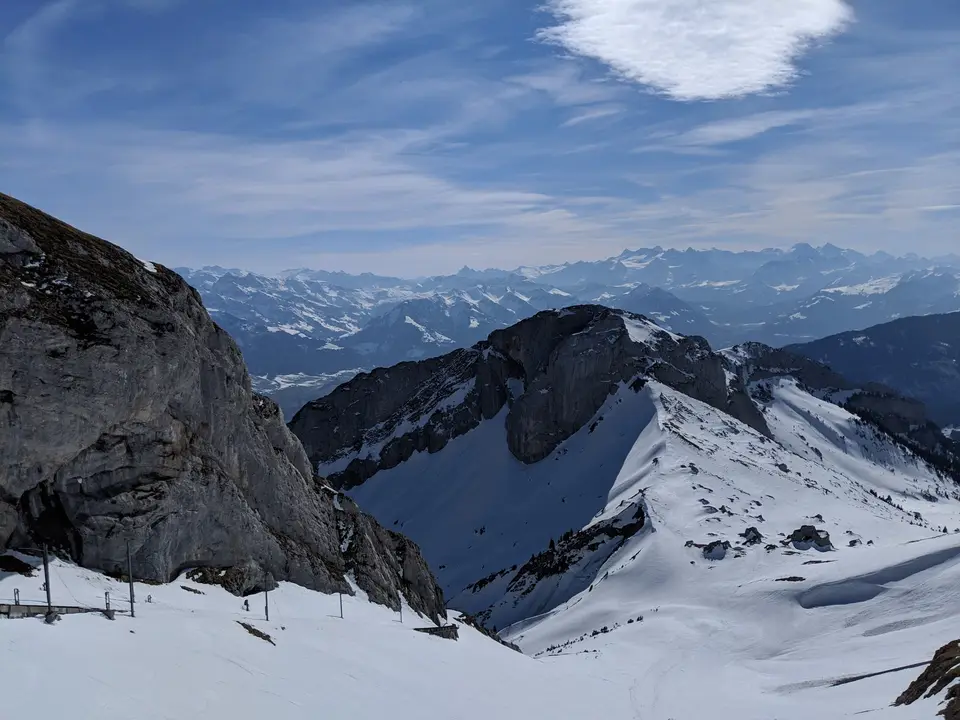
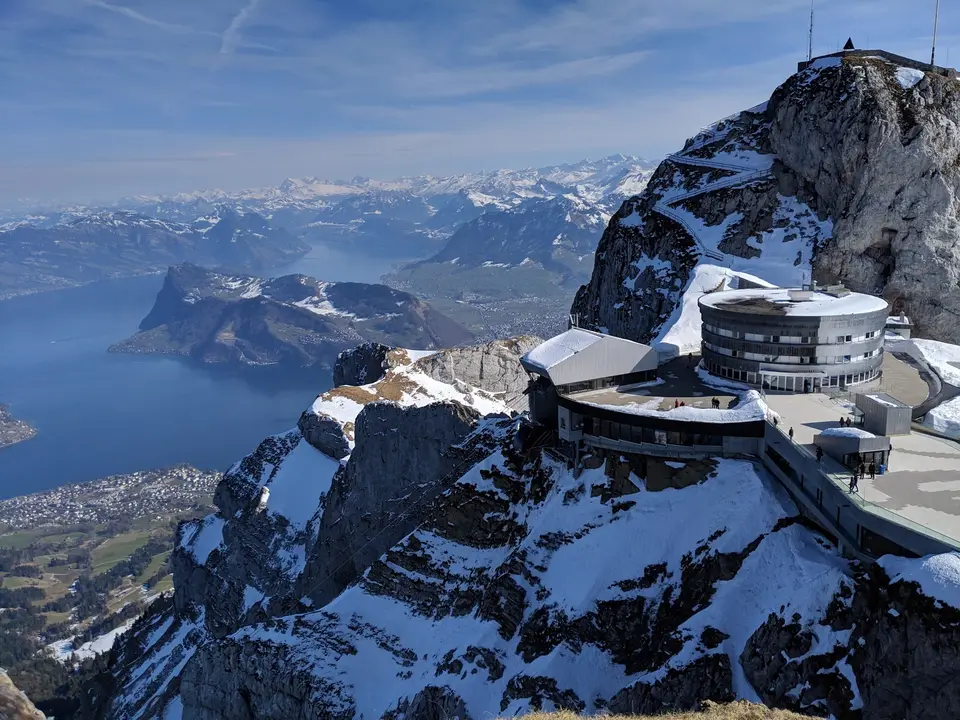
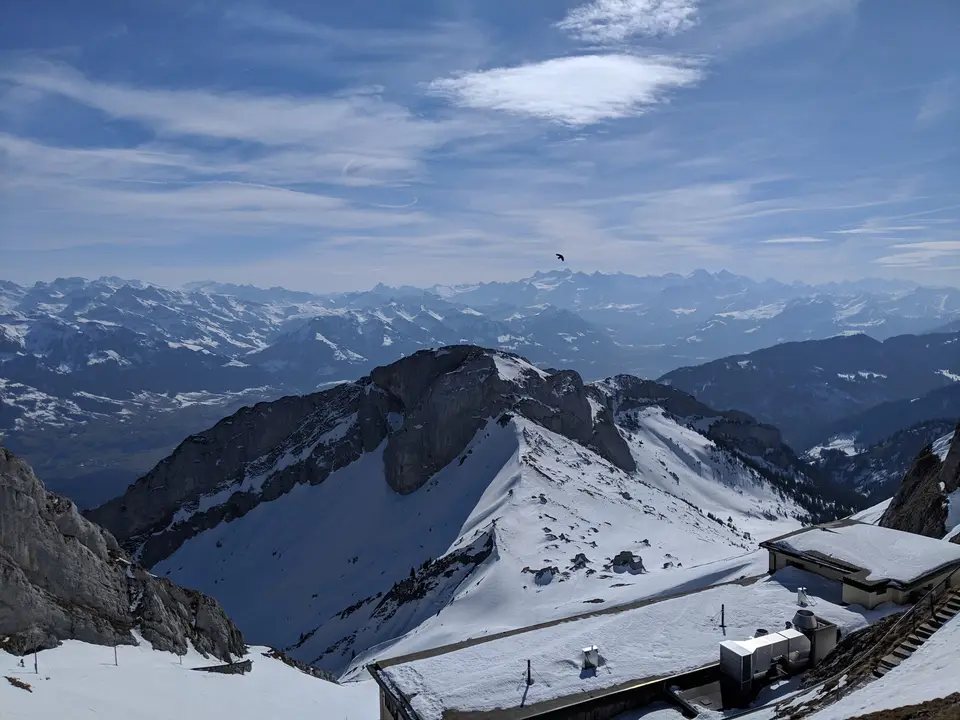
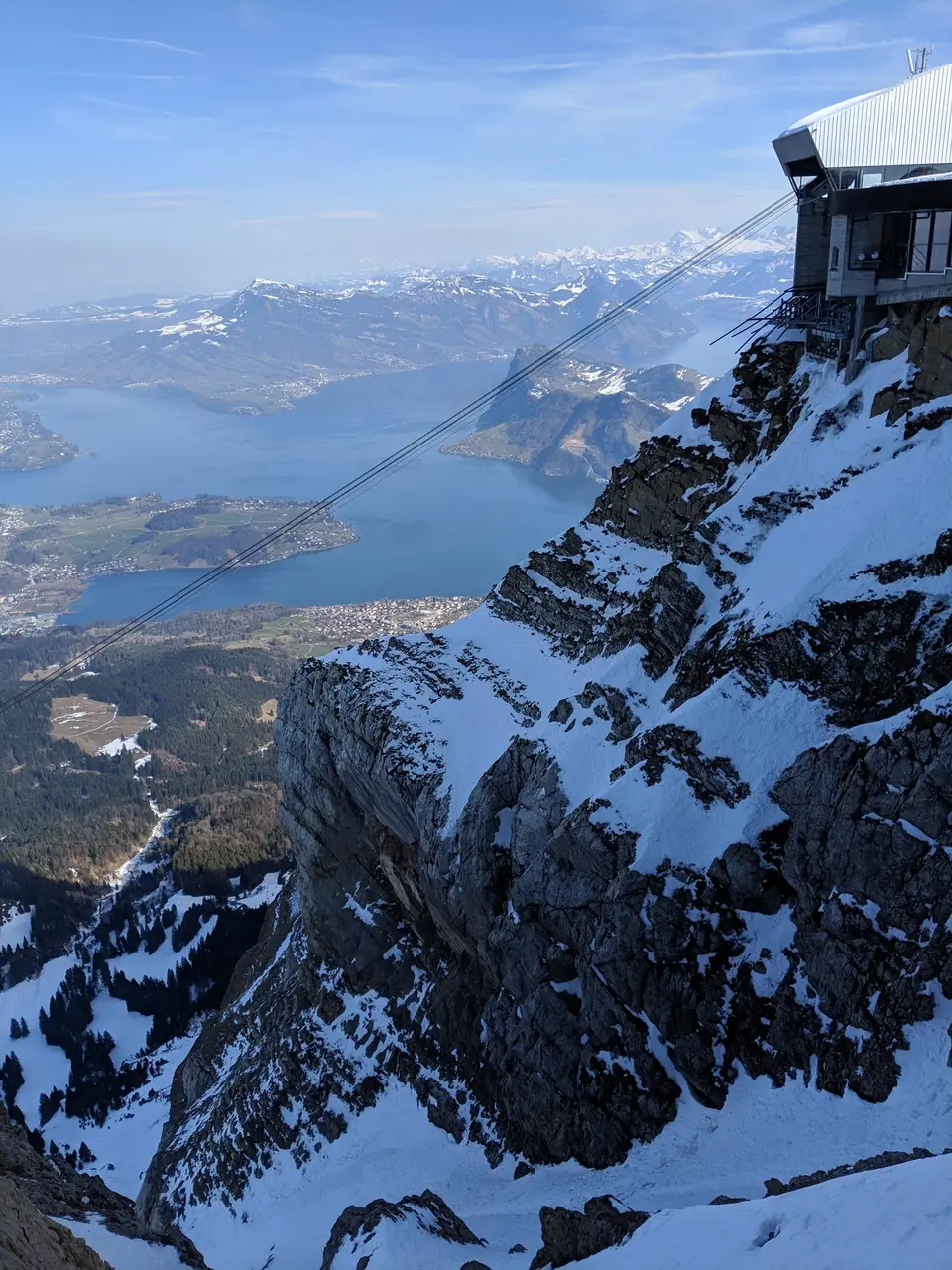
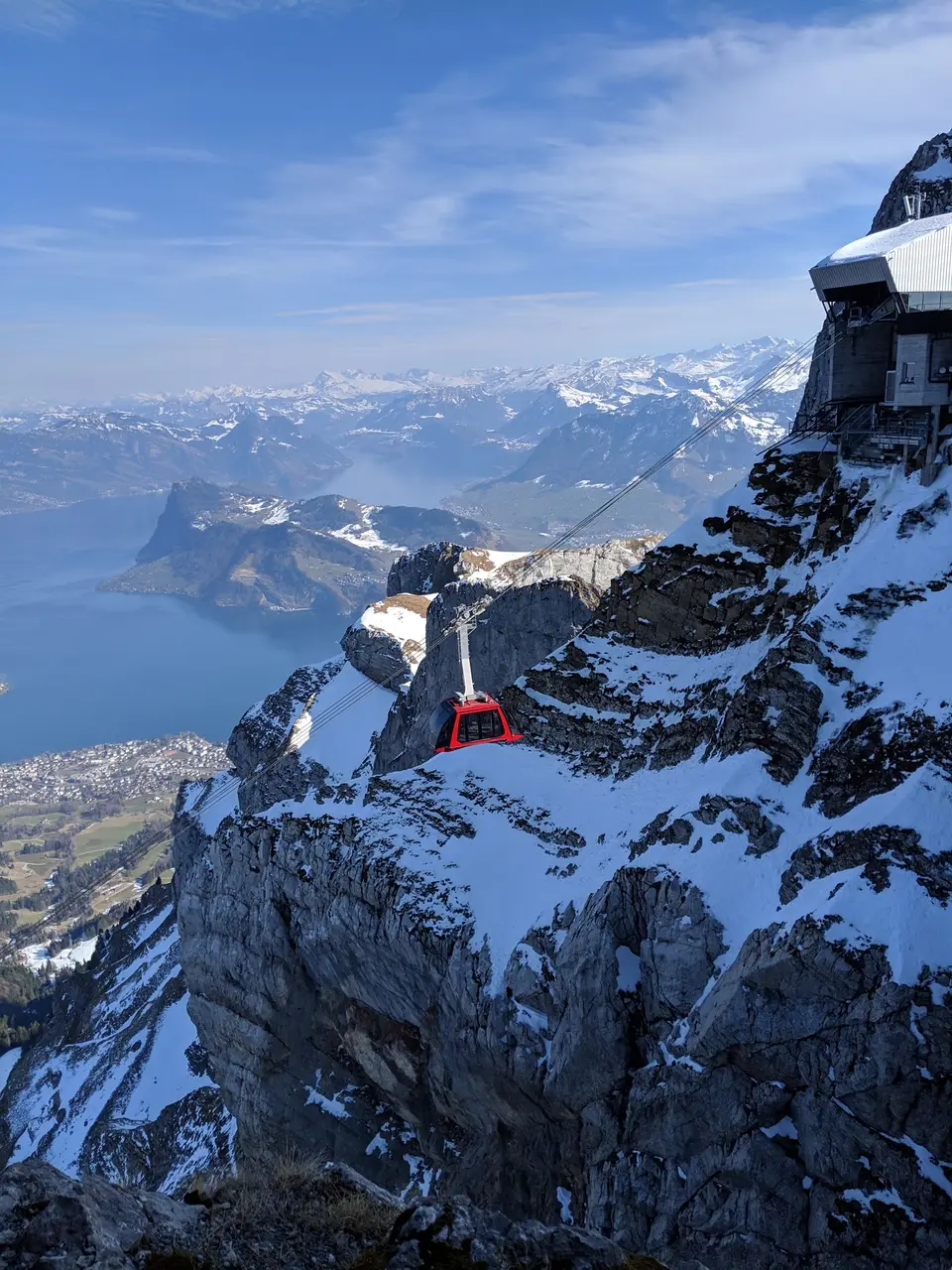
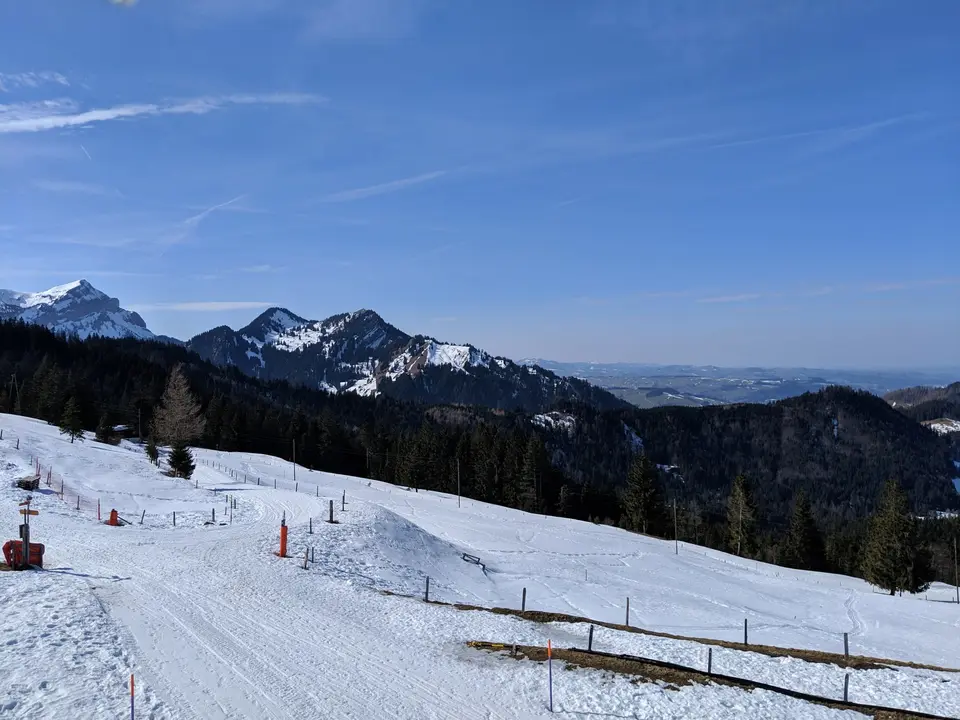
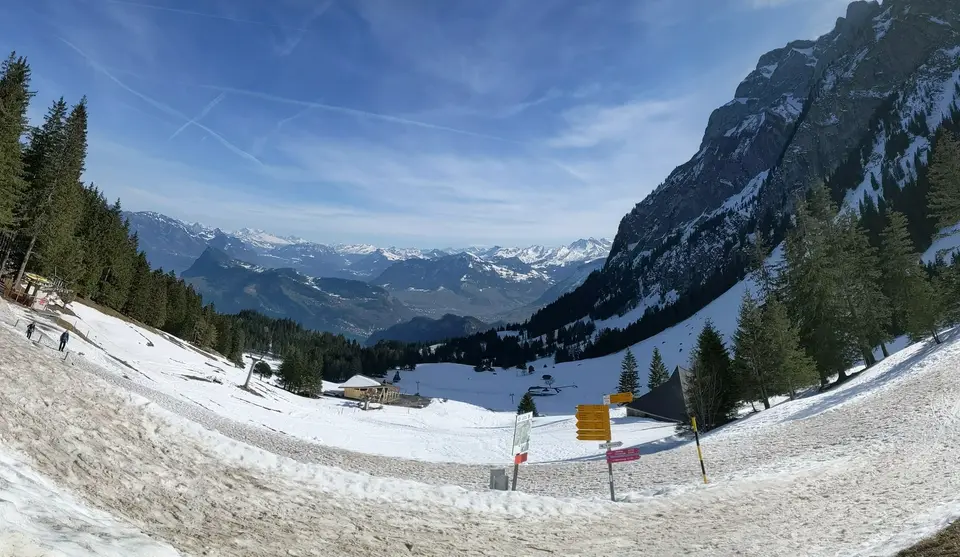
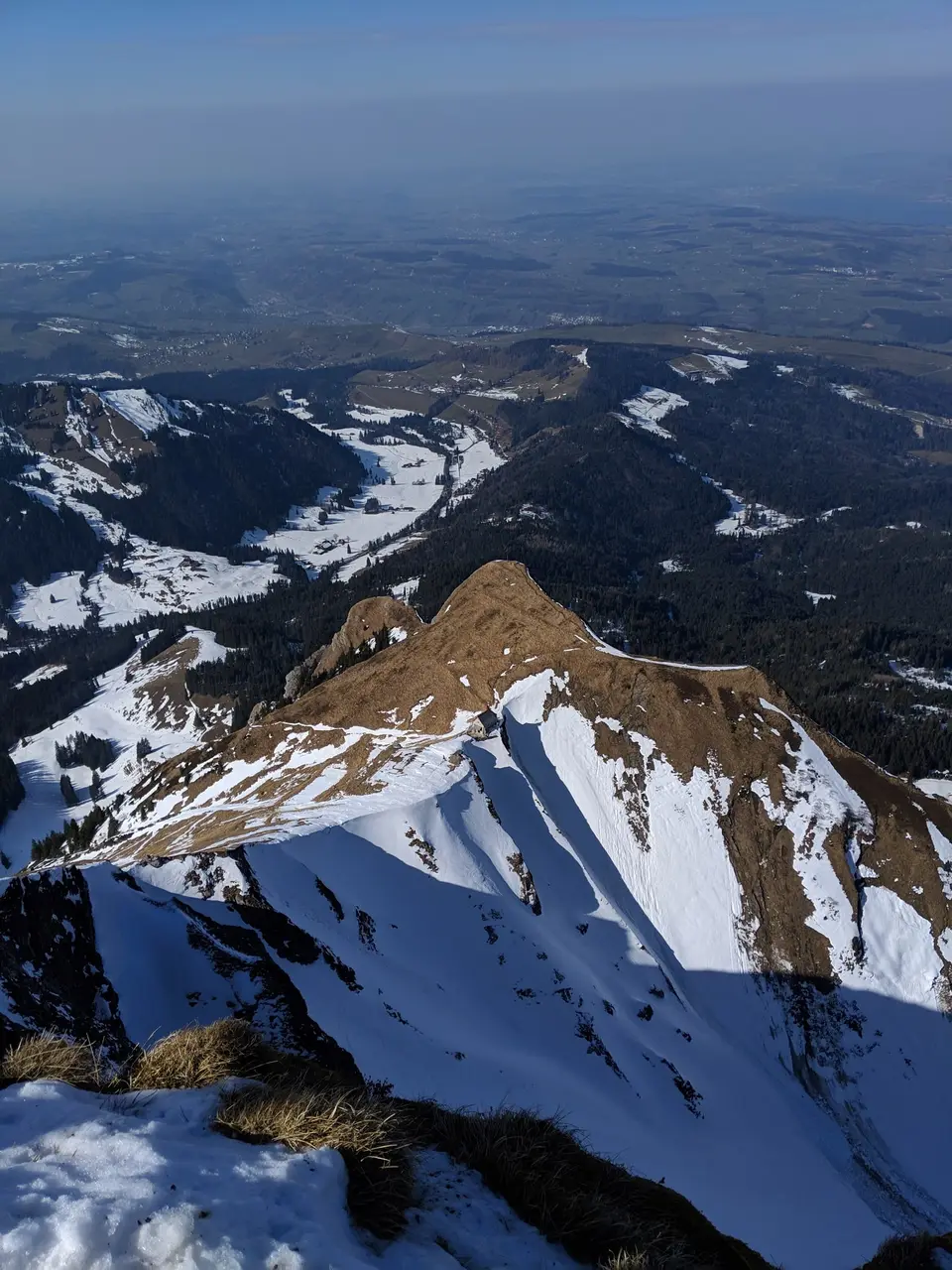
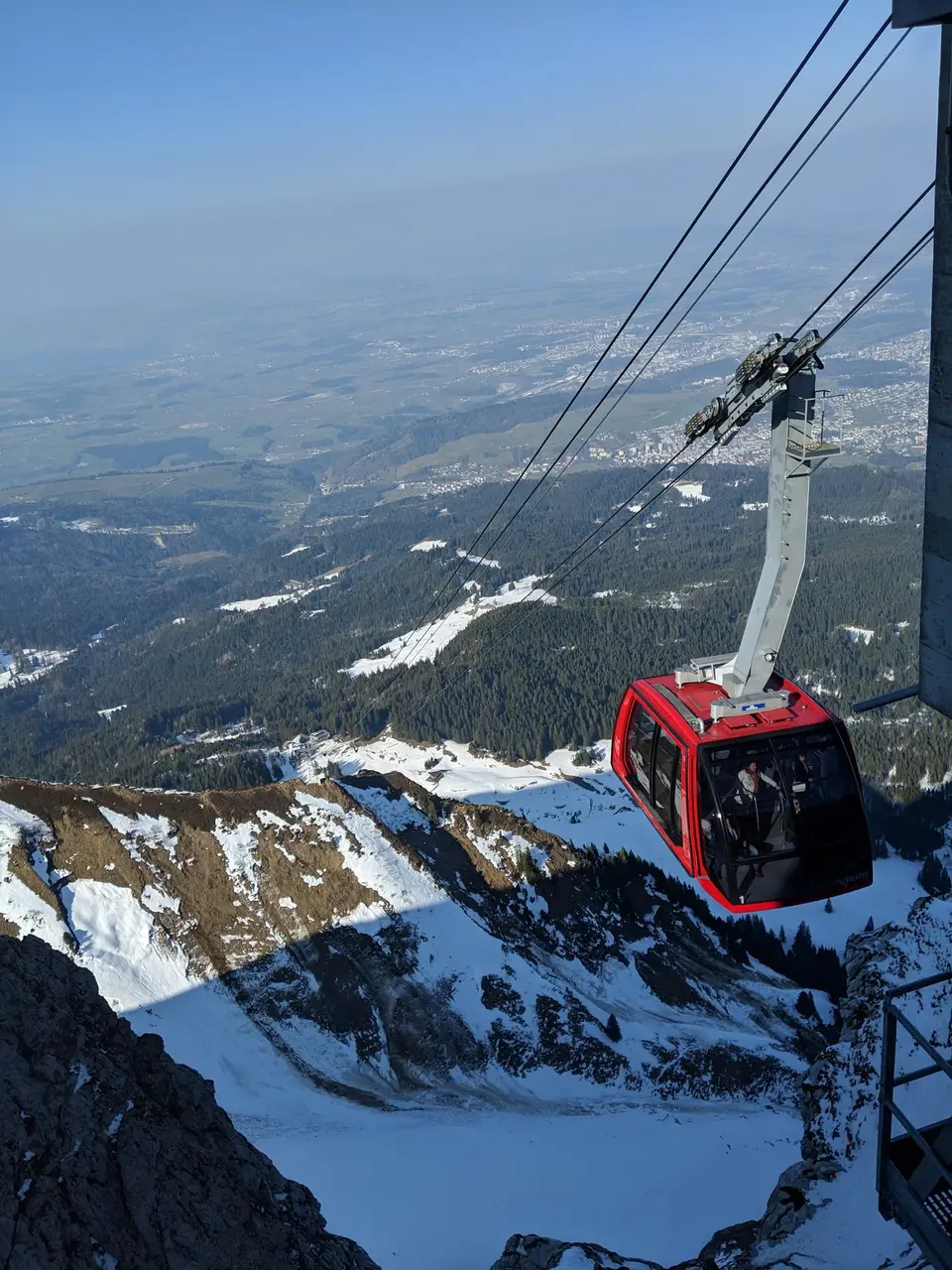
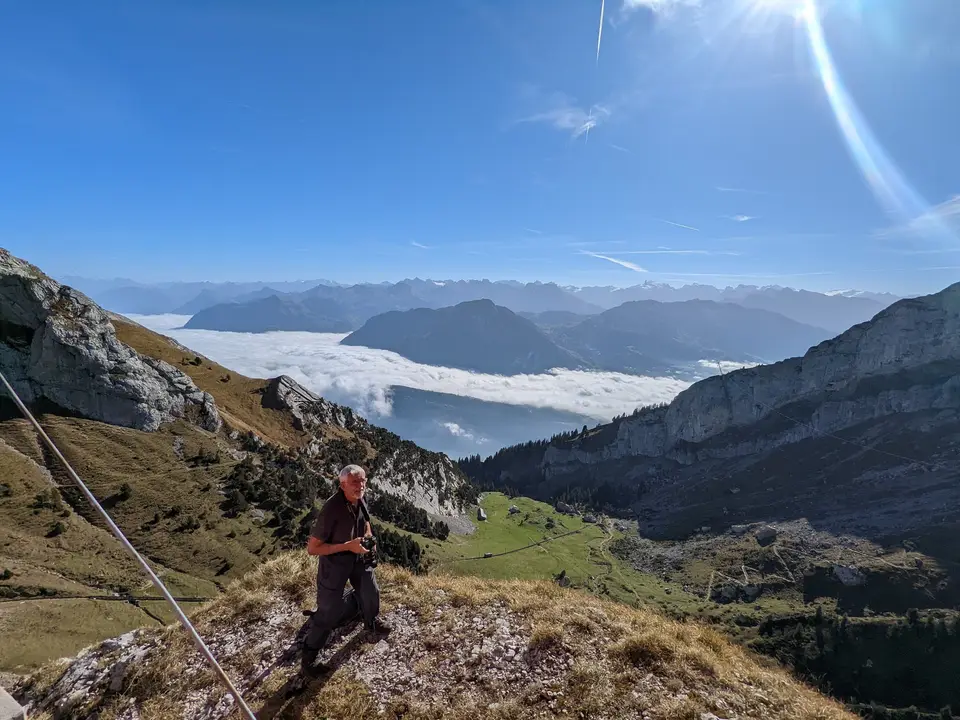
We have been up twice and, without planning it that way, did one of each: 28 February 2019 and 19 October 2022. The winter set on this page could only have been taken from the Kriens side. The railway photographs could only have been taken in autumn.
And note what 19 October is. In 2026 that exact date is the first day of the cableway’s autumn shutdown. The shoulder season here is real, it is narrow, and it moves year to year. Check the operator’s dates before you book anything else around this mountain.
Budget tips
- Cogwheel railway, Alpnachstad–Pilatus Kulm: CHF 84 return, CHF 42 one way. Children 6 to 16 and Half-Fare cardholders pay half — checked September 2026.
- A Swiss Half-Fare Card or GA halves it. A Swiss Travel Pass gets 50% on selected routes rather than free travel. Work out which card you are holding before you get in line.
- The Golden Round Trip is CHF 119.80 second class, CHF 136.80 first — boat from Lucerne, railway up, cableway and gondola down, bus back. Half price for children and Half-Fare holders.
- The Golden Round Trip is genuinely good value if you want all four legs. If you only want the mountain, you are paying for a boat ride and a bus ride as well.
Up — the railway, and why it is famous
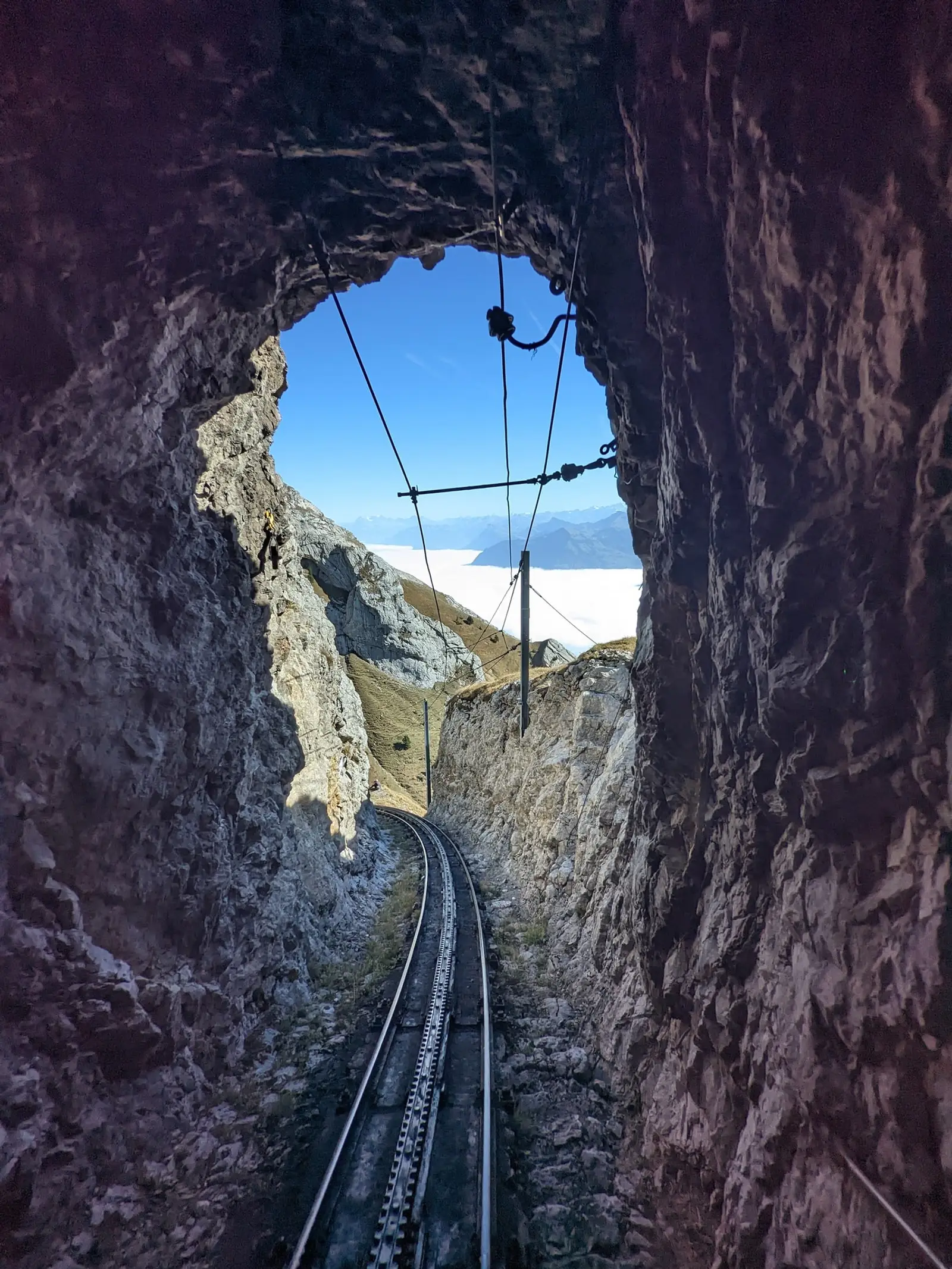
- The Pilatus Railway opened in 1889 and is still the steepest cogwheel railway in the world: 48 percent at its steepest, which is a gradient of about 26 degrees and looks considerably worse than that from inside.
- The reason it works is one piece of engineering. Eduard Locher used two cogwheels turning horizontally, gripping a rack from both sides, rather than the usual vertical wheel that would have climbed out of its teeth on this slope. He showed it at the Paris World Exhibition in 1889, the same year the Eiffel Tower went up there.
- It ran on steam until 1937. Thirty minutes from Alpnachstad to the summit.
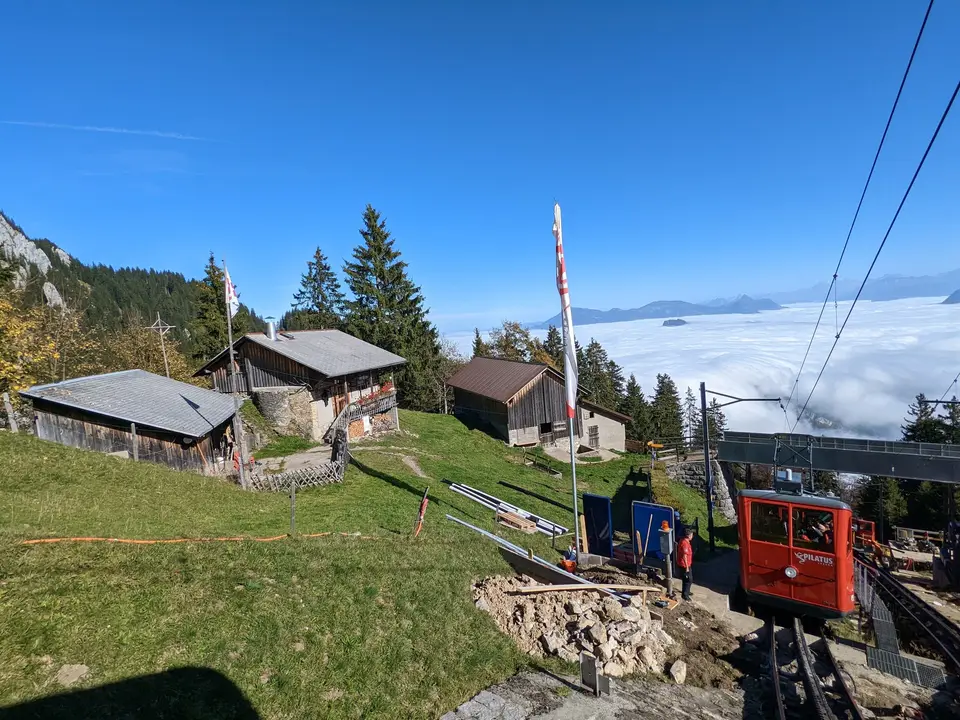
- Sit on the right going up. The line swings out over the Alpnach basin and Lake Lucerne opens up underneath you, and the photograph on this page of the red railcar passing a hay hut is that stretch.
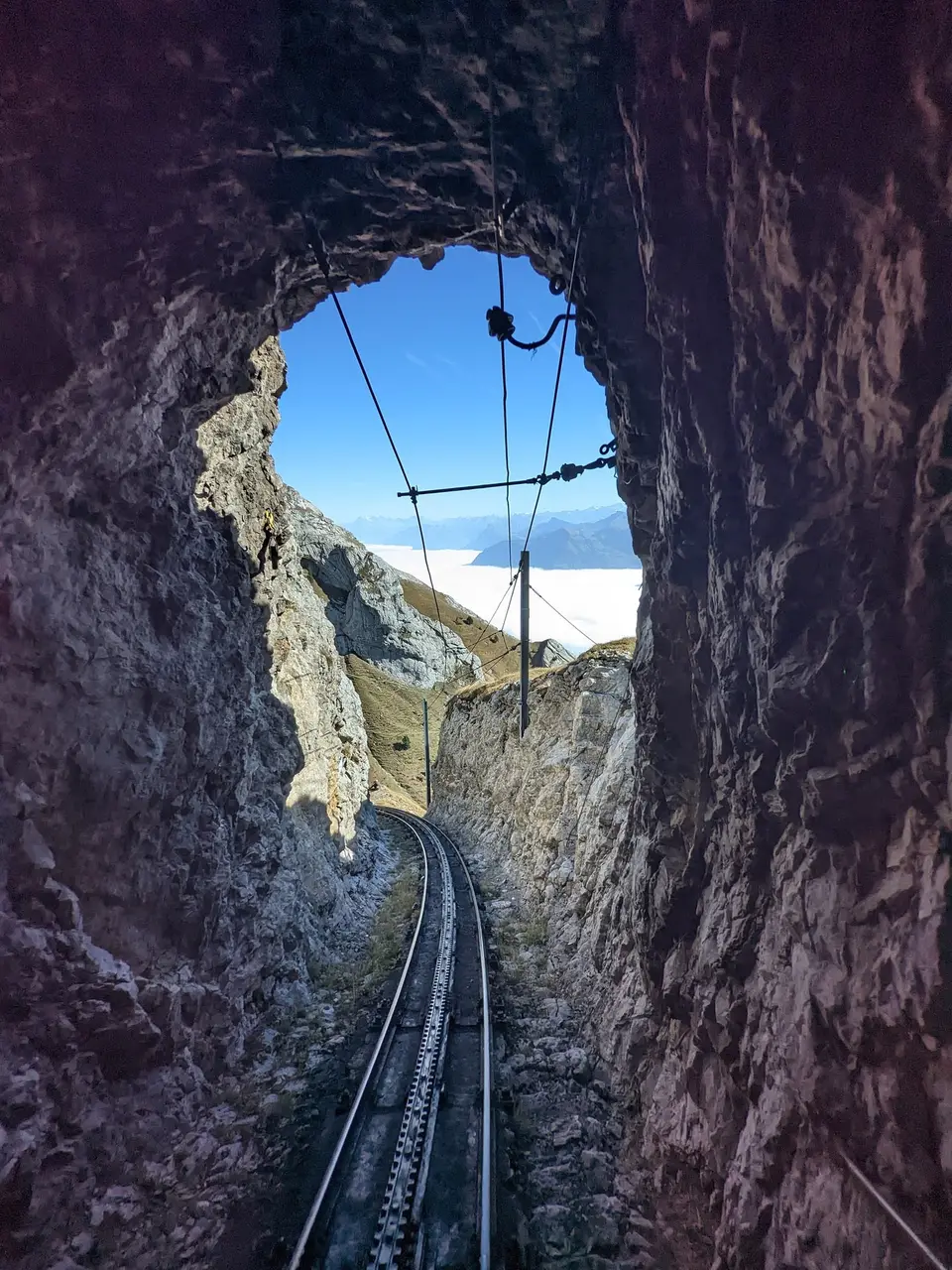
- Then it goes into the mountain. The tunnel shot here — rack track climbing into the dark with the rock a hand’s width from the window — is the part nobody has told you about in advance.
Up — the other way, which is the winter way
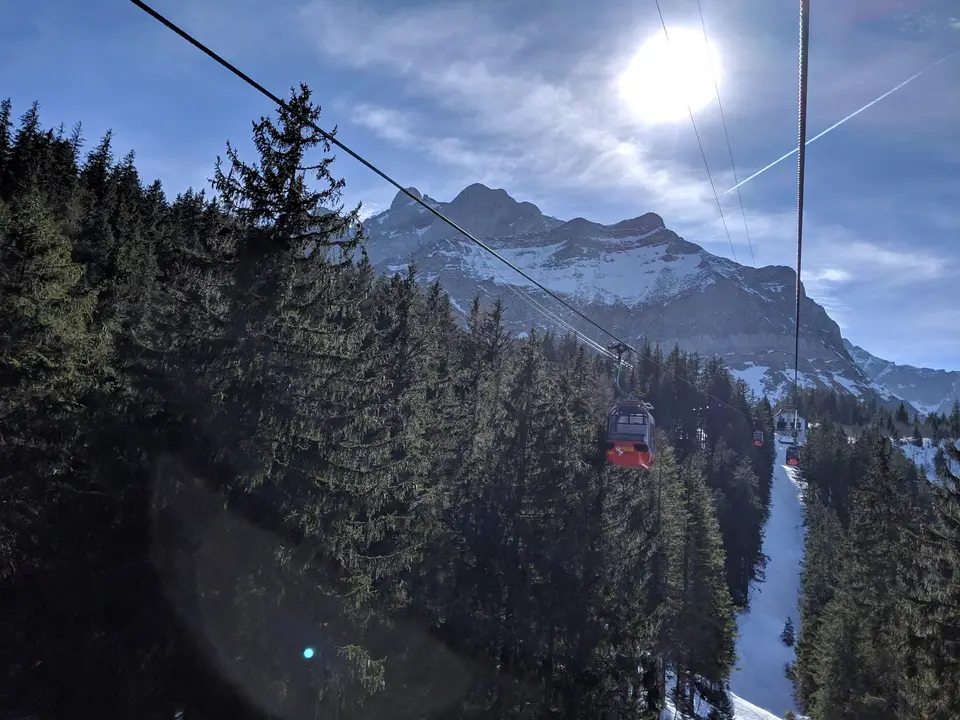
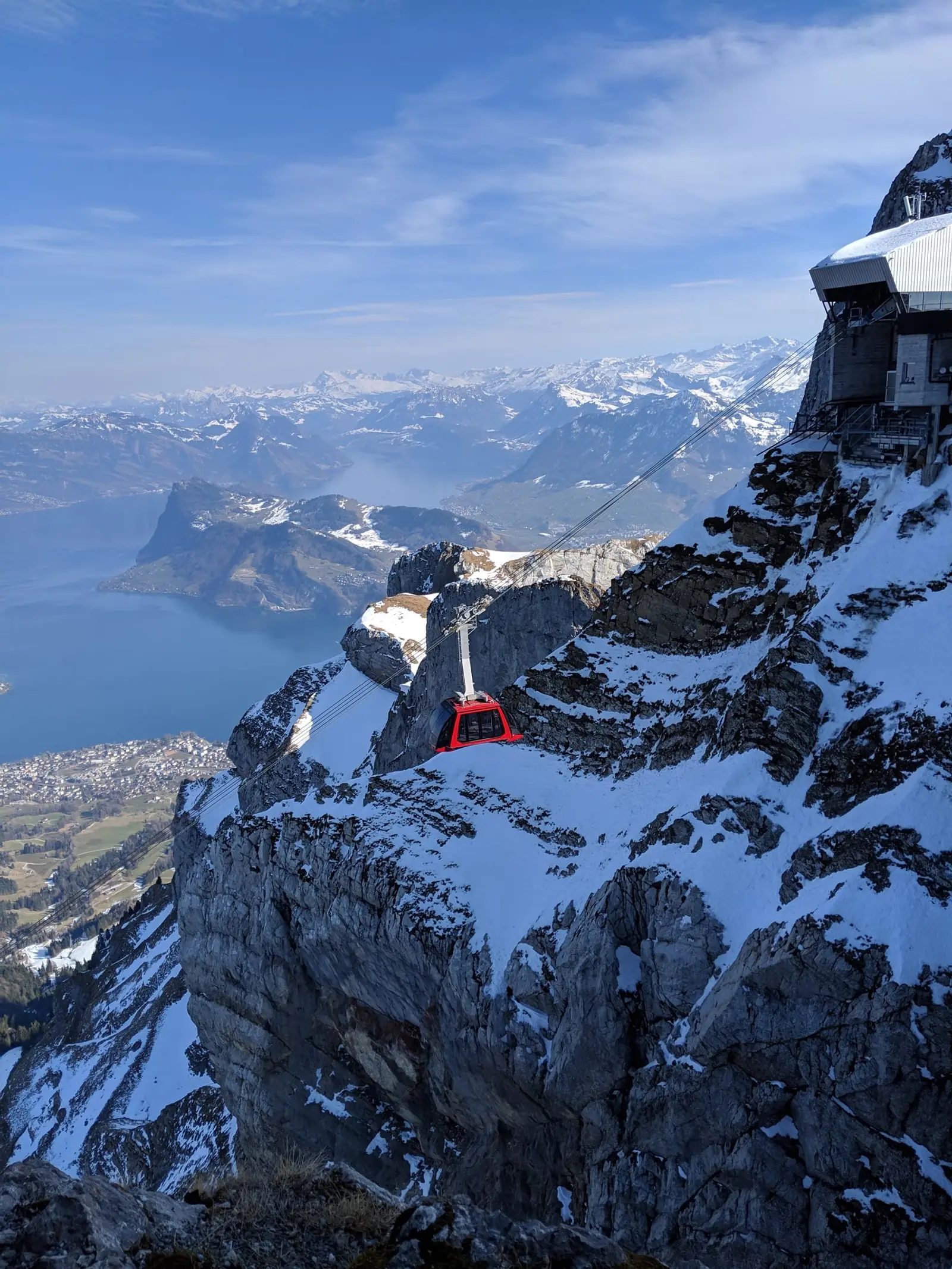
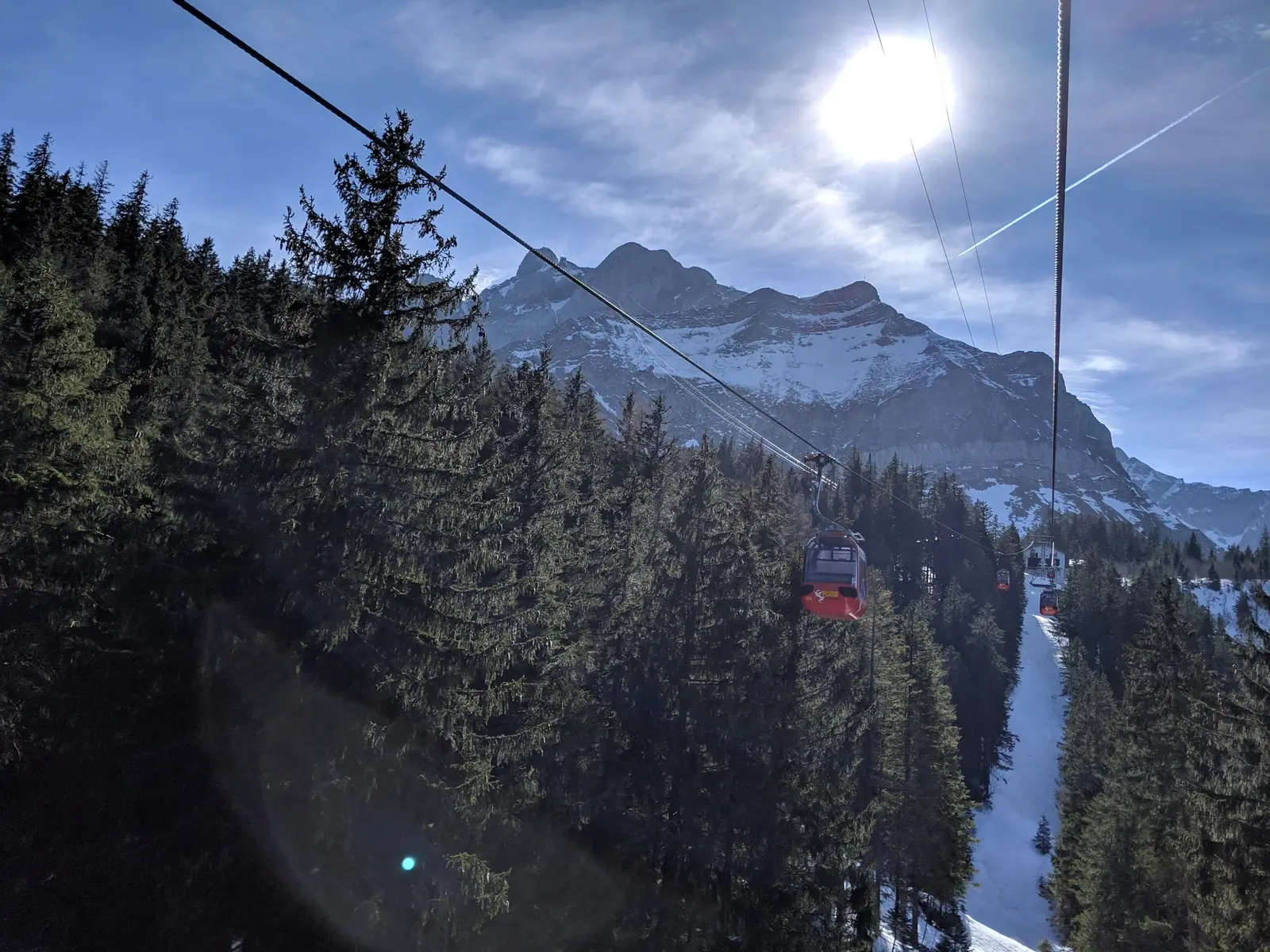
- From Kriens, on the edge of Lucerne, a panoramic gondola climbs in stages through Krienseregg to Fräkmüntegg, and there you change to the “Dragon Ride” aerial cableway for the last 3.5 minutes to the summit.
- The whole thing is about 45 minutes from Kriens, against 30 on the railway — but it runs when the railway does not, and in winter it is the only way to the top.
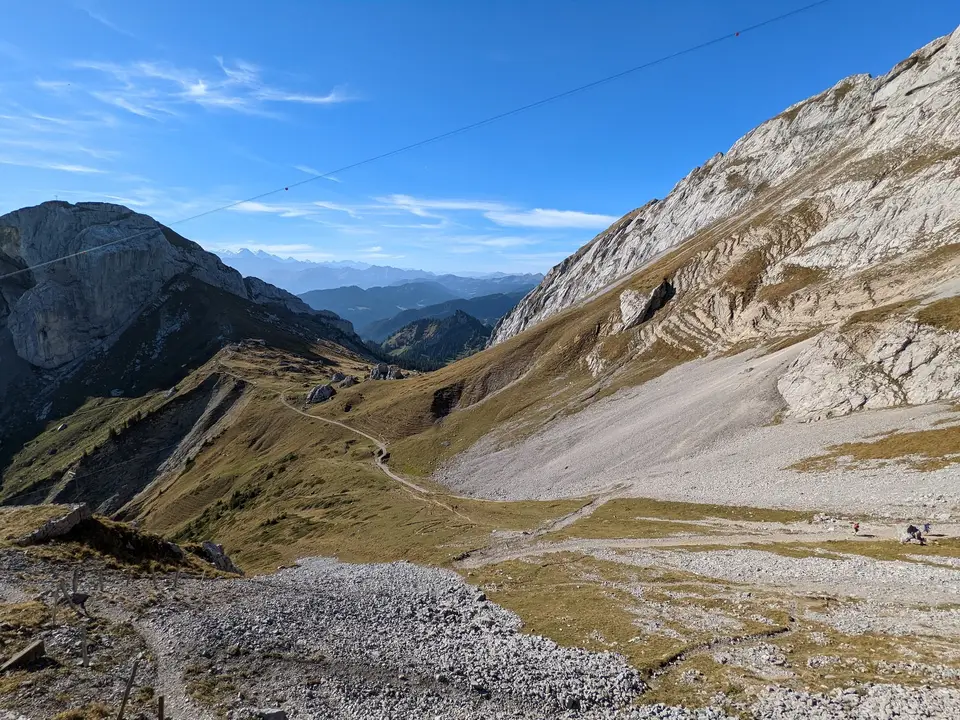
- It is also the better ride for the view down. The gondola crosses forest and open pasture the whole way, and you can see where you are going the entire time.
At the top
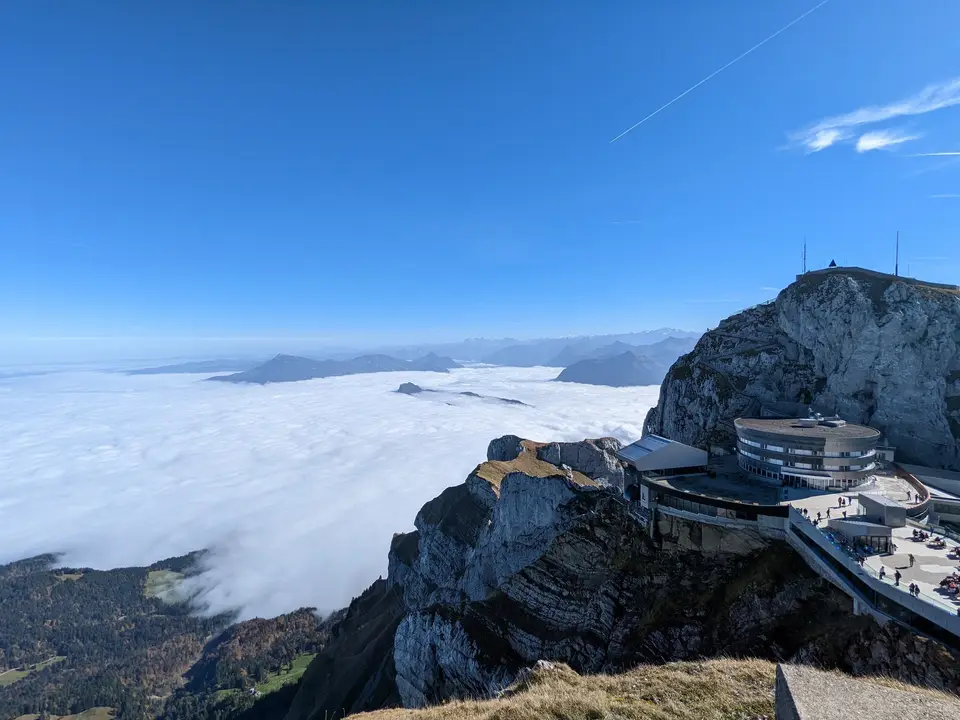
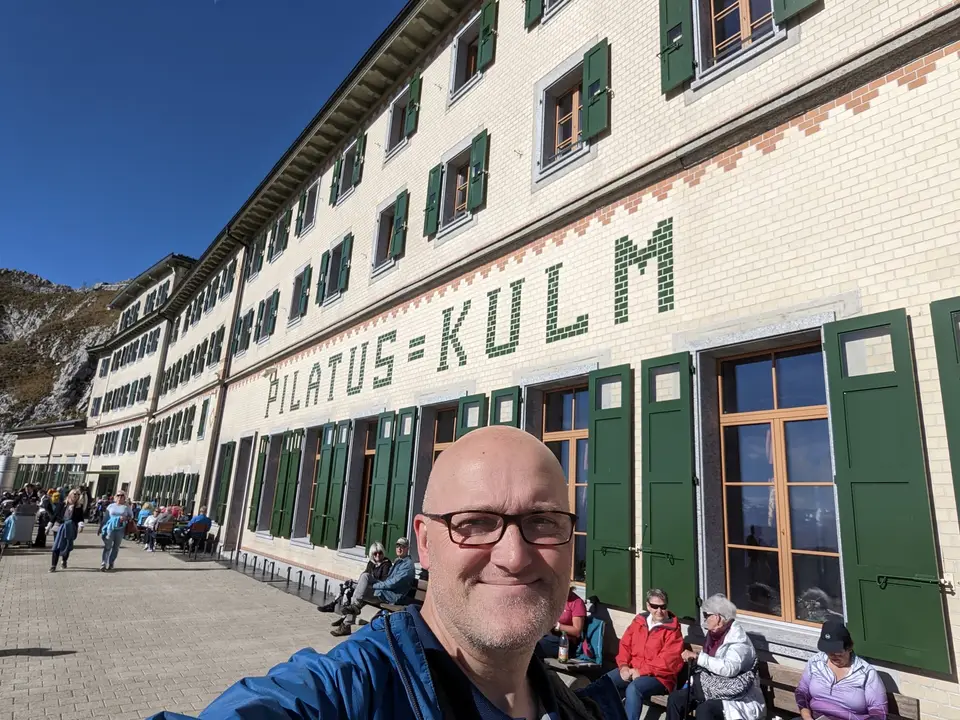
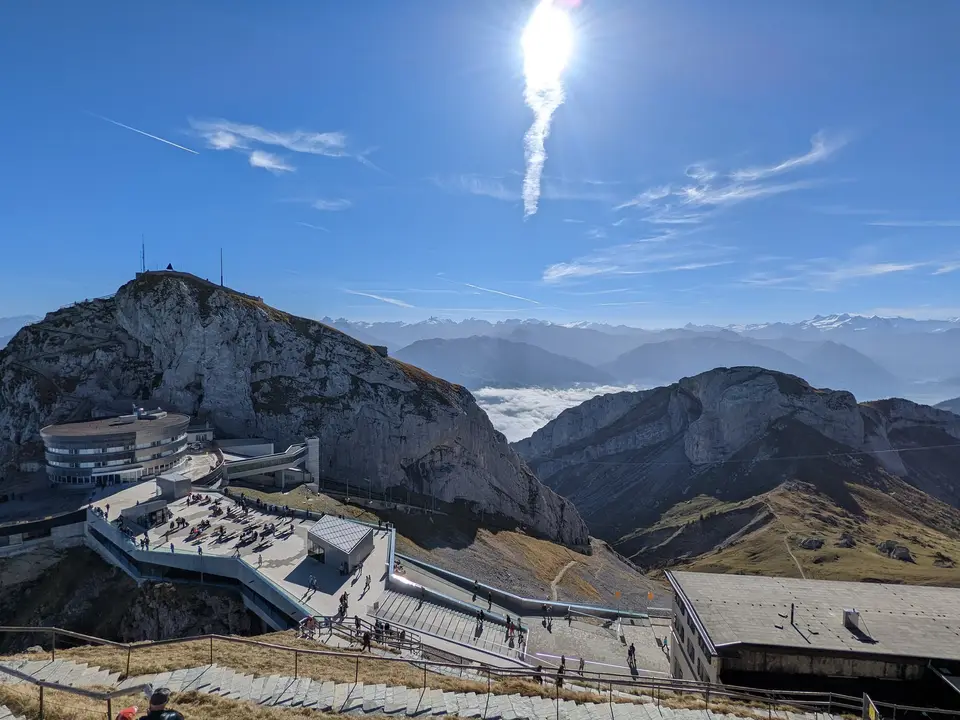
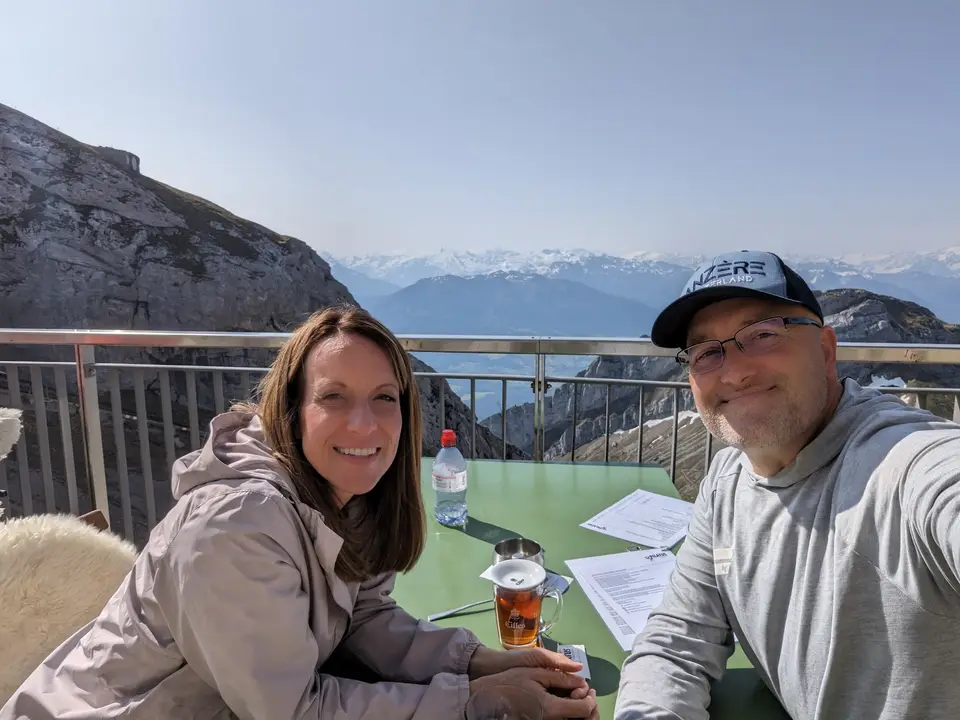
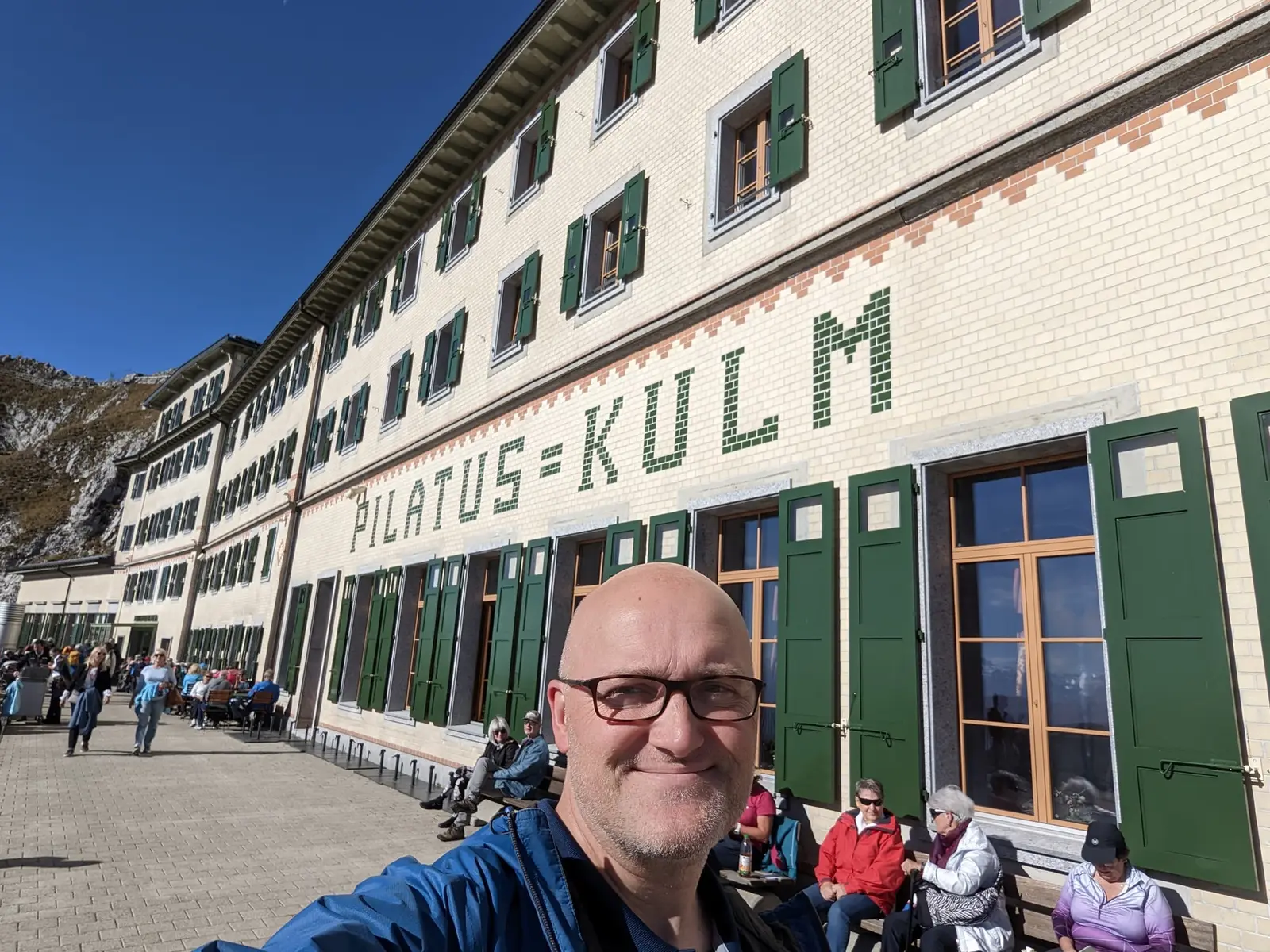
- Pilatus Kulm is a small settlement, not a viewing platform. Two hotels, a restaurant terrace, tunnels through the rock and paths out to the ridges. People stay the night up here, which tells you what the last cable car down leaves behind.
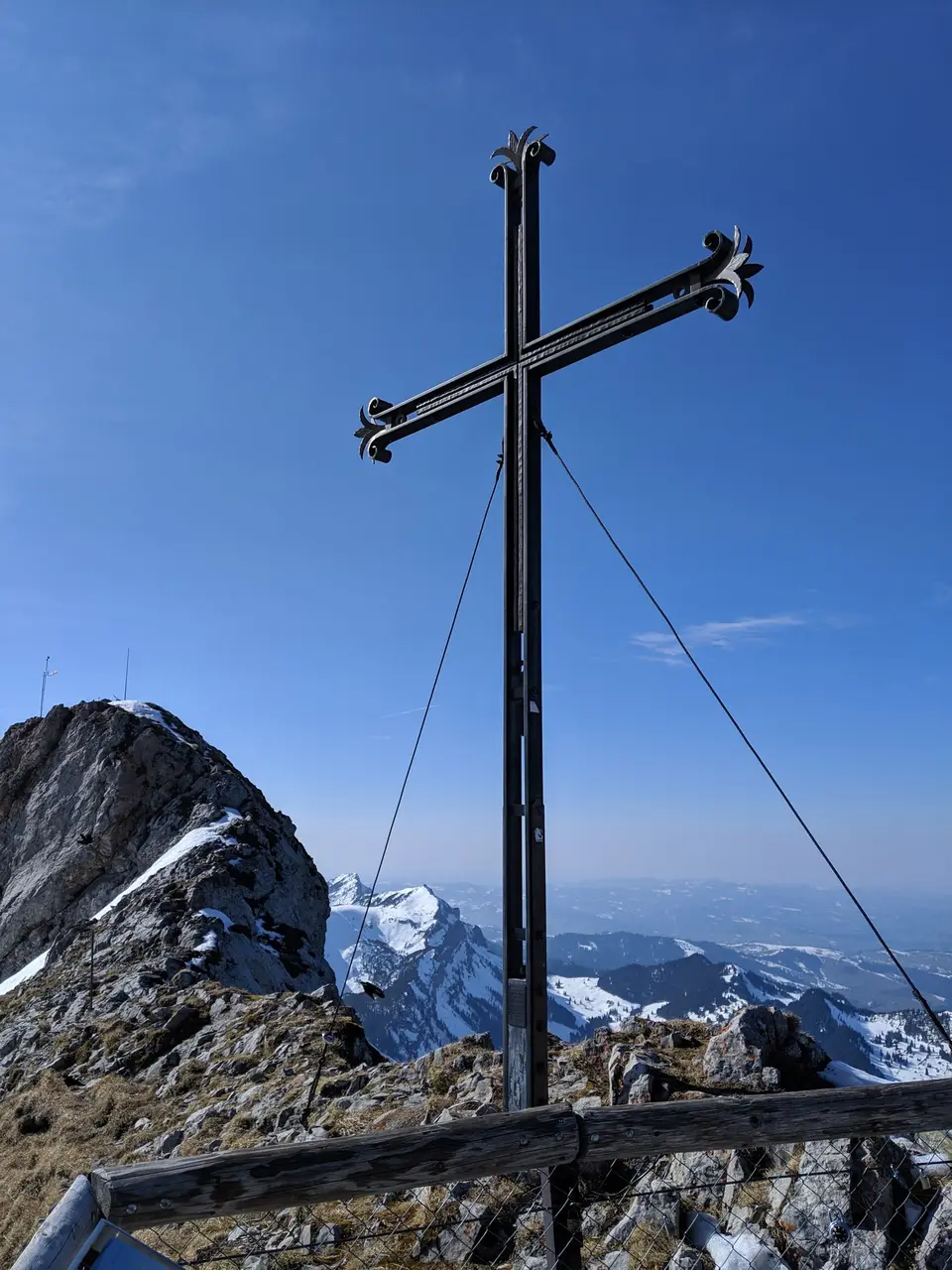
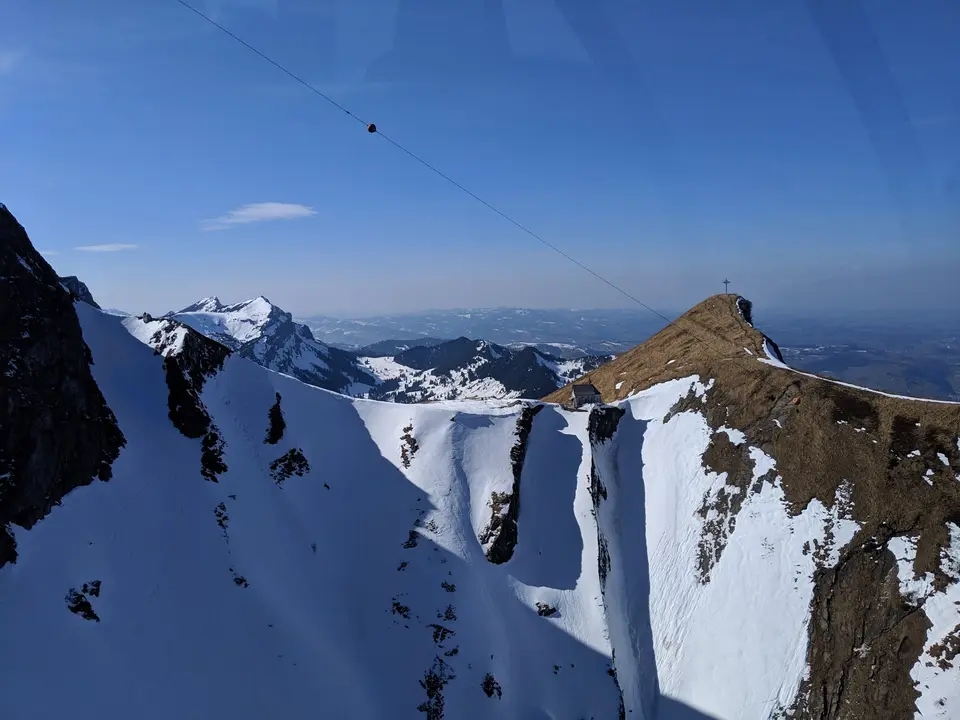
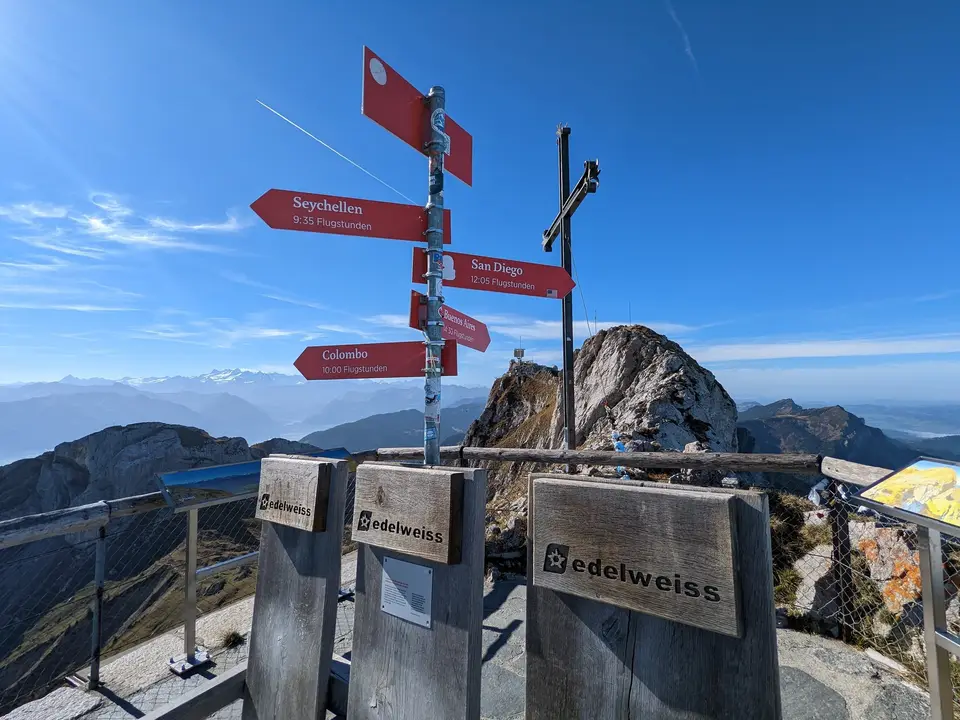
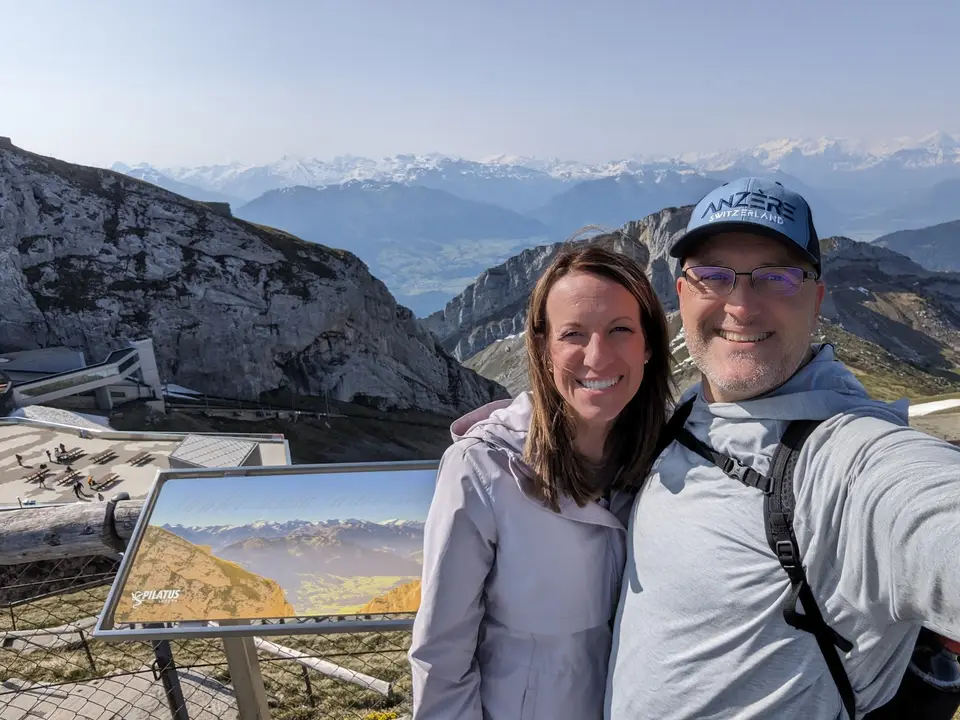
- Walk out to the Esel. It is the summit knob above the station, a few minutes of steps, and the cross on top is where the whole panorama arrives at once — Lake Lucerne on one side, the Bernese and Central Alps in a wall on the other.
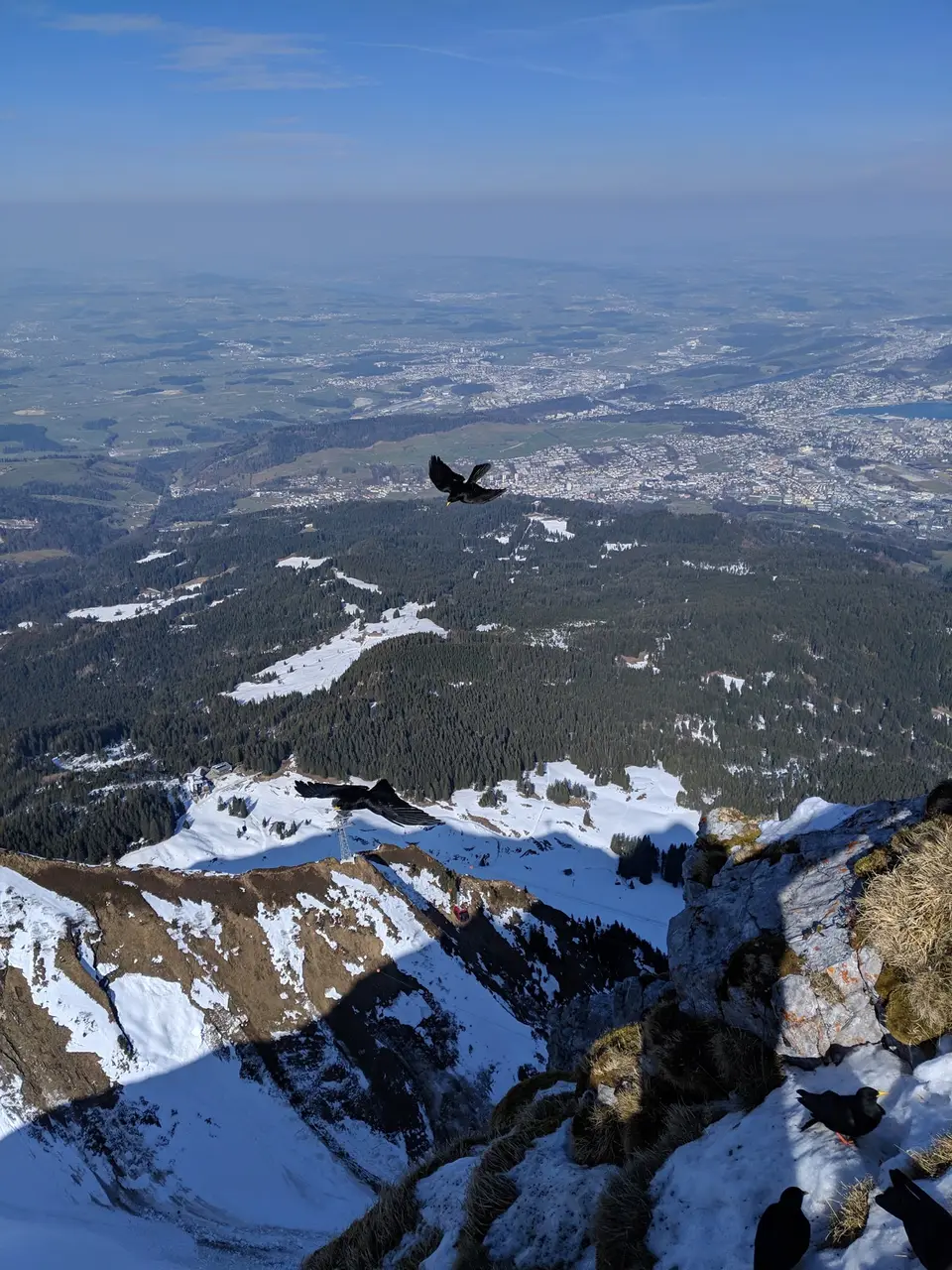
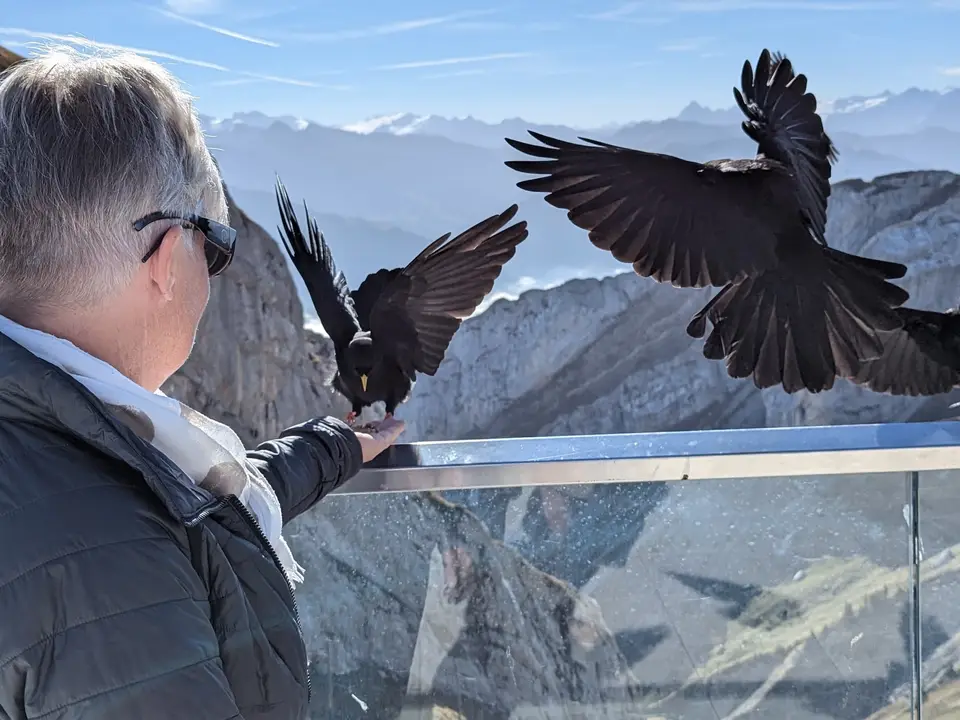
- The choughs will land on you. The black mountain birds that work the terrace are completely unbothered by people and will take food from an open hand. One of the photographs here is exactly that, and it is the best frame in the set.
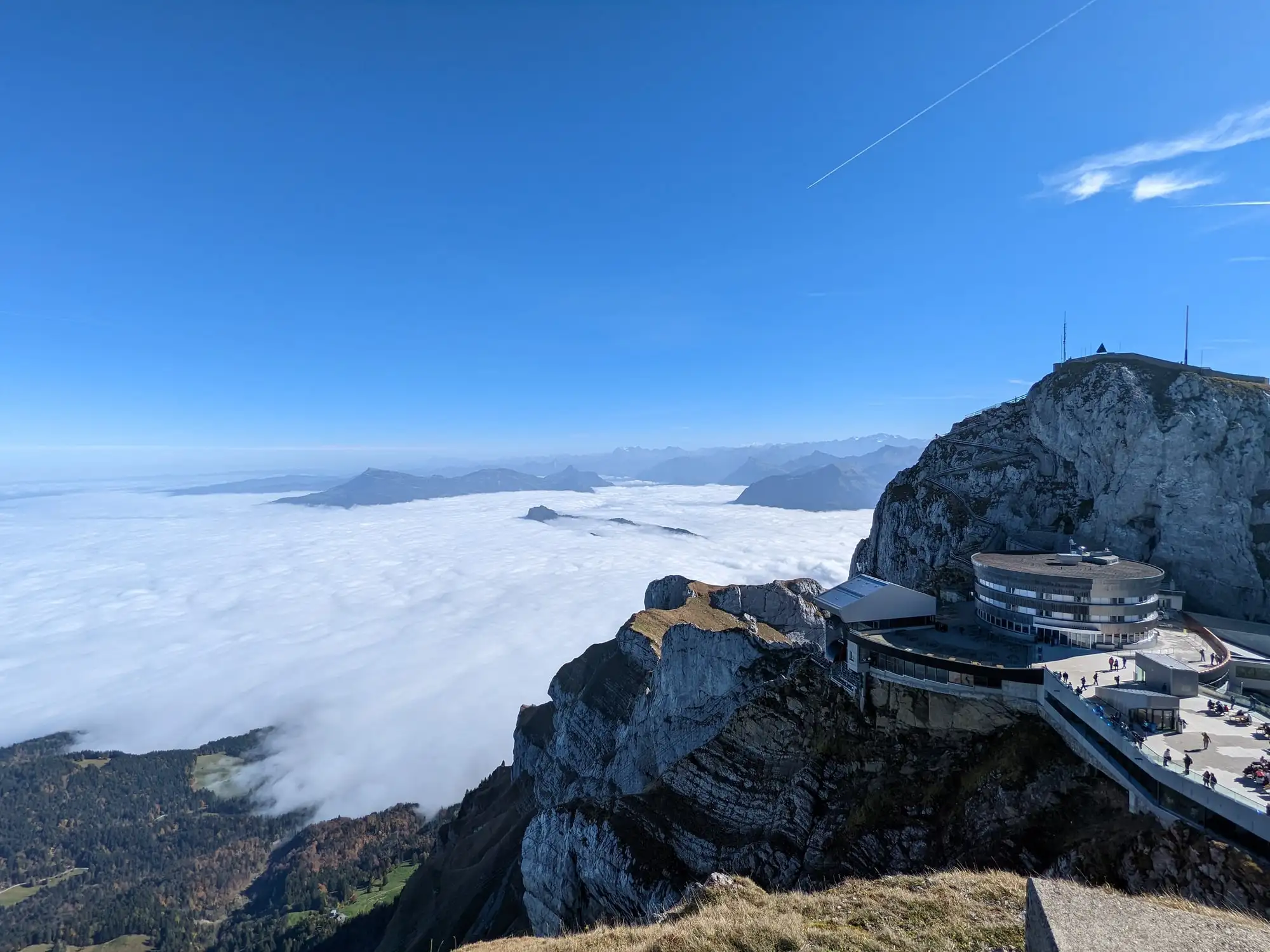
- Look for the inversion. On the right autumn morning the lake and the whole Lucerne basin fill with cloud and you stand above it in the sun. That is what the low white sea in several of these photographs is — not a view of nothing, a view of weather from the top of it.
Budget tips
- Everything at the top that matters — the paths, the ridges, the tunnels, the views — is included in getting there.
- The terrace is a mountain restaurant with mountain restaurant prices, and the seat is what you are paying for. Same as everywhere up high in this country: a drink to sit down properly is worth it; a full meal is a decision.
- Bring a layer more than you think. February at 2,132 meters is obvious; October catches people out.
Down — and the one at Fräkmüntegg nobody plans for
- Break the descent at Fräkmüntegg. Everyone rides straight through it, and the station is not the point — what is there is.
- The Fräkigaudi is the longest summer toboggan run in Switzerland: 1,350 meters of steel track, up to 40 km/h. It runs April to October, in dry weather only, and it is the single best-value thing on this mountain for anyone traveling with children or with a sense of humour.
- We have no photographs of it, which tells you something about our own planning. Both of our visits fell outside dry-toboggan weather — February, and a wet October. If you go in summer, do the thing we did not.
- Also at Fräkmüntegg: a rope park in the trees. Same season, same weather rule.
Evening — back down in Lucerne
- The gondola lands you in Kriens, a bus ride from the middle of Lucerne. The railway lands you at Alpnachstad, on the lake, where the boat goes back.
- Take the boat if the timing works. An hour and a half across Lake Lucerne at the end of the day, with the mountain you just came off behind you, is the best-spent slow hour in central Switzerland — and it is the leg of the Golden Round Trip people are most tempted to skip.
- Dinner belongs in Lucerne, not on the mountain.