What it actually is
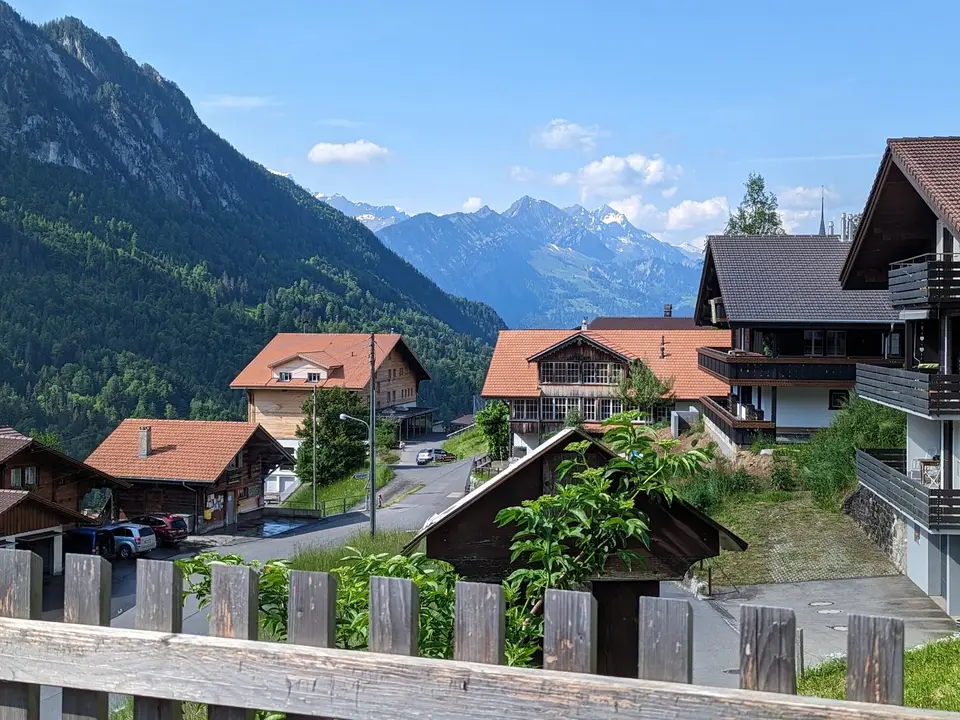
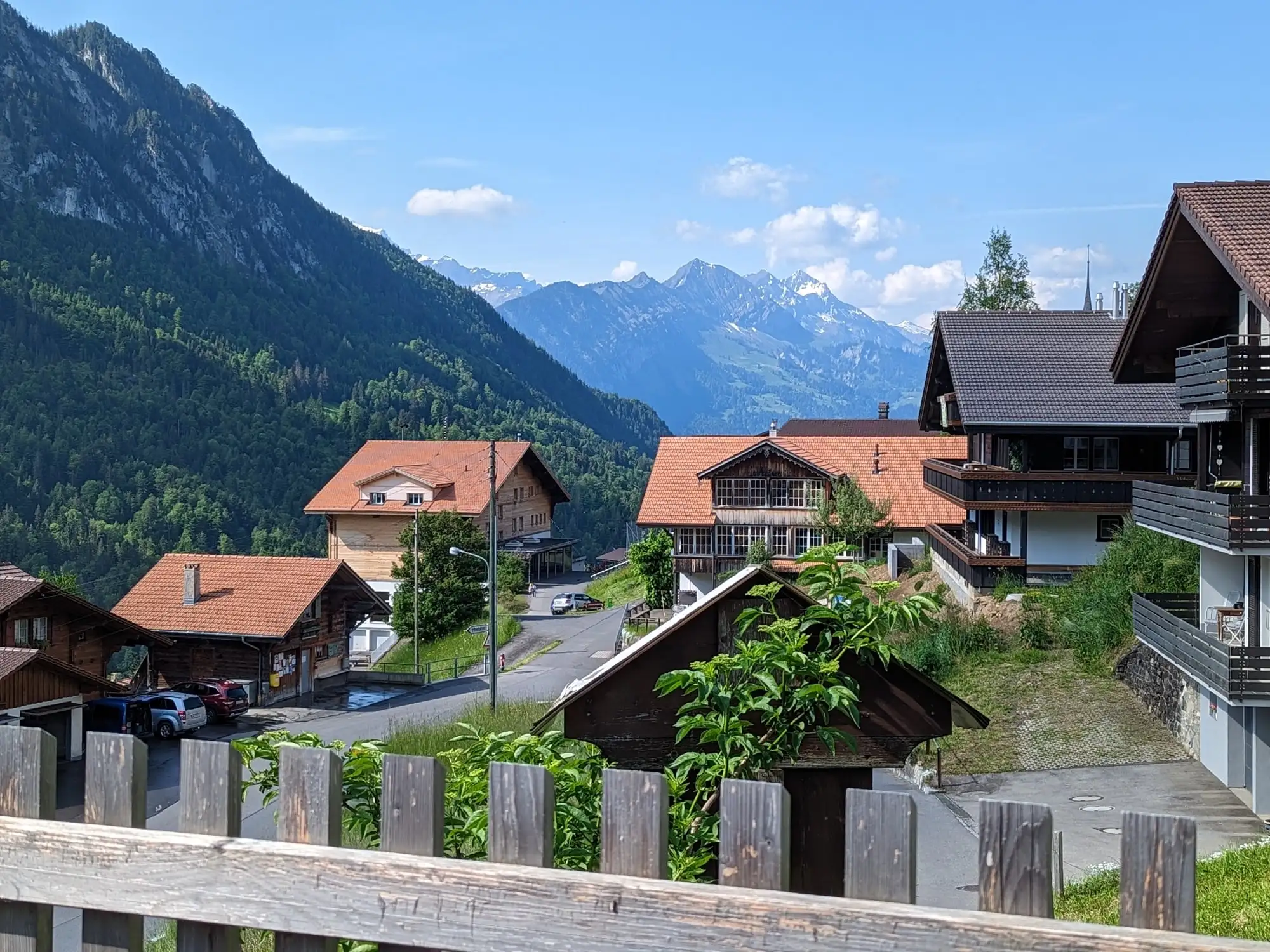
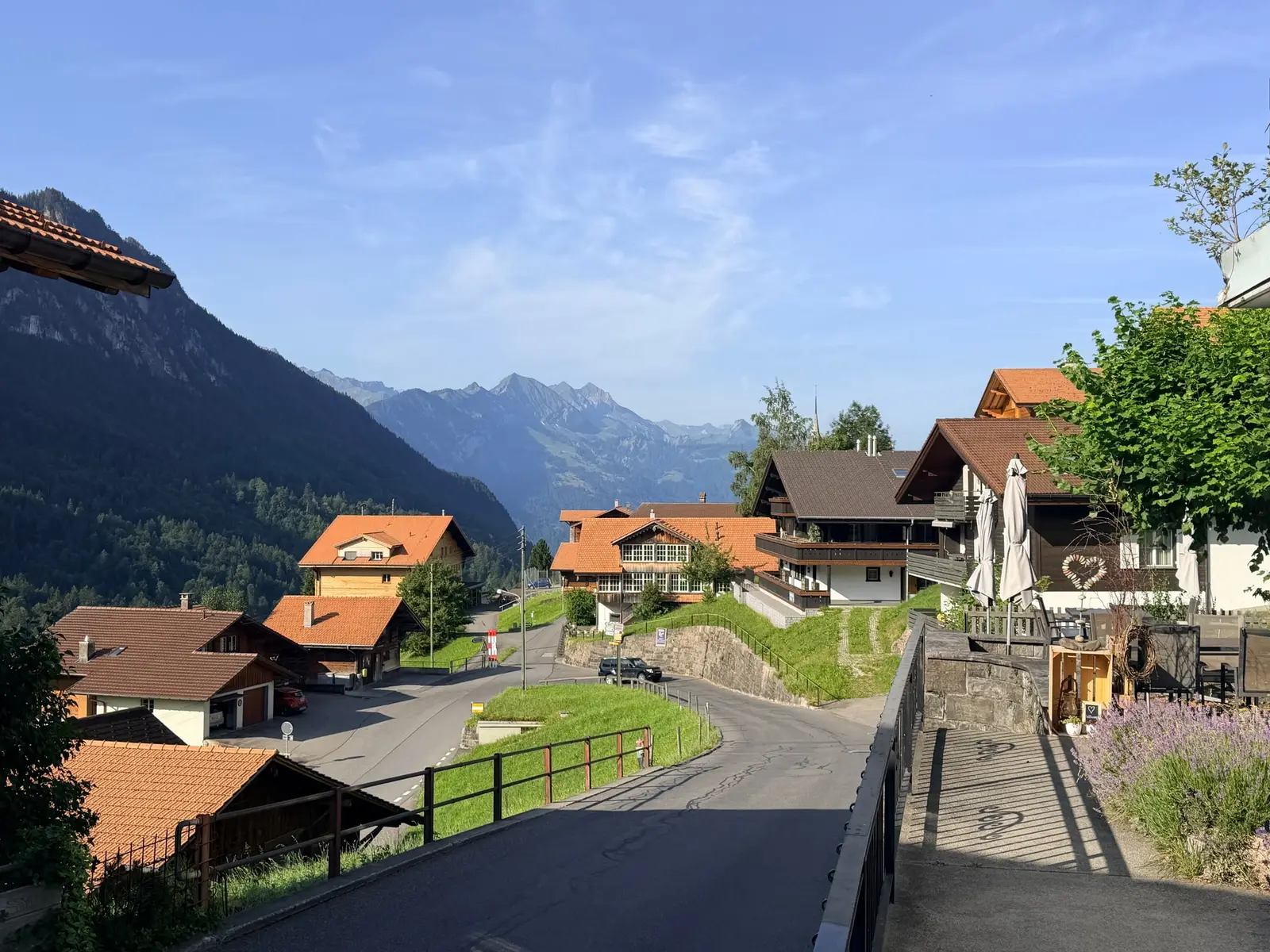
- A farming village in the Bernese Oberland, up a dead-end road above Interlaken. Nothing passes through Habkern on the way to anywhere, which is most of why it still looks the way it does.
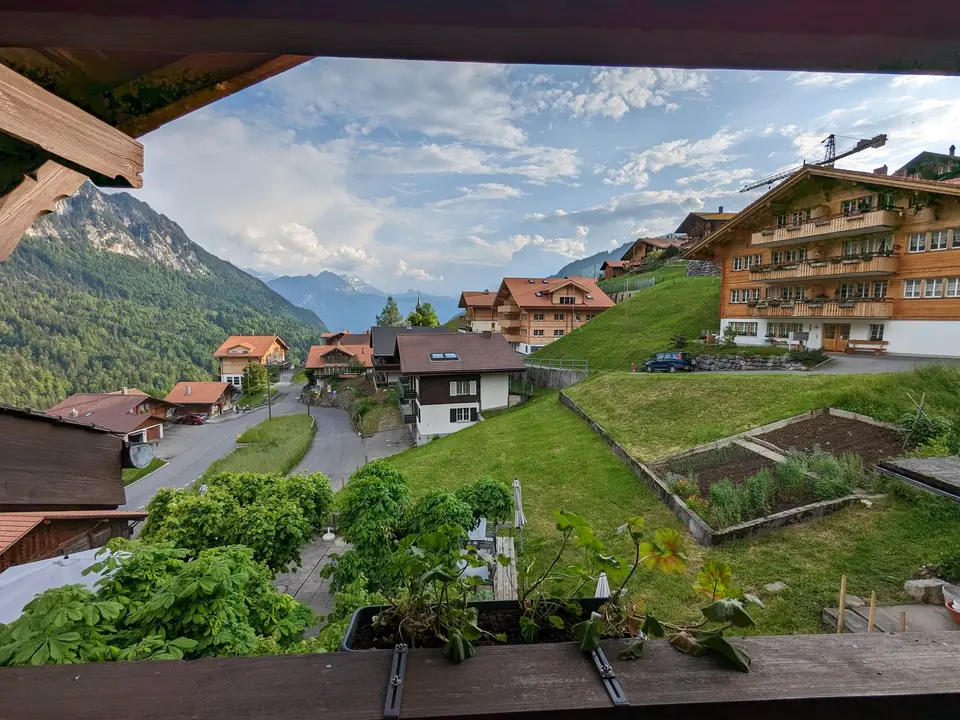
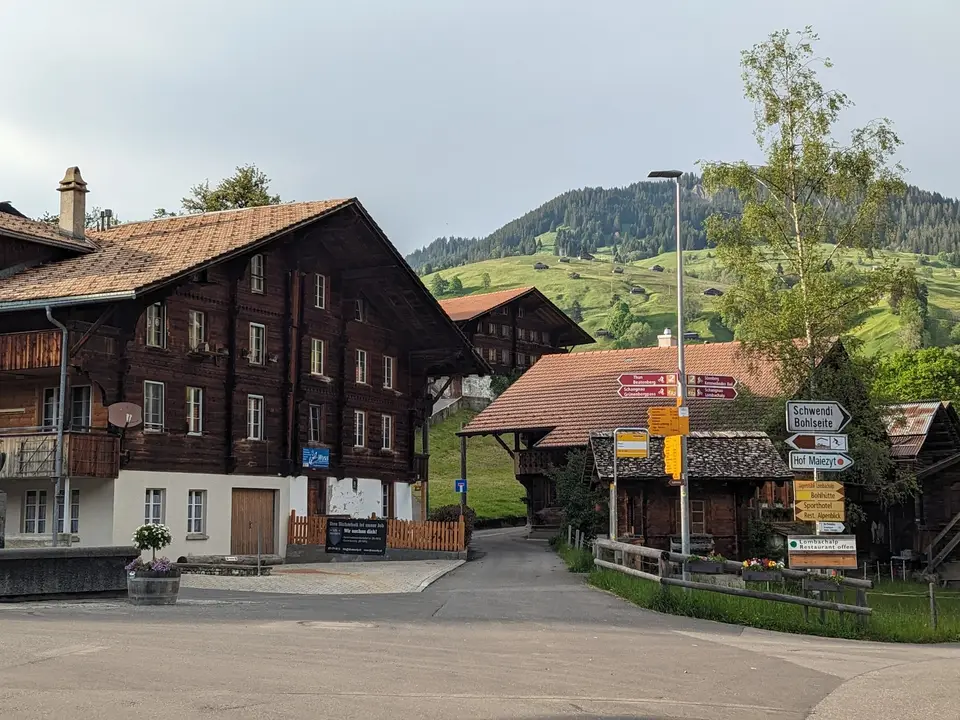
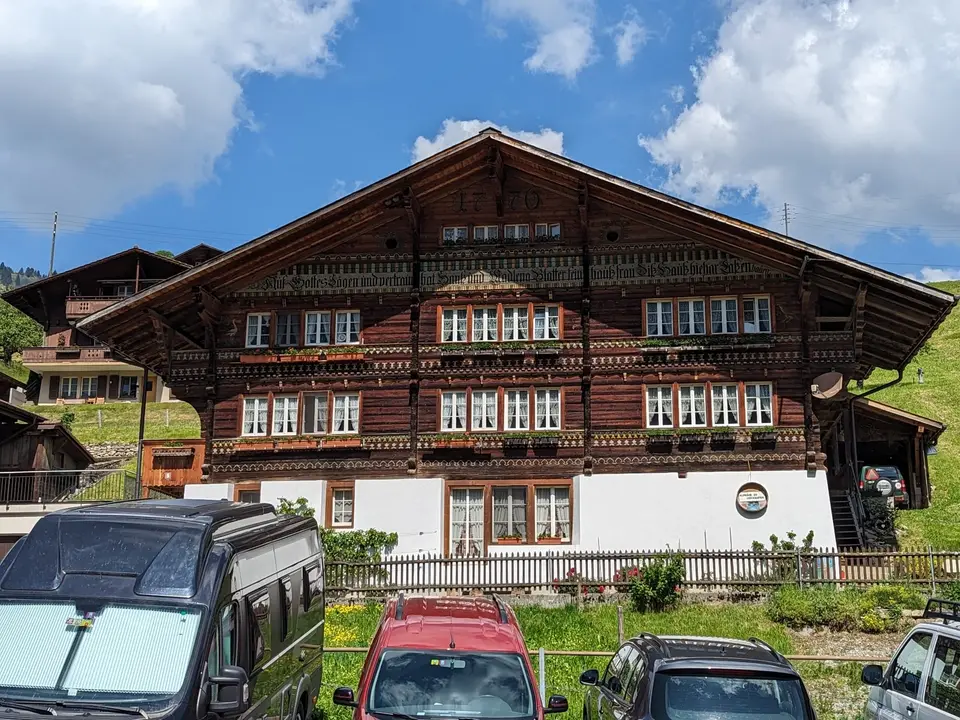
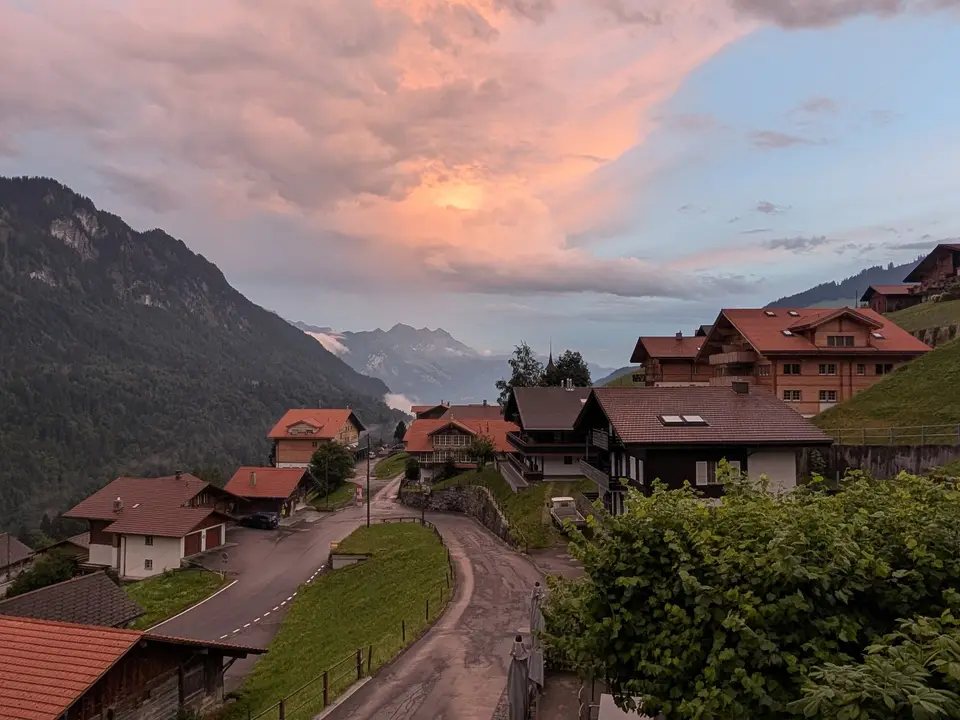
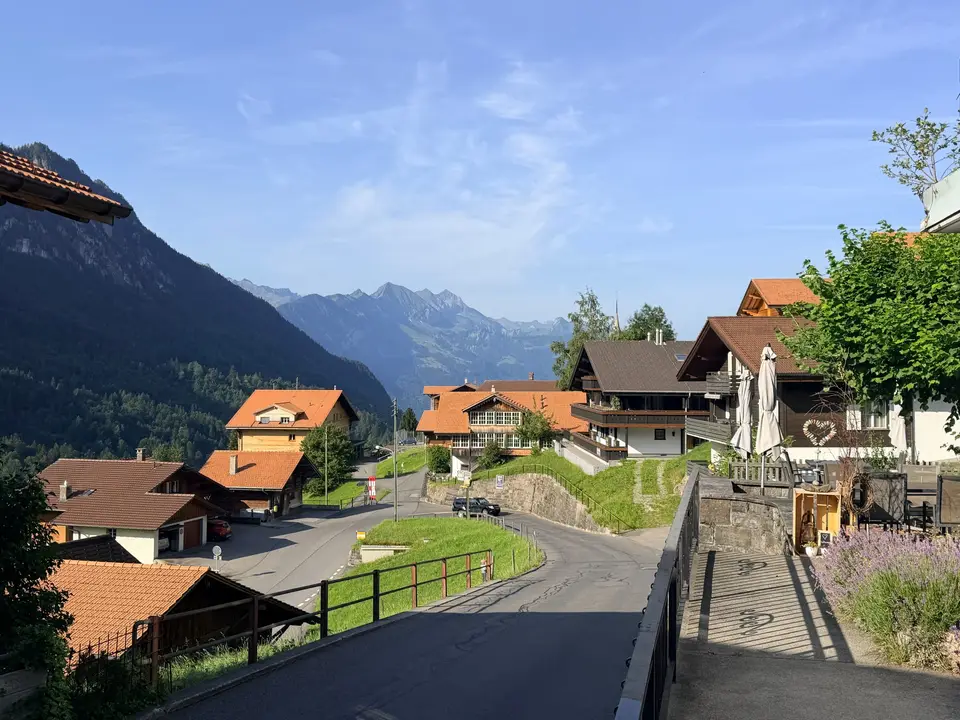
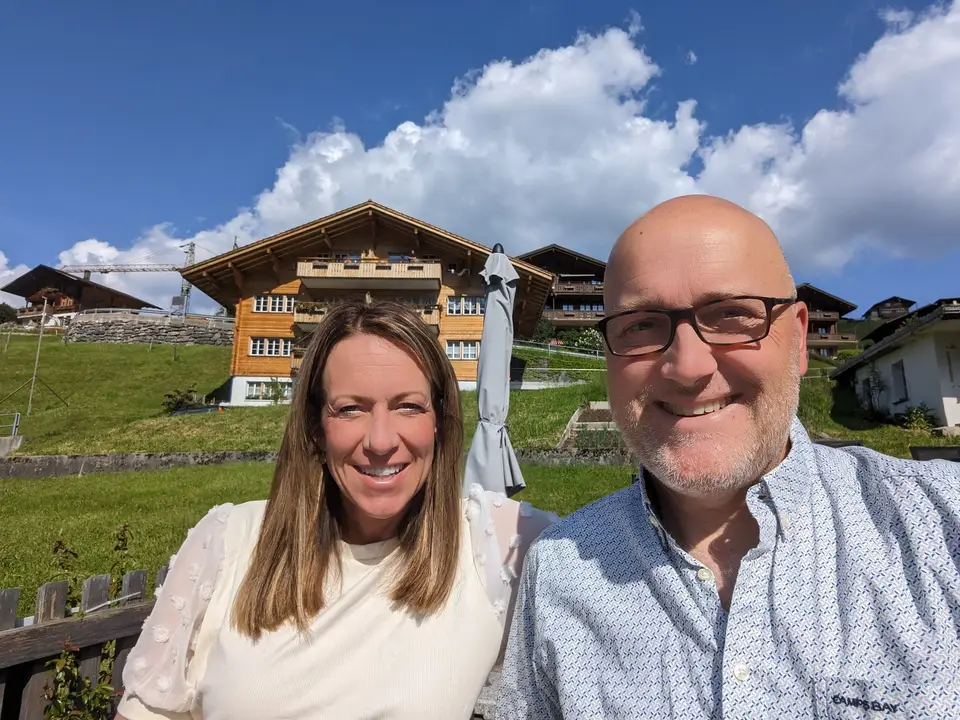
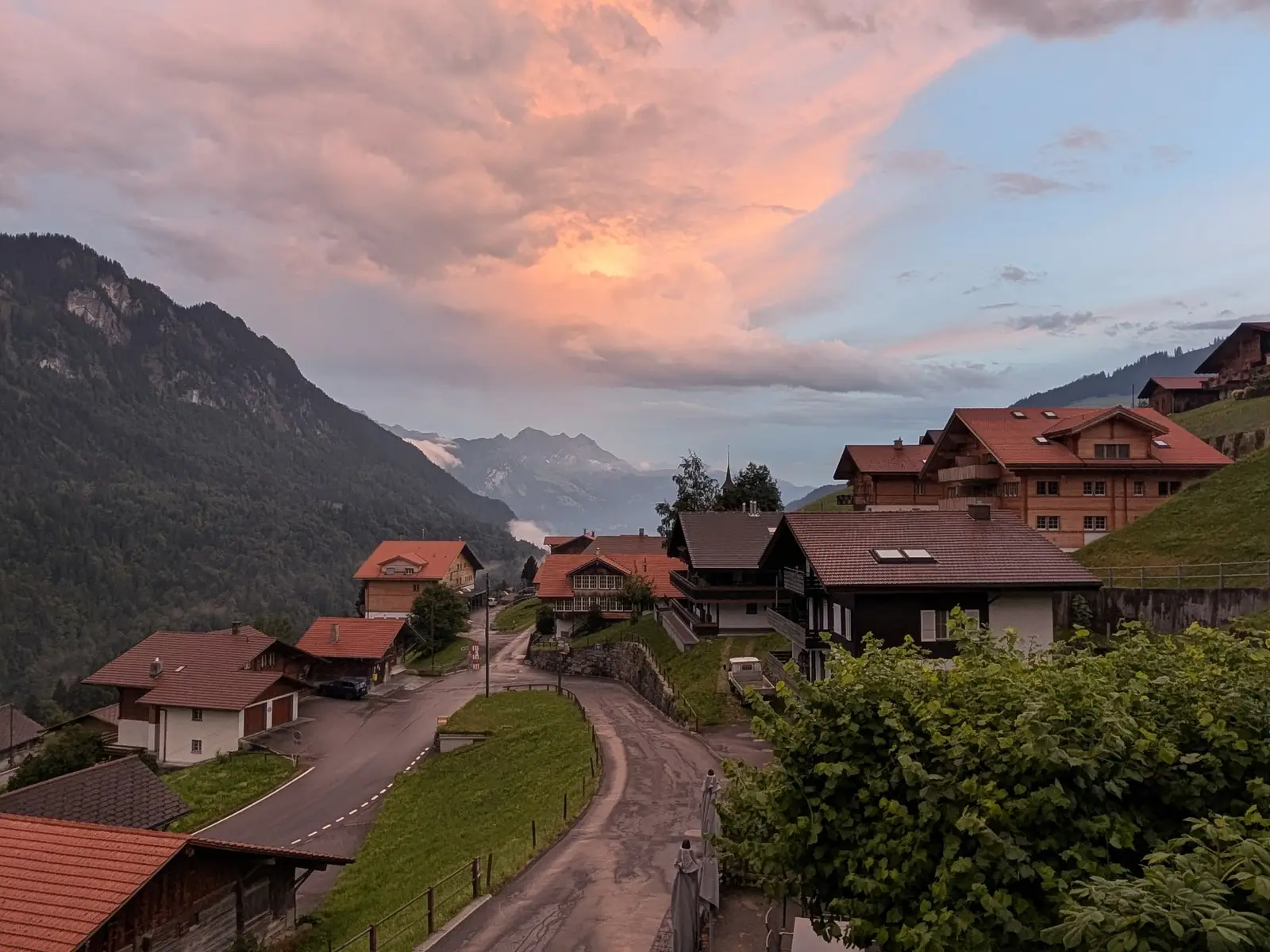
- Dark timber chalets, a painted Bernese farmhouse or two, one road, and pasture running up to the peaks behind. There is no lift, no lake promenade and no museum of the sort a coach stops at.
- It is a stop, not a day — and the reason to make it is a workshop at the side of the road where alphorns are built from the tree up.
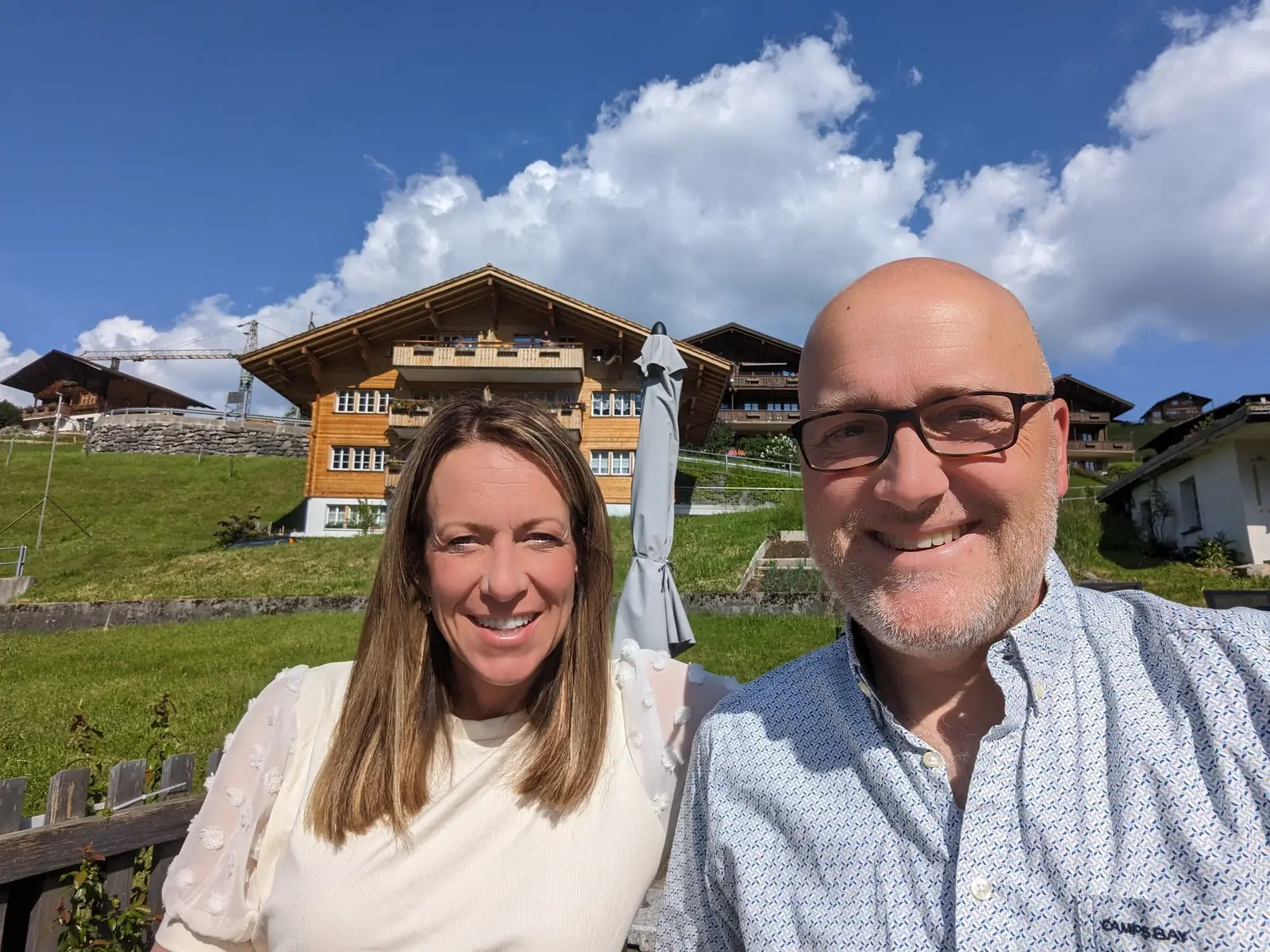
- We have been twice, three years apart: June 2023 and June 2026. Almost nothing about the village had changed in between, which is the point of it.
The alphorn maker
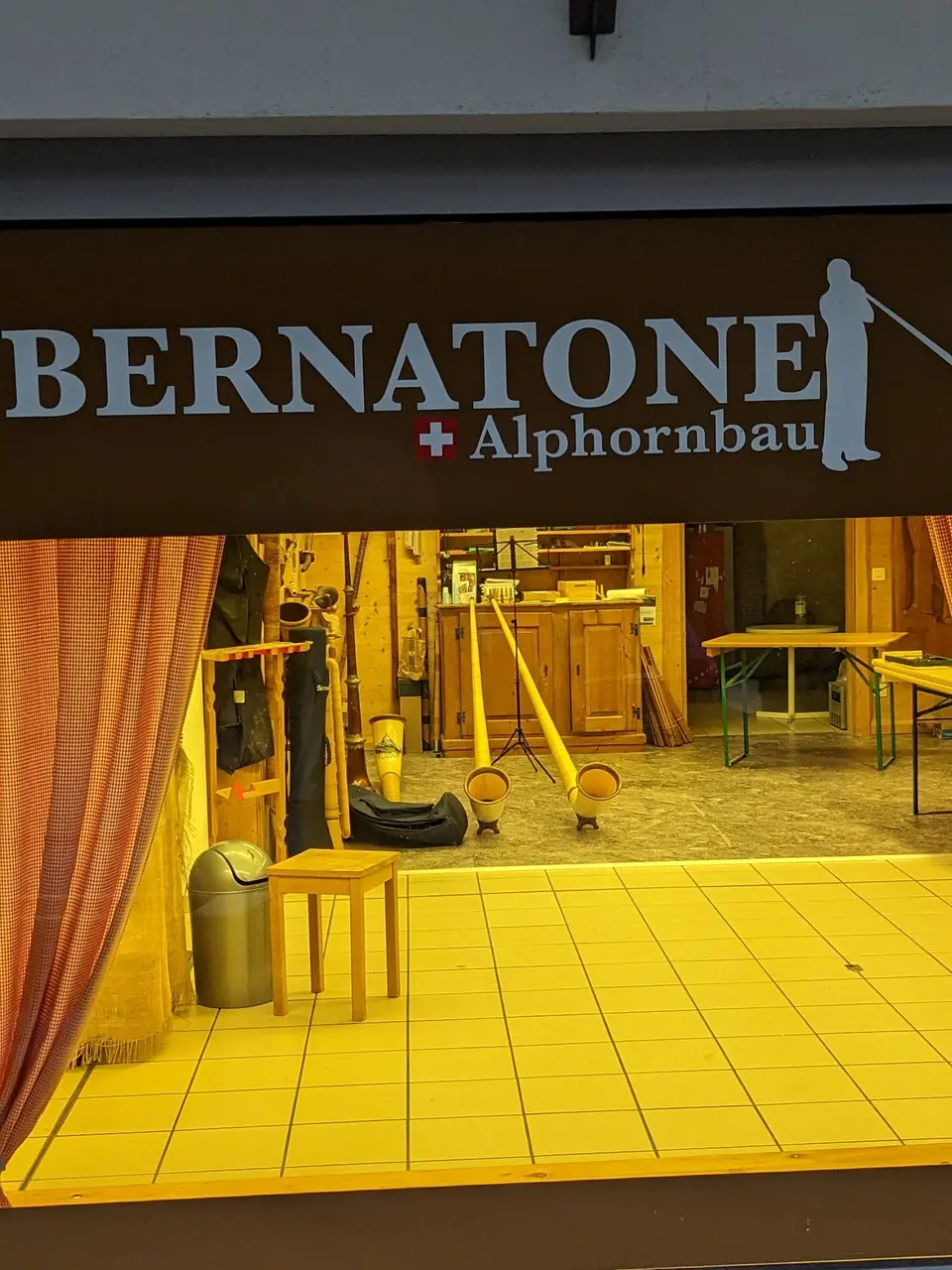
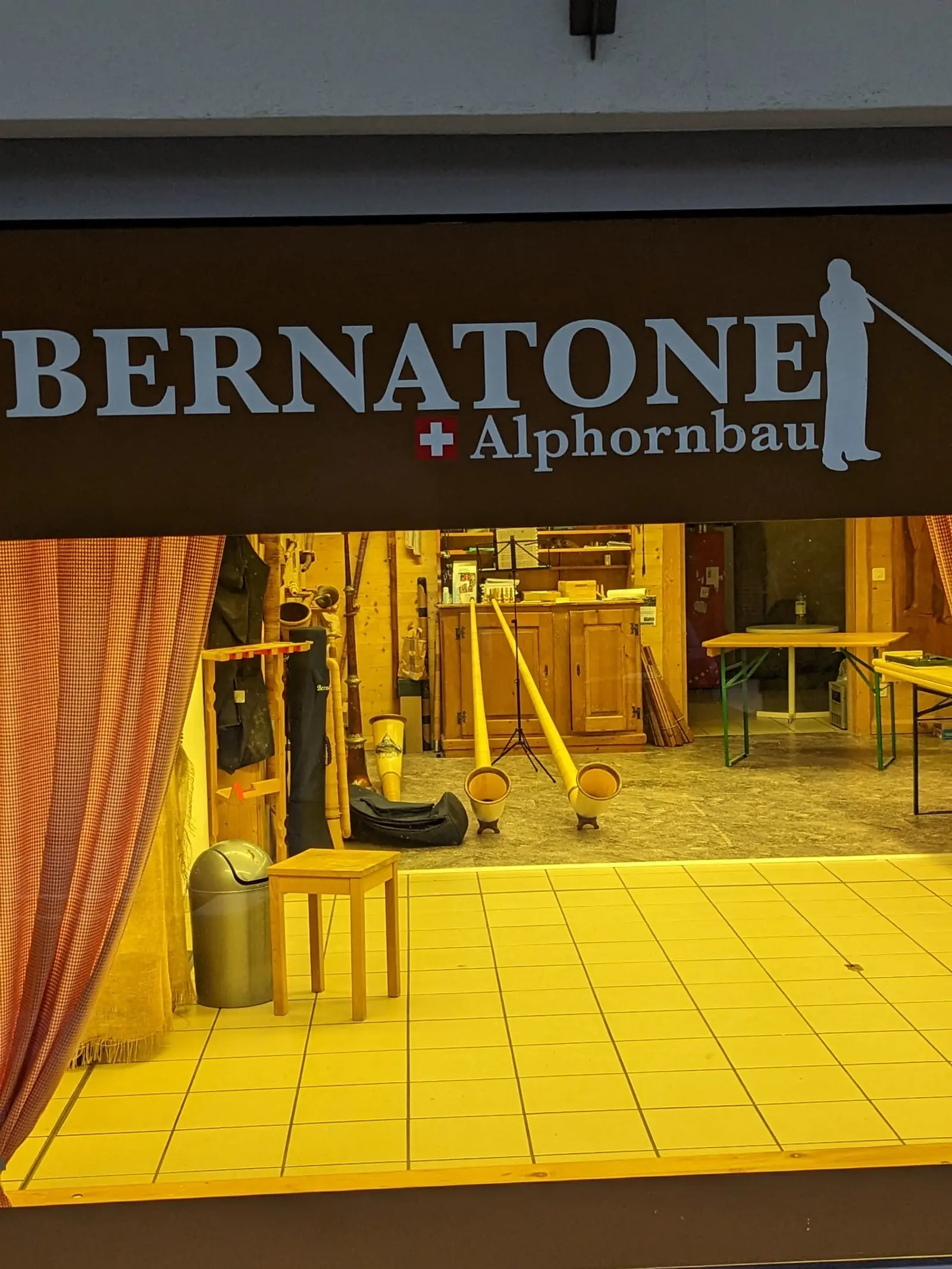
Bernatone, on the village road, is a working shop rather than a visitor attraction that happens to make instruments.
- Heinz Tschiemer makes the horns. His father Hans saws the logs in his own sawmill, which is the part that makes the rest of it unusual.
- A Bernatone alphorn is made exclusively from local spruce from the mountain forests of Habkern. The tree, the sawmill, the workshop and the finished instrument are inside about two kilometers of each other.
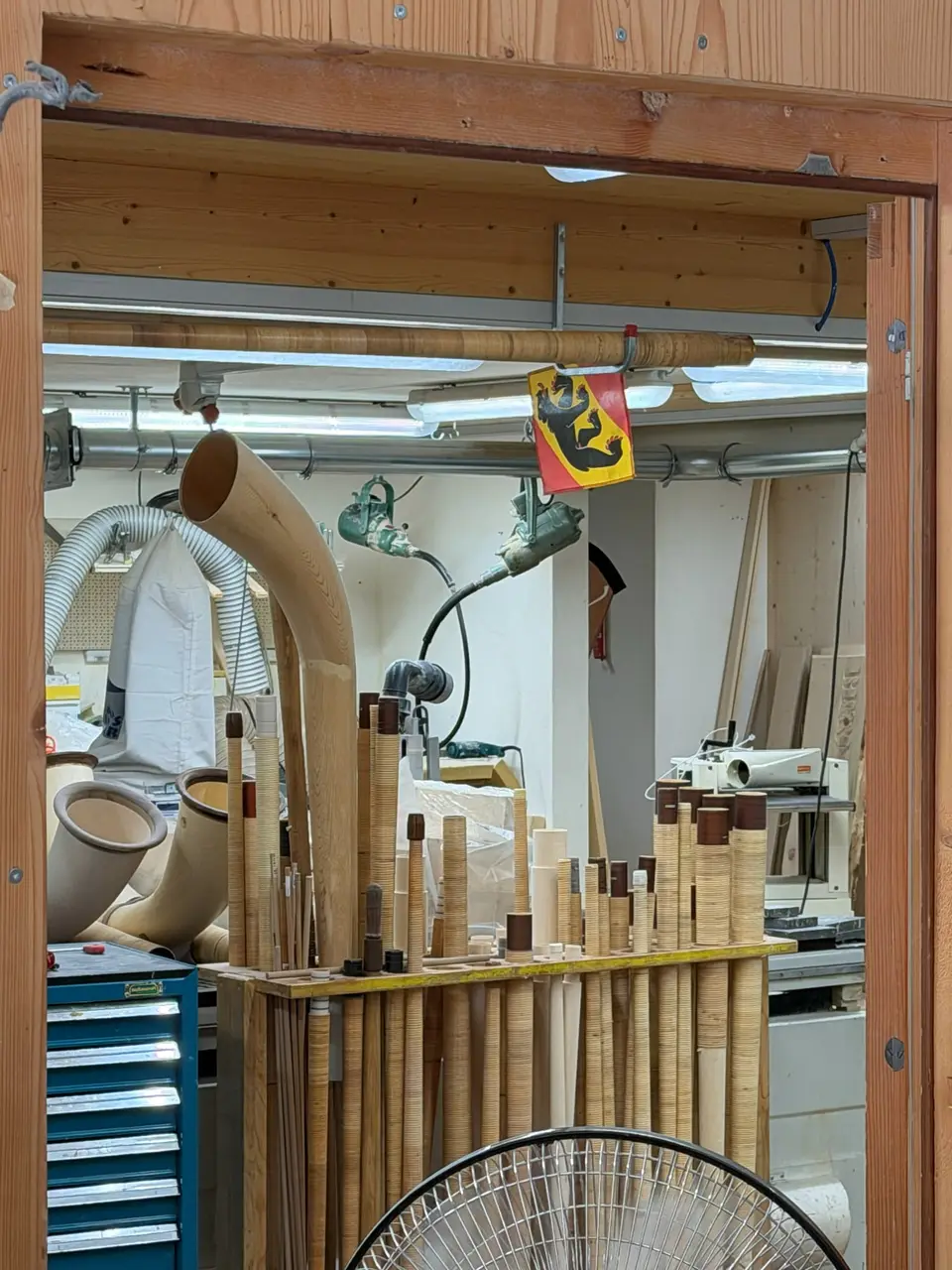
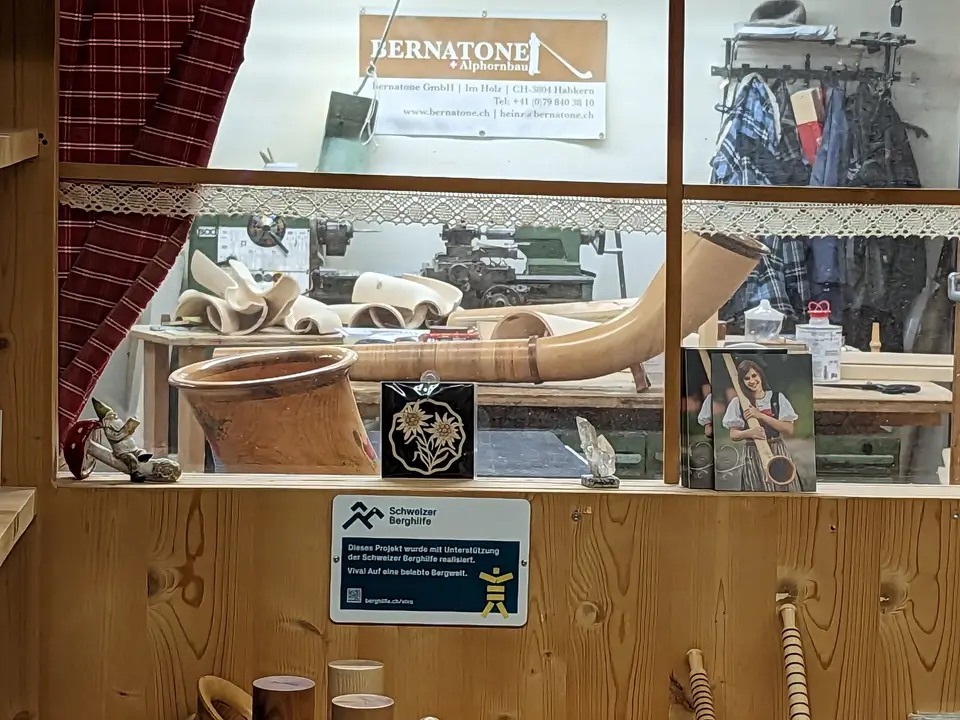
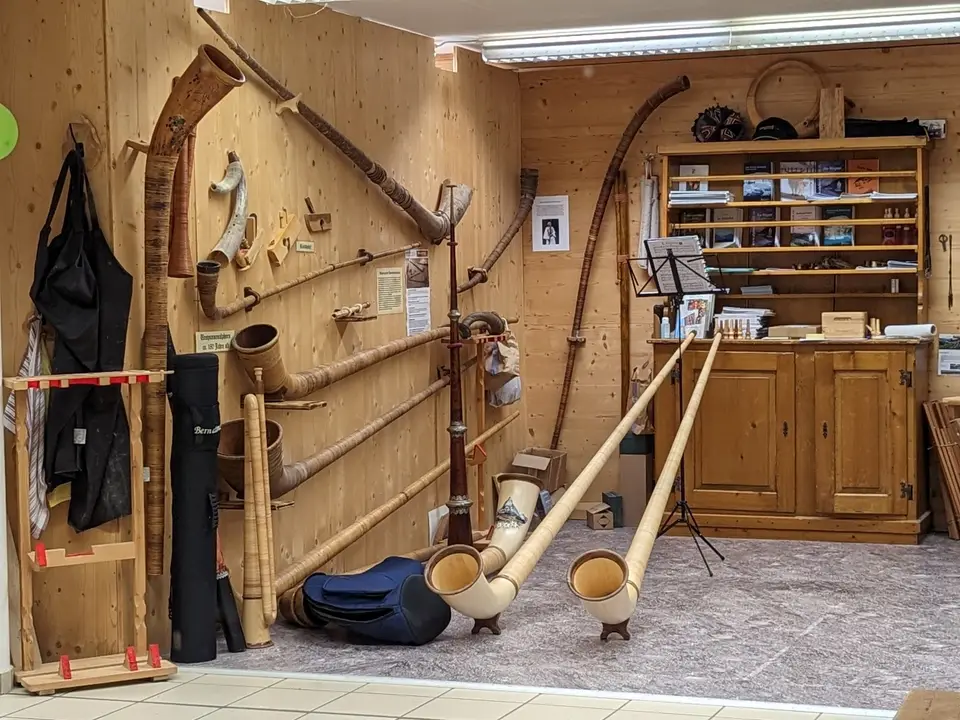
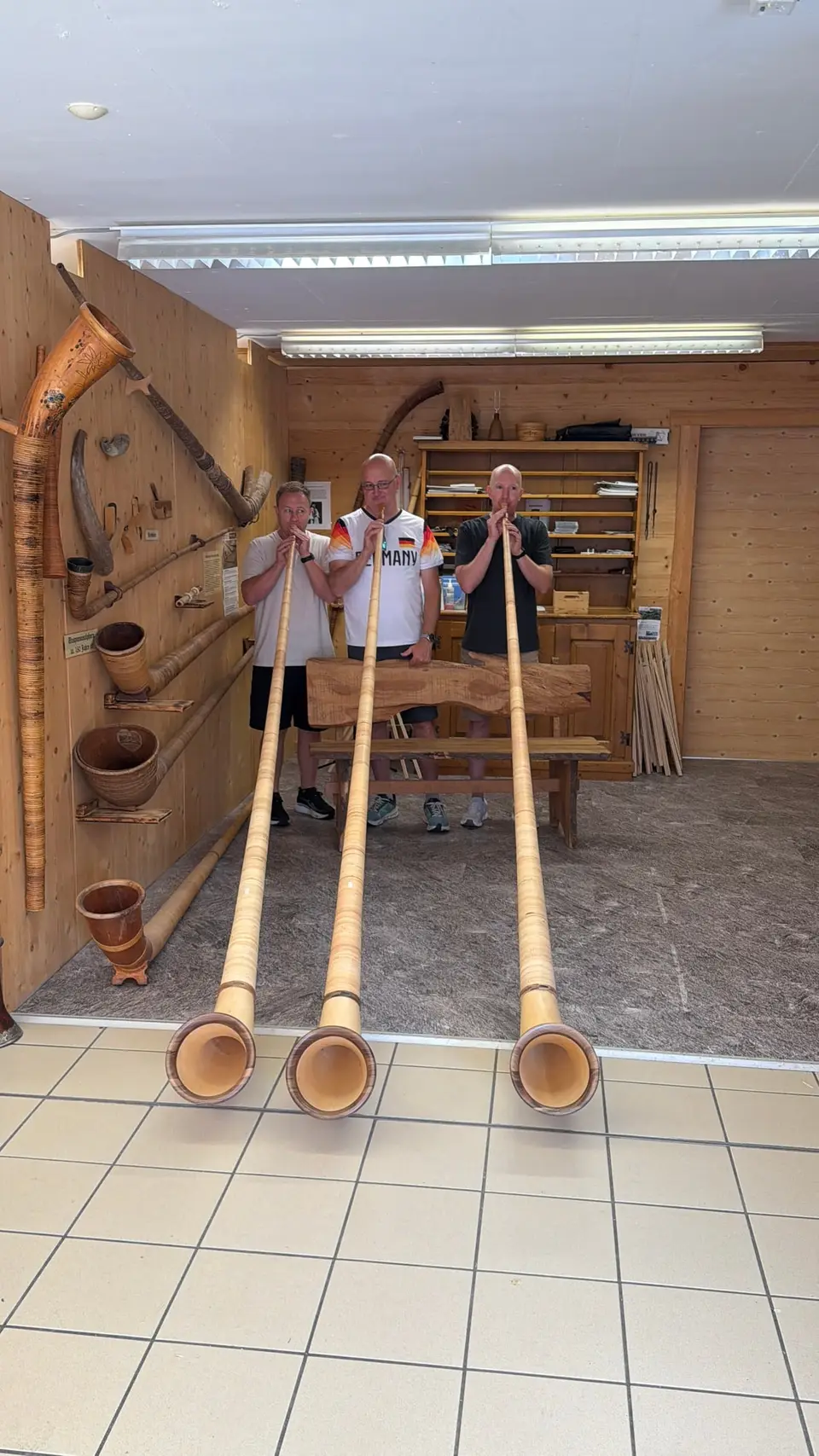
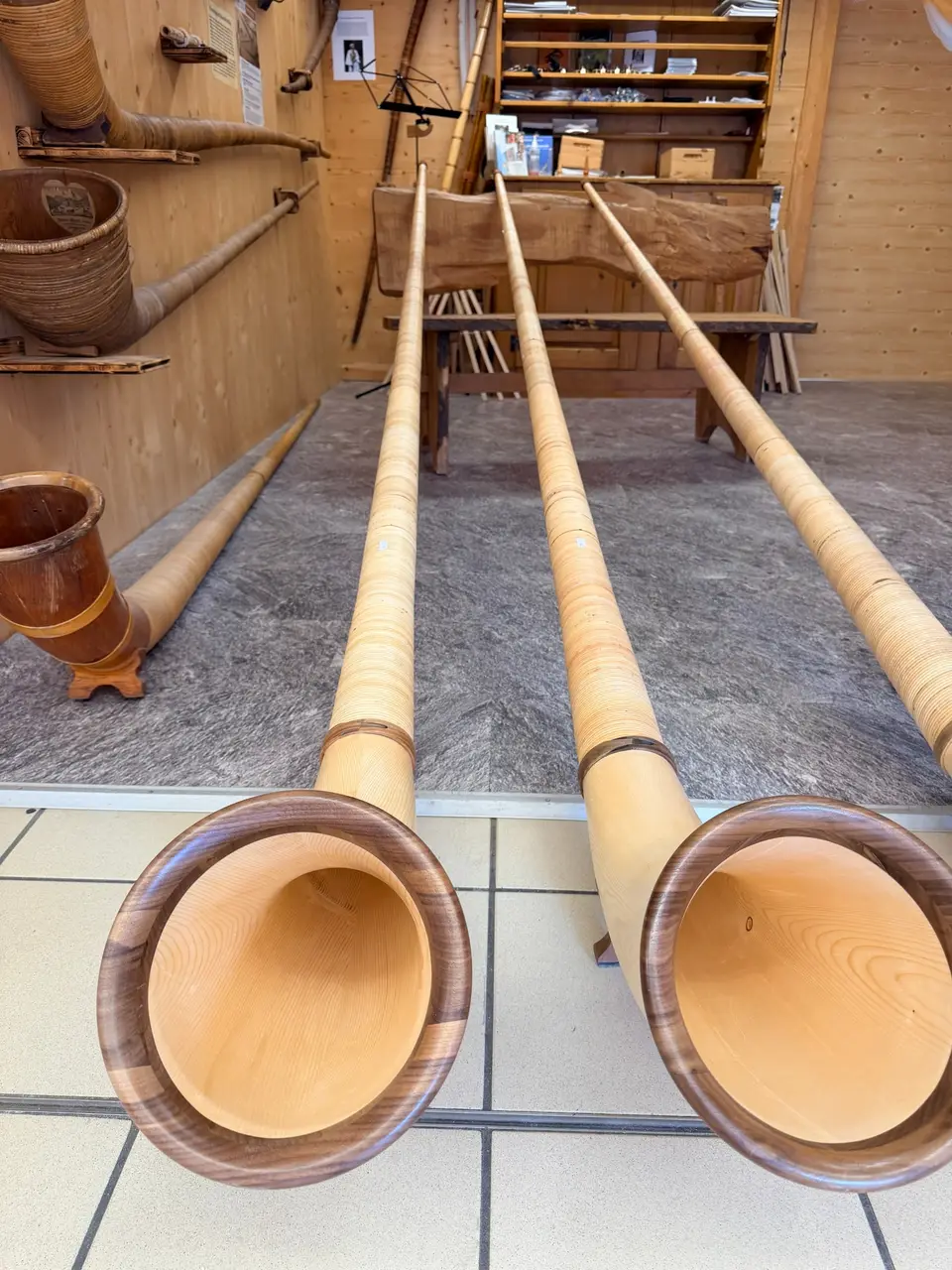
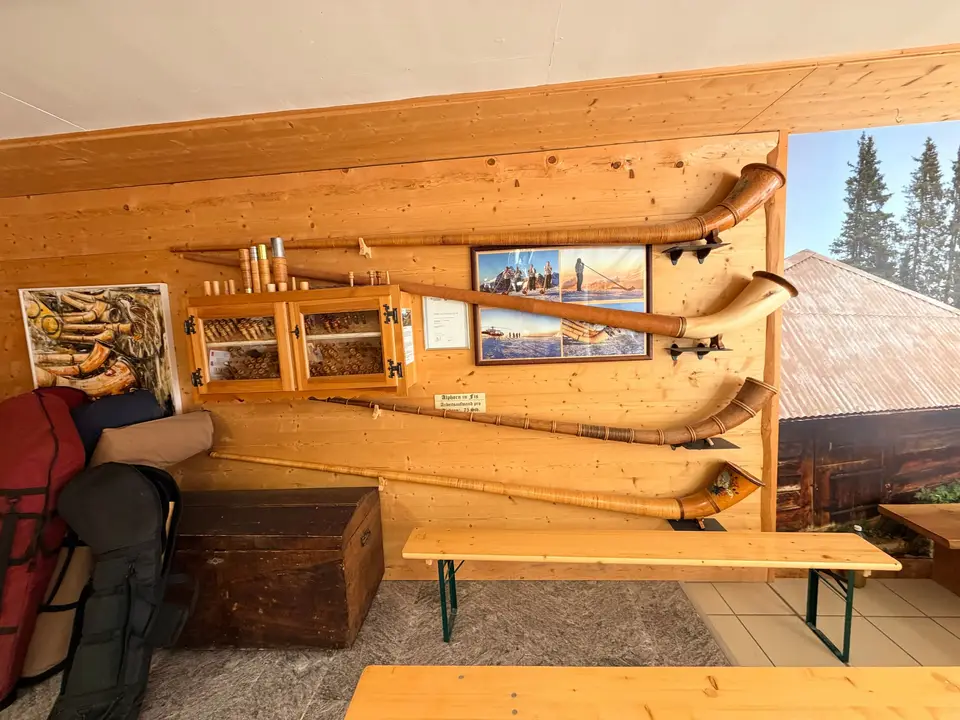
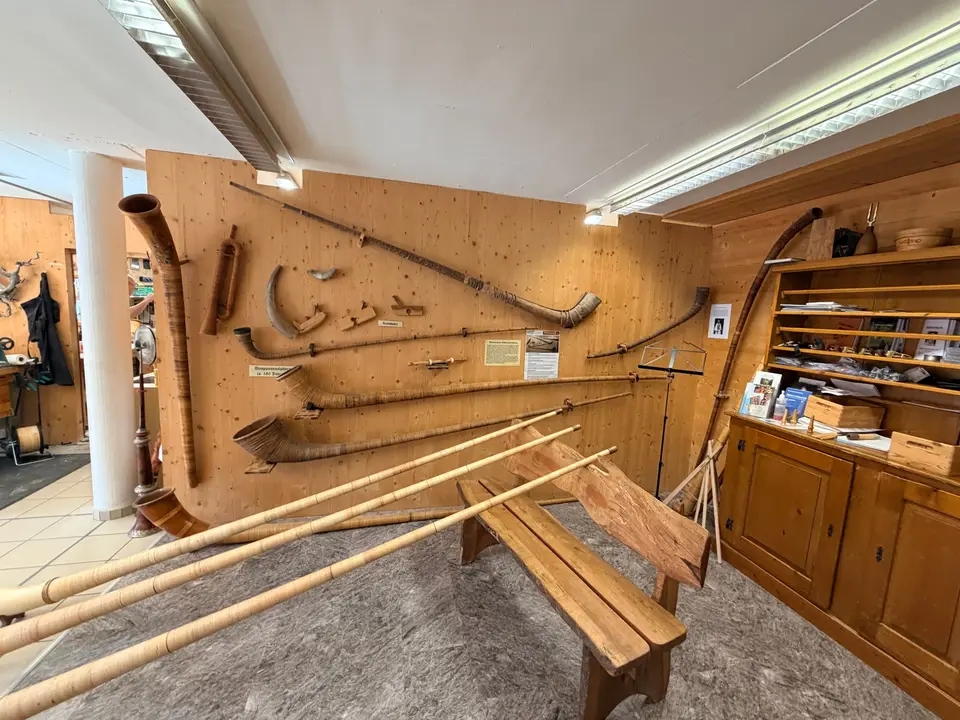
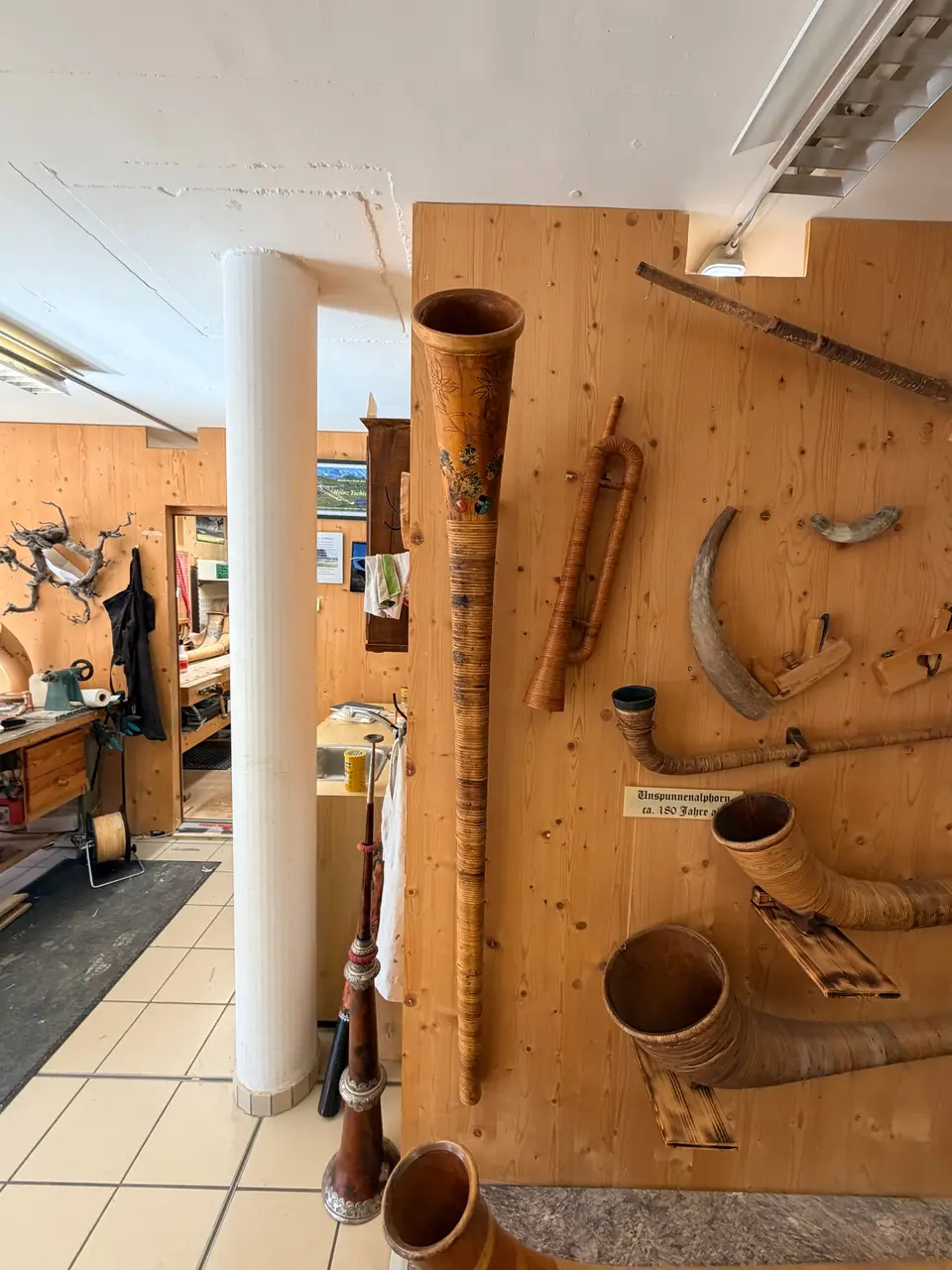
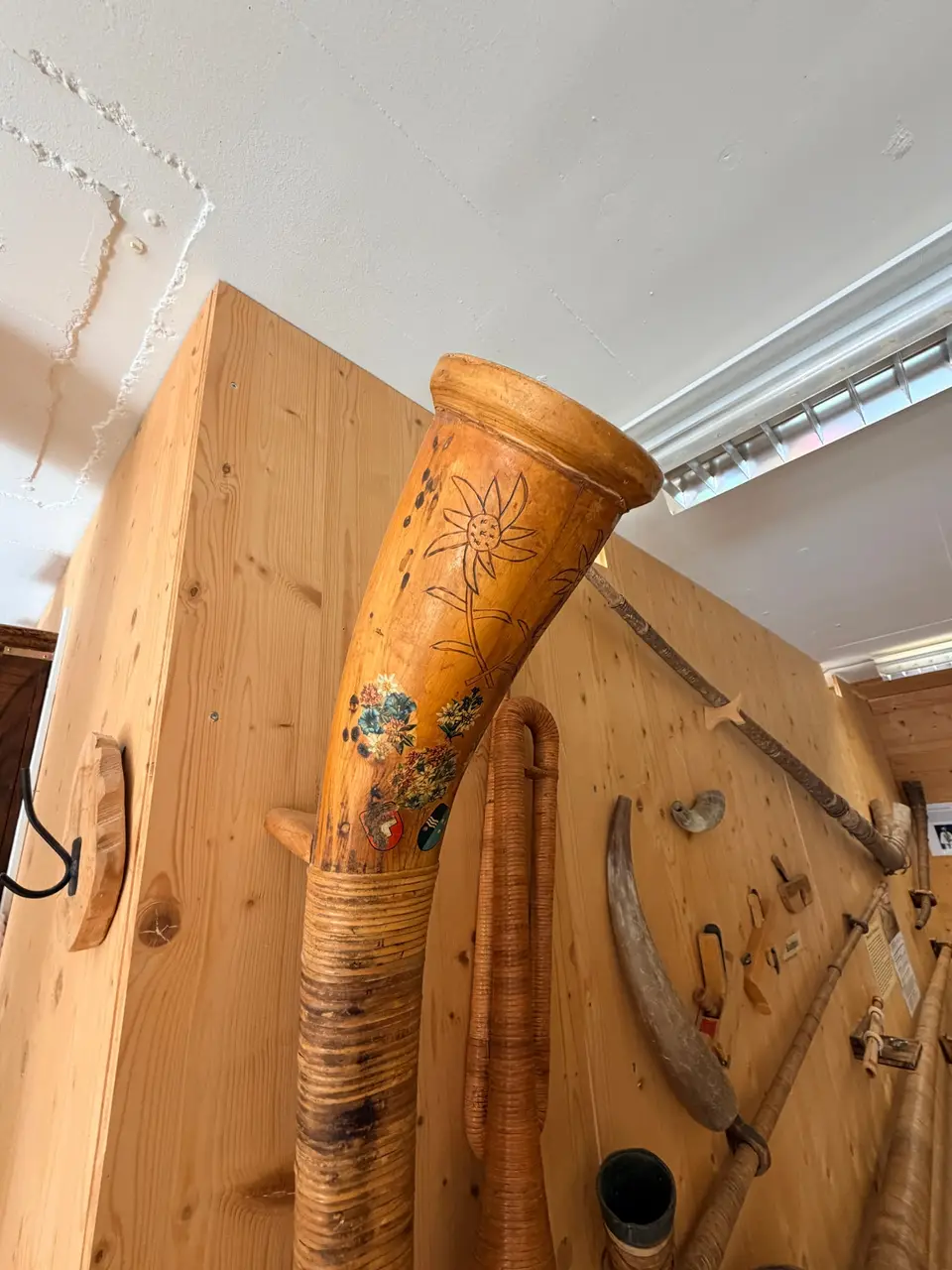
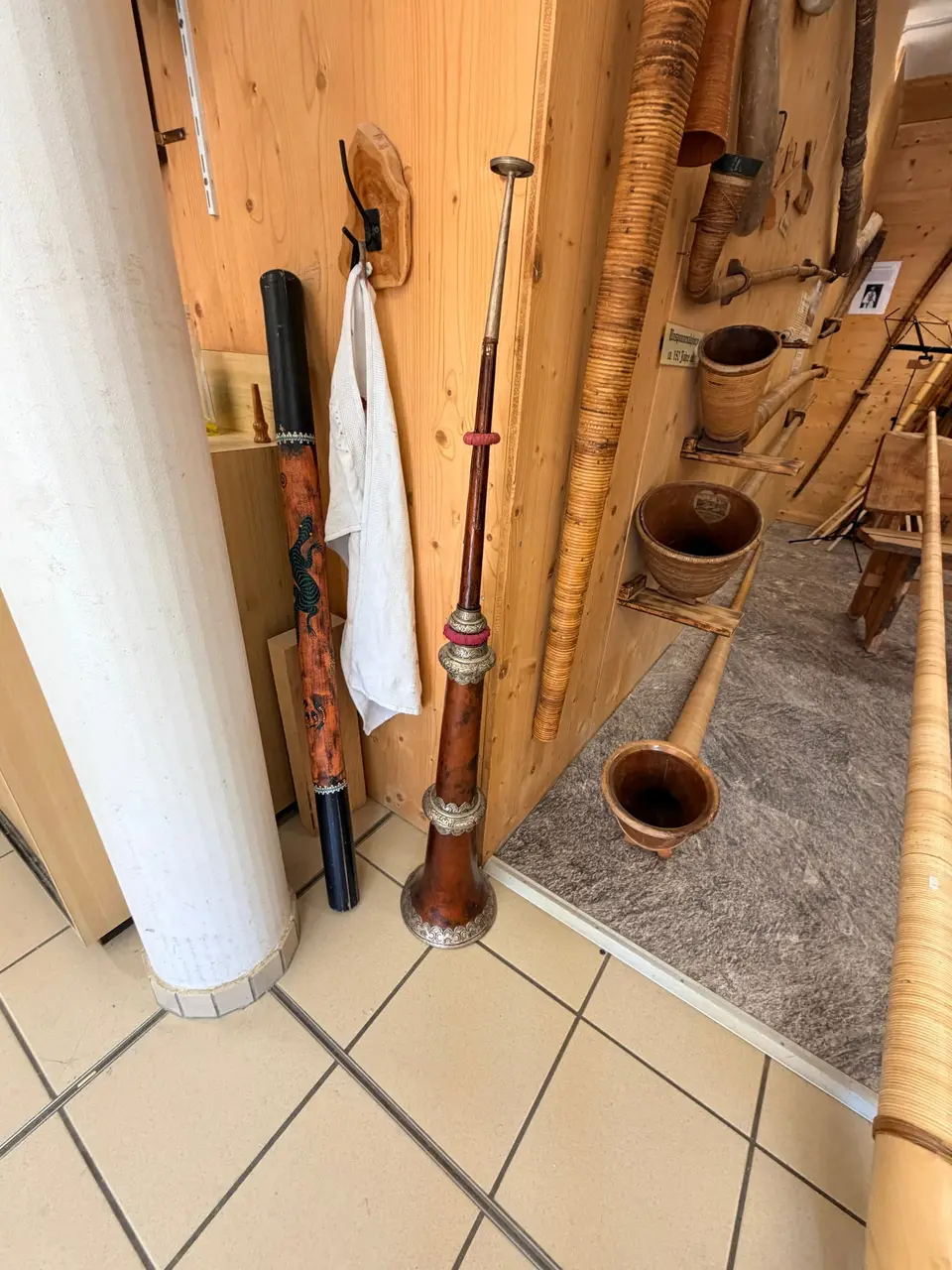
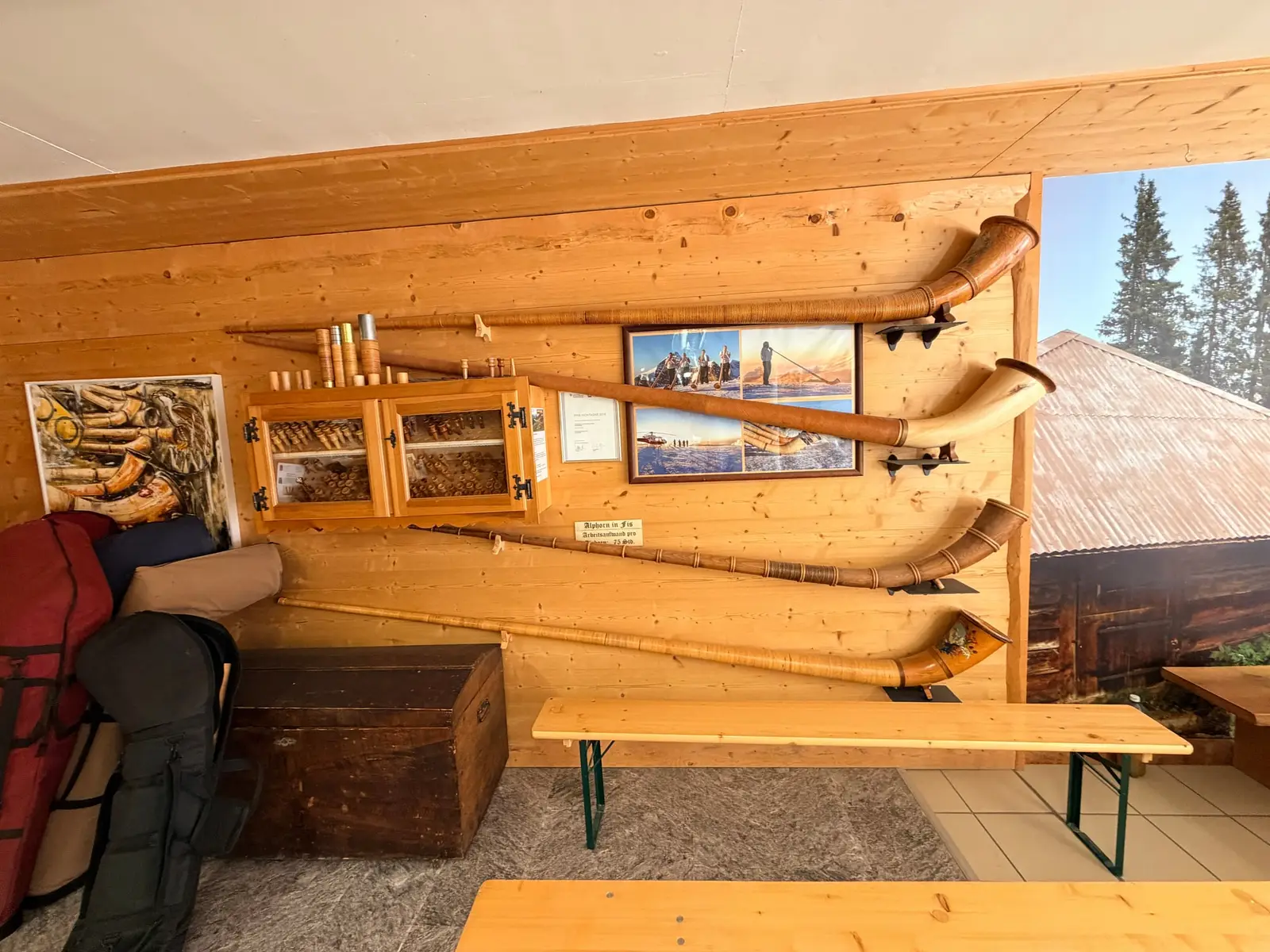
- Inside, the sections are turned, bound with cane, and the bell carved and painted. Our photographs are the bench and the tools, horn sections hung along the wall, finished instruments leaning in a row, a carved bell, and horns wrapped and ready to ship.
- The one worth looking at twice is two alphorns actually being played in the workshop, which is what the room is for and what a display case cannot do.
This is the second instrument maker in this archive, after the brass workshop at Freischling in Austria. That is not a coincidence, and /about says why.
What it costs, and what it does not
- The museum is free, and mostly open. You can walk in, smell the spruce, and look at the horns without arranging anything or paying anybody.
- The shop takes visitors without an appointment. No booking, no ticket.
- A guided tour of the actual workshop is by request only, and it is chargeable. Factory visiting hours run 08:00–12:00 and 13:00–17:00. This is the part people turn up hoping for and do not get: if you want to be walked through how a horn is made, it has to be arranged in advance, not asked for at the door.
- The village itself is free and always open, which is the other half of the stop. The road, the chalets and the view back down the valley cost nothing.
- Checked against bernatone.ch and interlaken.swiss on 16 September 2026. A one-man workshop’s hours are exactly the kind that change, so confirm before you drive up.
Getting there, and how long
- It is a short run up from Interlaken, on a road that ends at the village. There is a bus stop in Habkern, so it is reachable without a car, but the schedule is a rural one and it decides your day rather than the other way around.
- Ninety minutes to half a day. The shop and the museum are half an hour; a booked workshop tour is a couple of hours; the village adds a slow walk and a coffee.
- It sits above Interlaken, which means it pairs naturally with a Bernese Oberland day rather than standing alone — Lauterbrunnen, Grindelwald and Mürren are all within reach of the same base.
When to bother
- Any dry day between late spring and autumn. This is a village and a workshop, not a viewpoint, so it does not need the weather the mountain days need — but the road up and the walk around it are better without rain.
- Go if somebody in the party likes making things. The appeal here is watching a material become an object, and it lands hardest with people who would rather see a workshop than a castle.
- Skip it if your week is already tight. Habkern is a genuine pleasure and it is not a headline. On a six-day Swiss trip with the Jungfrau region to fit in, it is the first thing we would cut — and we would tell you that rather than leave it on the itinerary to be discovered as filler.