Before you go — do not rent a car
Everything in this guide sits on one railway line along the coast, and the line is the single best thing about traveling here. Nice to Monaco is about 24 minutes and €4–7 second class, with something like 55 trains a day. Villefranche-sur-Mer is the first stop out of Nice, seven minutes along. That fare is the one figure on this page we cannot stand a source up for — SNCF and the regional Zou! site both publish fares only through a journey search, not as a table — so treat it as the shape of the cost and check it on the day.
- Base yourself in Nice. It has the airport, the beds and the cheapest food of the three, and the other two are day trips from it.
- A car is a liability. Monaco parking is expensive and the corniche roads are slow in summer. The train runs above the sea most of the way and you can look out of the window.
- This is a two-day trip, honestly. Ours was 26 and 27 July 2023 and it did not feel rushed — Monaco one day, Villefranche and Nice the next.
Monaco — and the dress code that changes three times a day
This is the thing nobody tells you and it decides whether you get in. The Casino de Monte-Carlo runs on two clocks: visits in the morning, the gaming rooms from 2pm, and three different dress codes depending on when you turn up.
- Morning, on the heritage visit: relaxed. T-shirts, shorts and sneakers are all fine. This is when to go if you are on a day trip in July.
- From 2pm to 7pm: no shorts — including bermudas — and no ripped jeans, athletic wear, sneakers, sandals, tank tops or beachwear.
- After 7pm: no shorts, no t-shirts, no sweatshirts. Dark jeans and smart shoes are tolerated; a jacket is recommended for men.
- Entry to the gaming rooms is €20 from 2pm, and half of it comes back — €10 of the €20 is credit for the slot machines, the bar or Le Salon Rose. So the real cost of walking in is ten euros, which nobody says.
- ID is compulsory and it must be the physical document. An EU national ID card or a passport with a photo. Photocopies and phone photographs are refused, and you must be over eighteen — the casino's wording is a day older than your birthday.
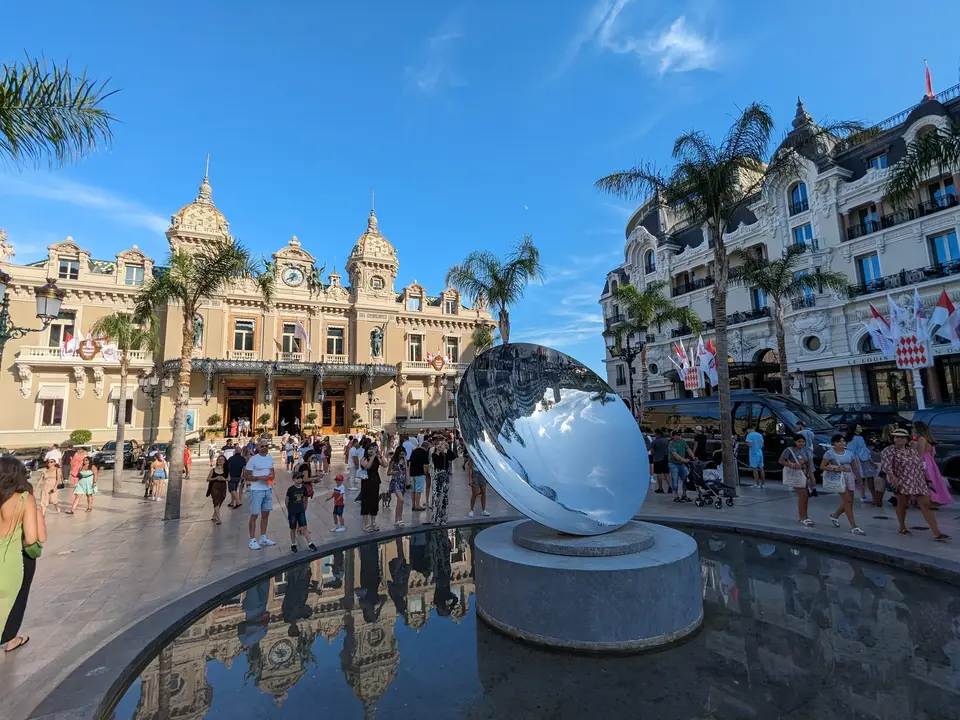
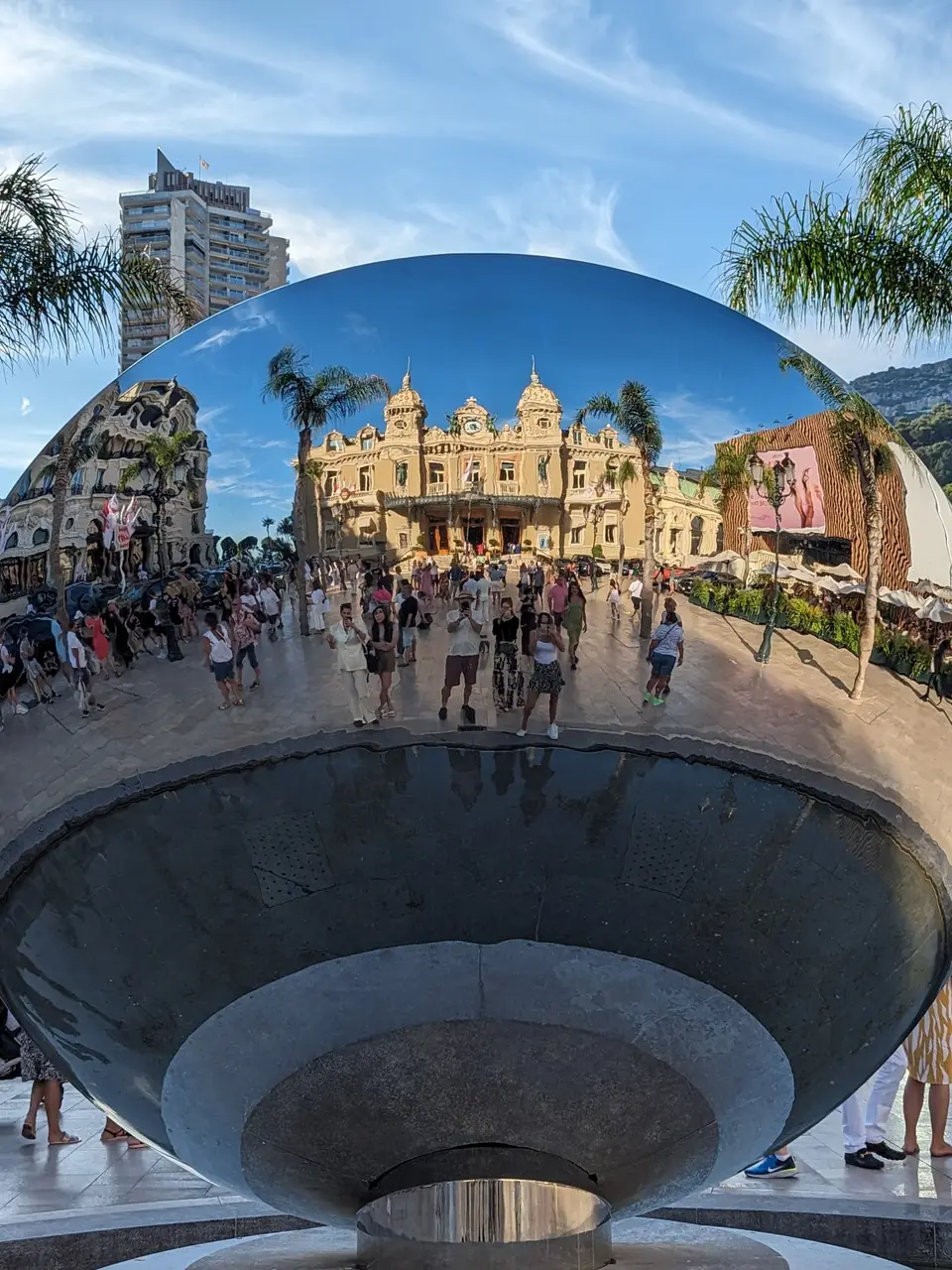
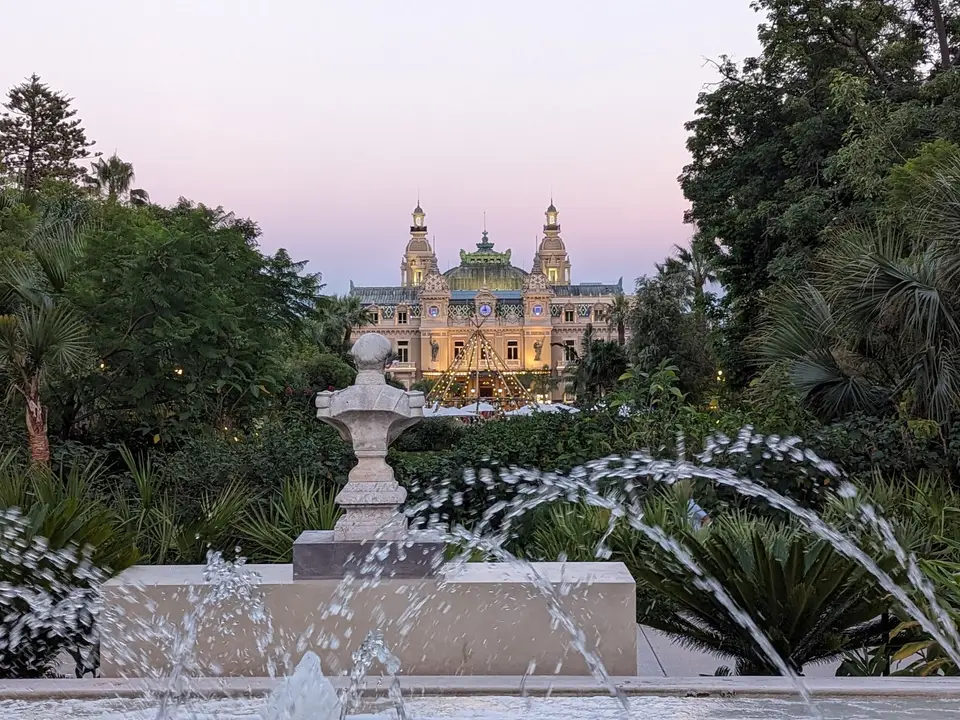
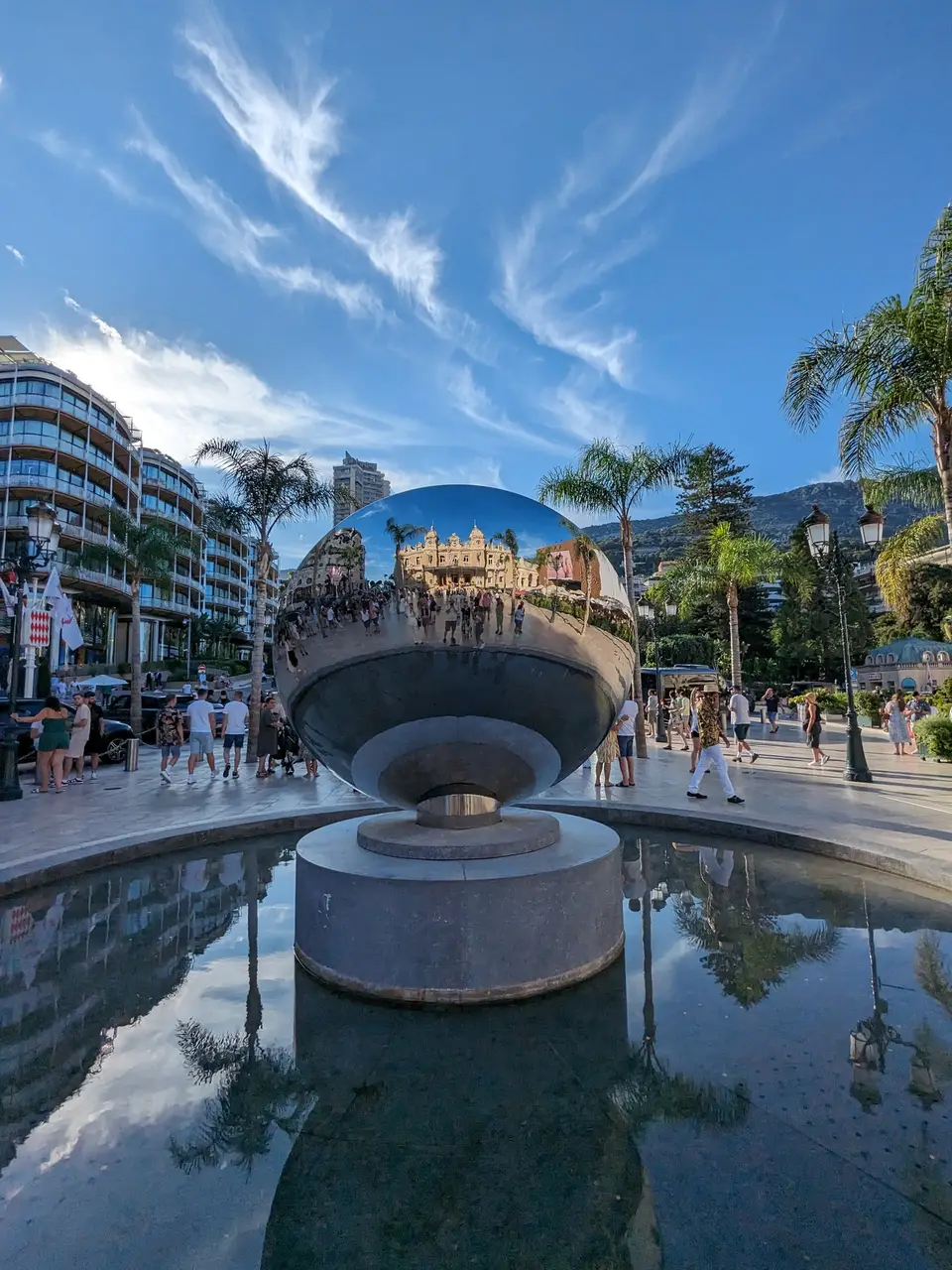
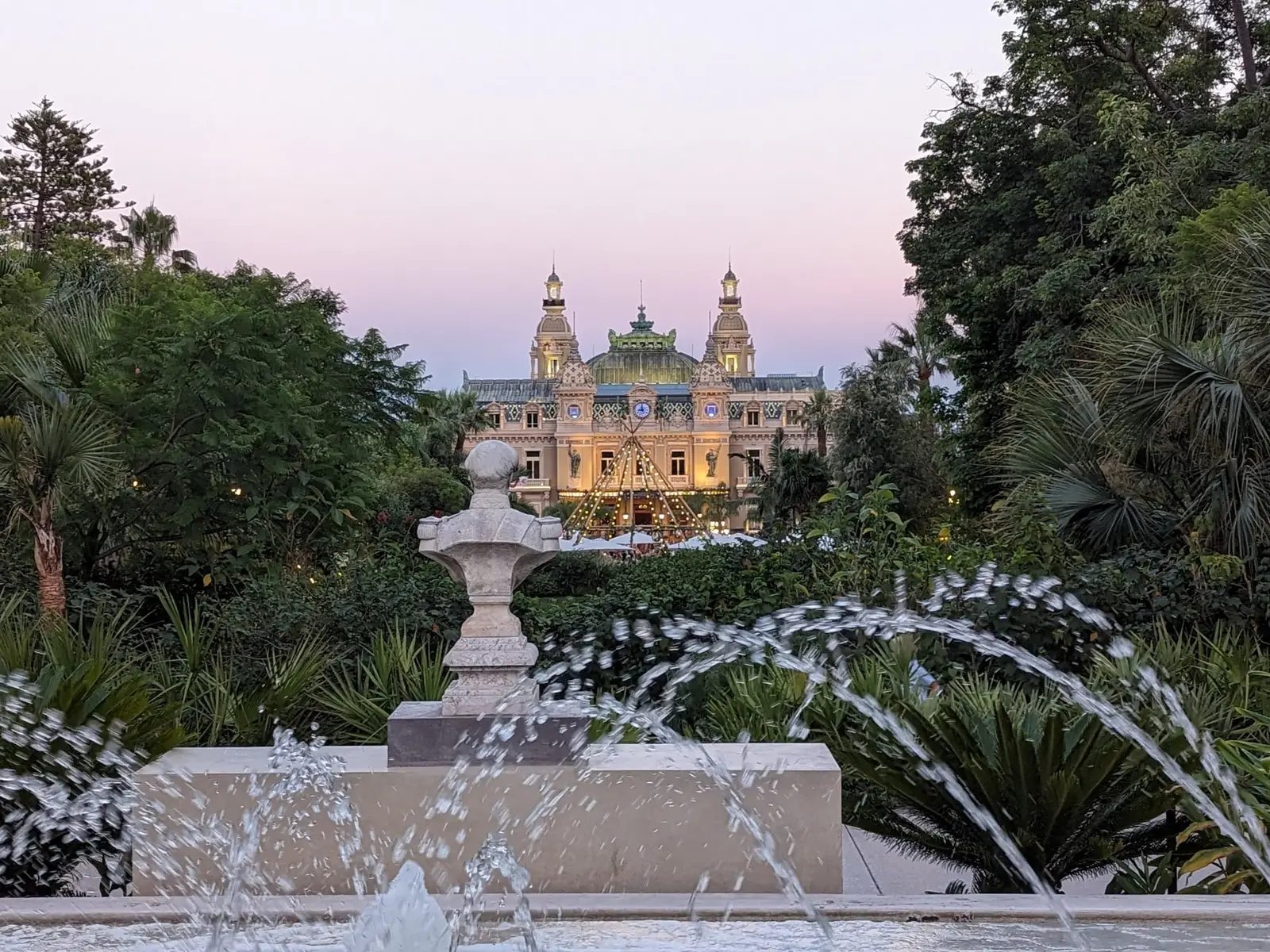
The gardens and the square outside are free, and they are where the photographs on this page were taken — the fountain, the mirrored sphere, and the casino front with the cars parked in a row.
The rest of Monaco
- The changing of the guard is free and it is at 11:55 every day in the Place du Palais, up on the Rock. Not noon — 11:55. Be there by twenty to.
- The Prince's Palace state apartments are €13 (€11 students, €8 children 6–17, under 6 free) and open 30 March to 15 October. In July and August 10am–7pm, last entry 6pm; shorter the rest of the season.
- The Oceanographic Museum is €22.50 (€14 students and children 4–17). It is the most expensive ticket on this page and the best one for anyone with children. Book it online at least a week ahead and it is €20.50 and €13 — about ten percent, and the only discount on this page you get simply for deciding early.
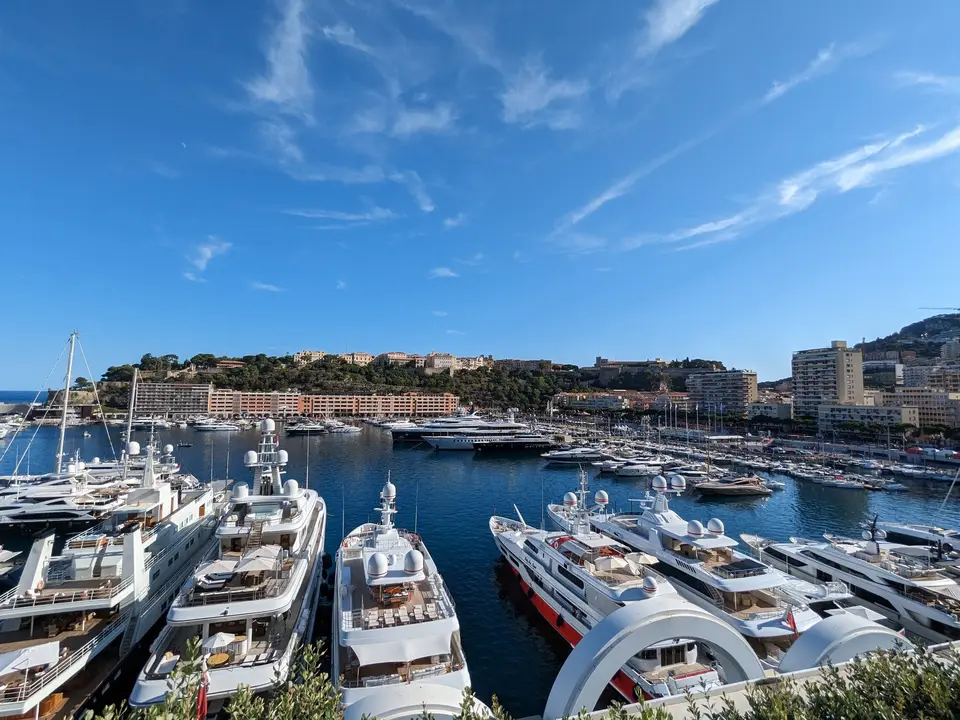
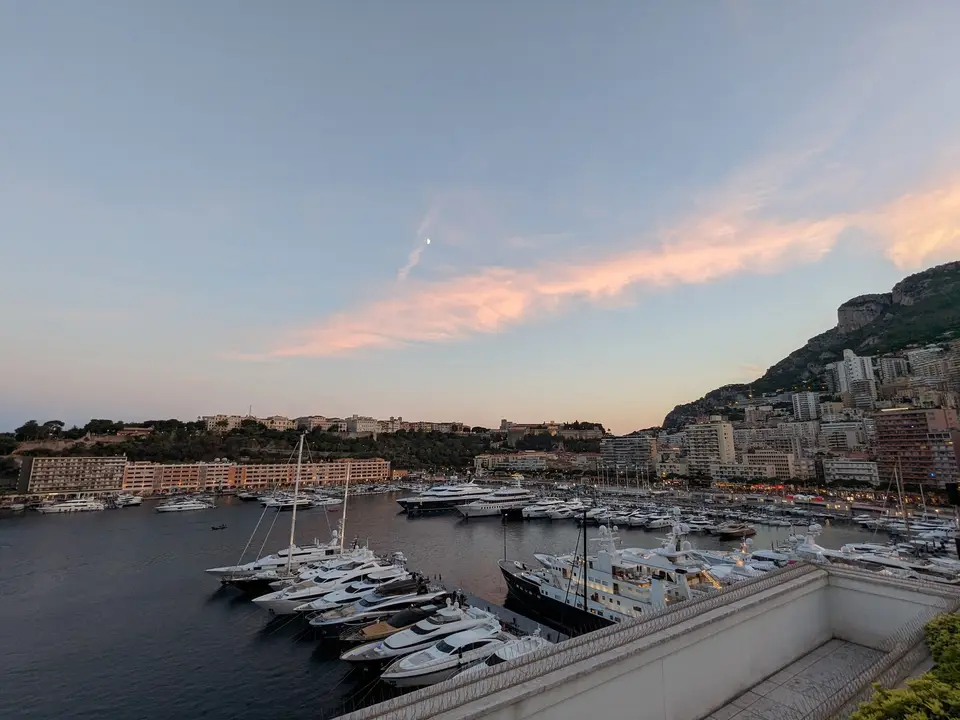
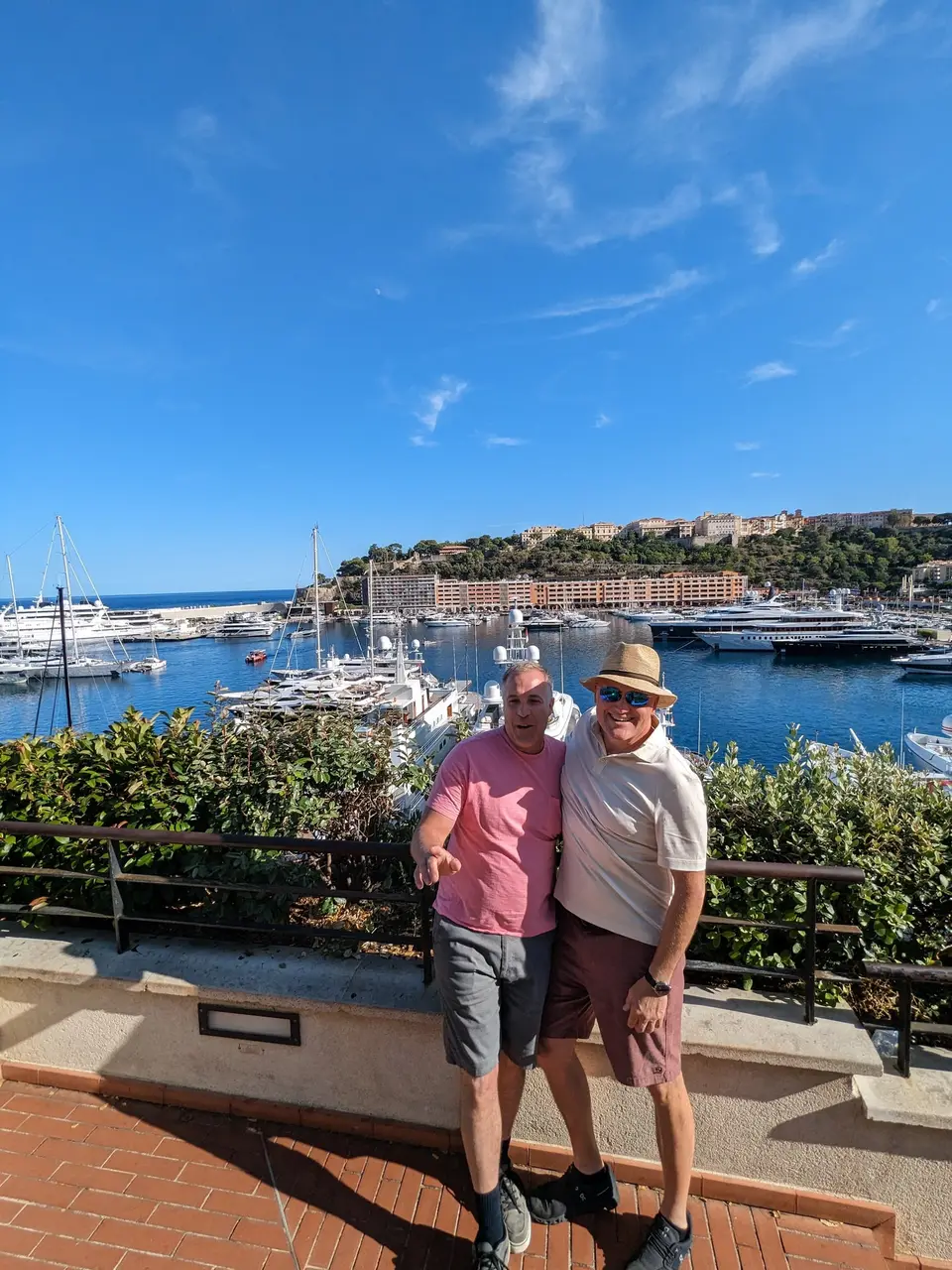
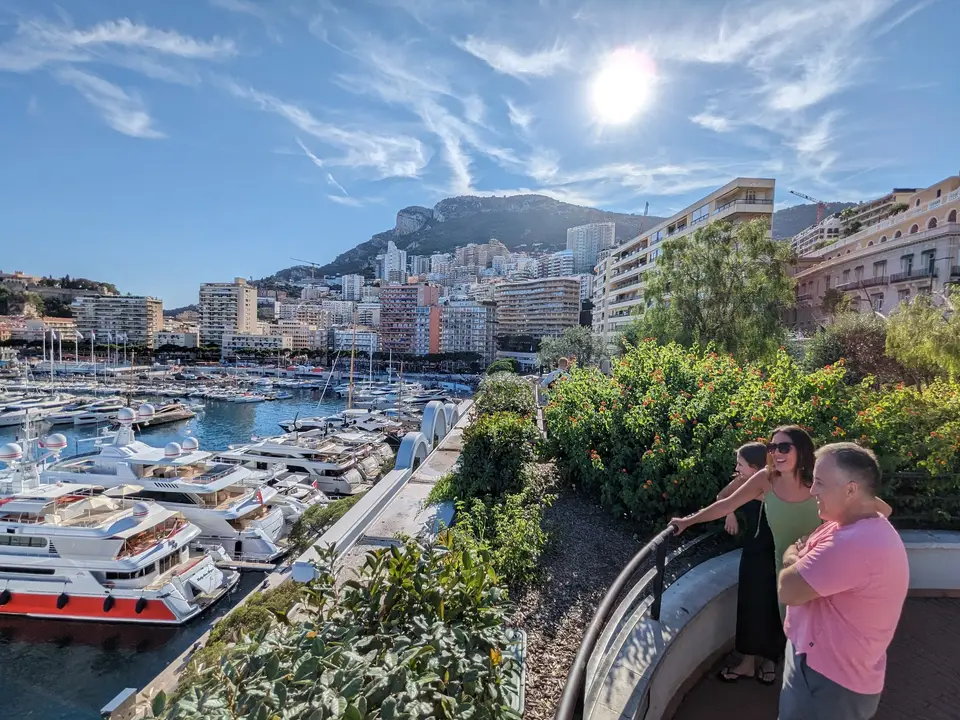
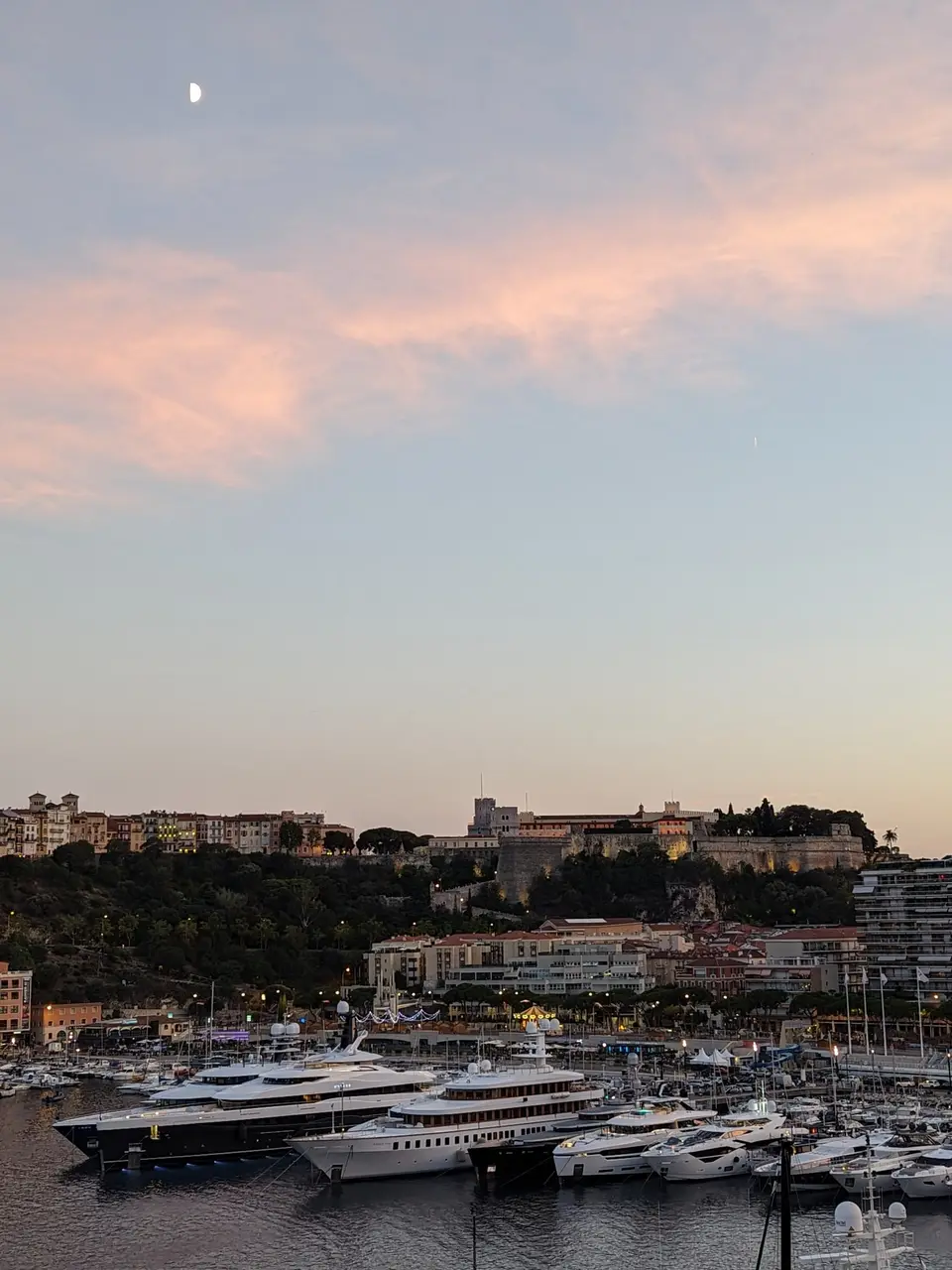
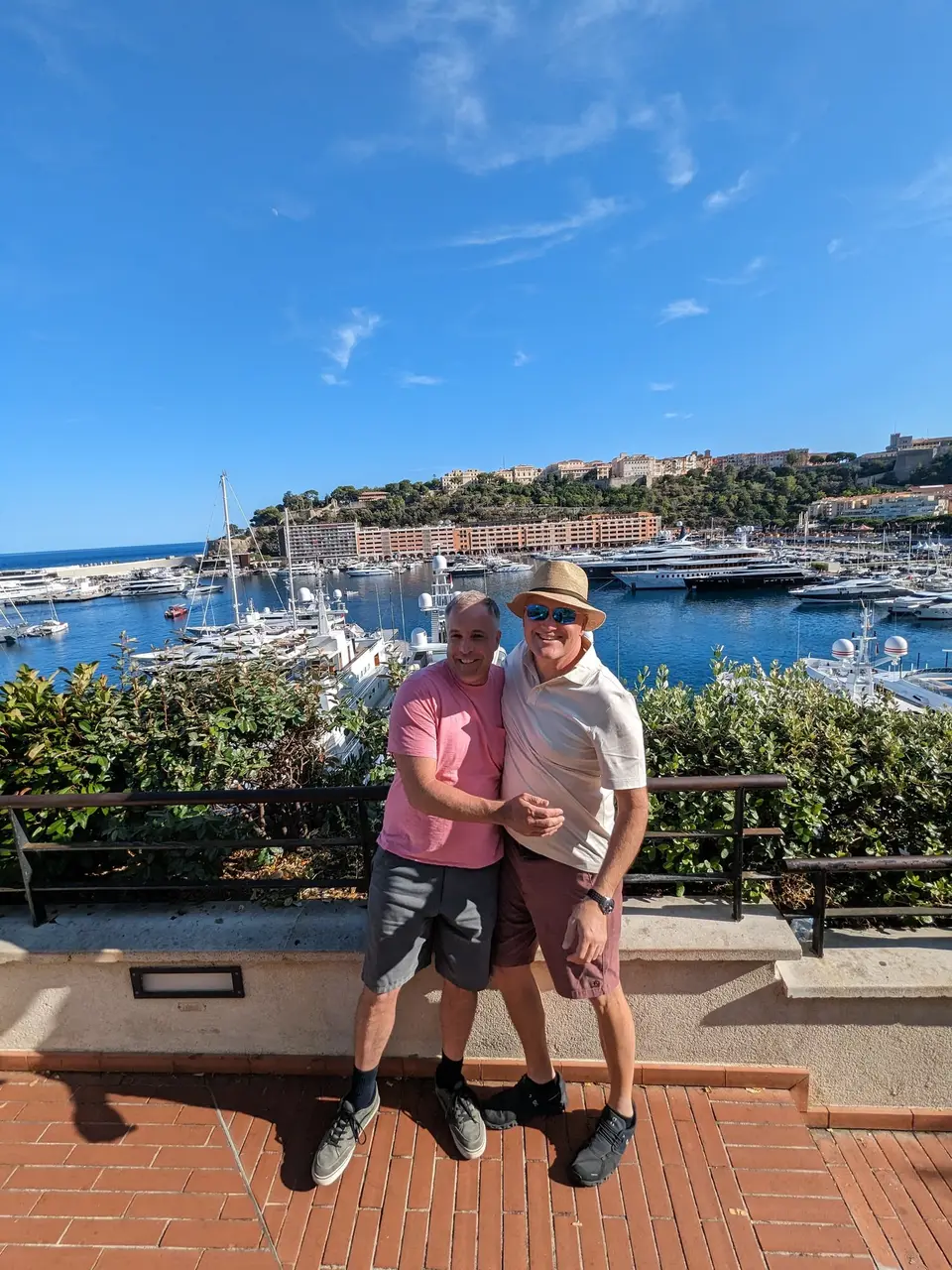
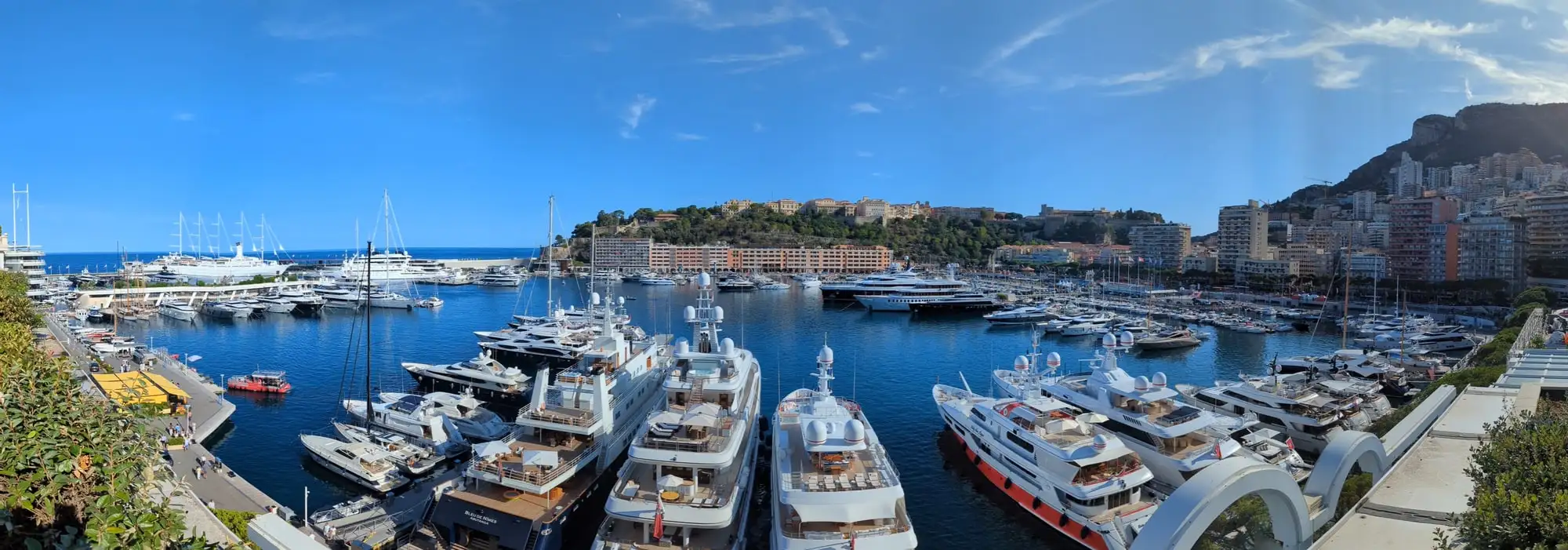
- The harbor costs nothing to walk round, and half our Monaco photographs are of it — the superyachts, the Rock behind them, the whole place laid out from the far side.
- Monaco prices, hours and the dress code checked 22 September 2026 against the operators' own pages: montecarlosbm.com, visitepalaisdemonaco.com, palais.mc and musee.oceano.org. The train fare above is not part of that check — see below.
Villefranche-sur-Mer — seven minutes and a different century
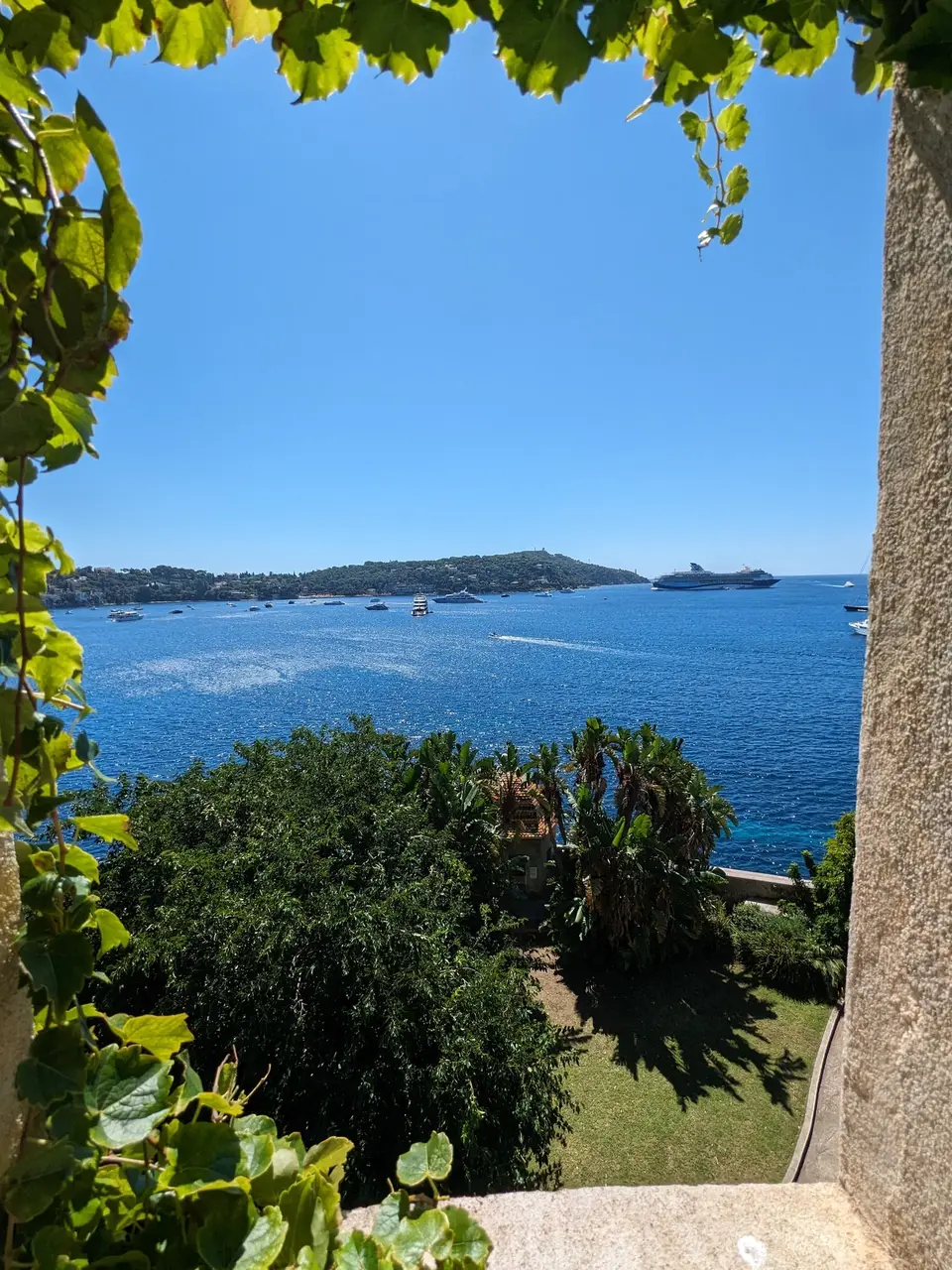
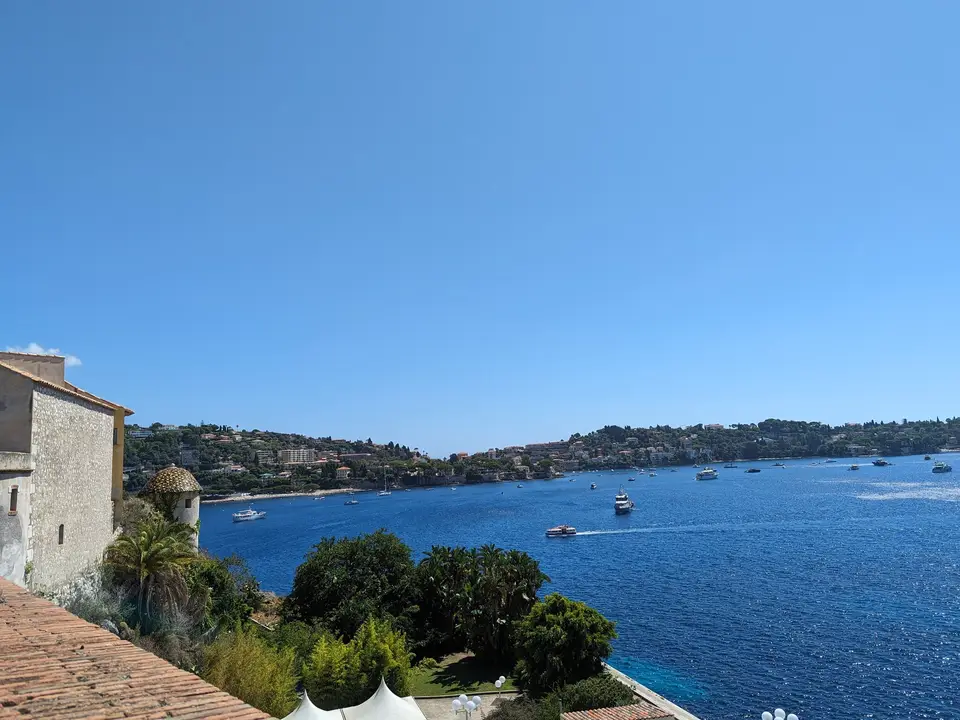
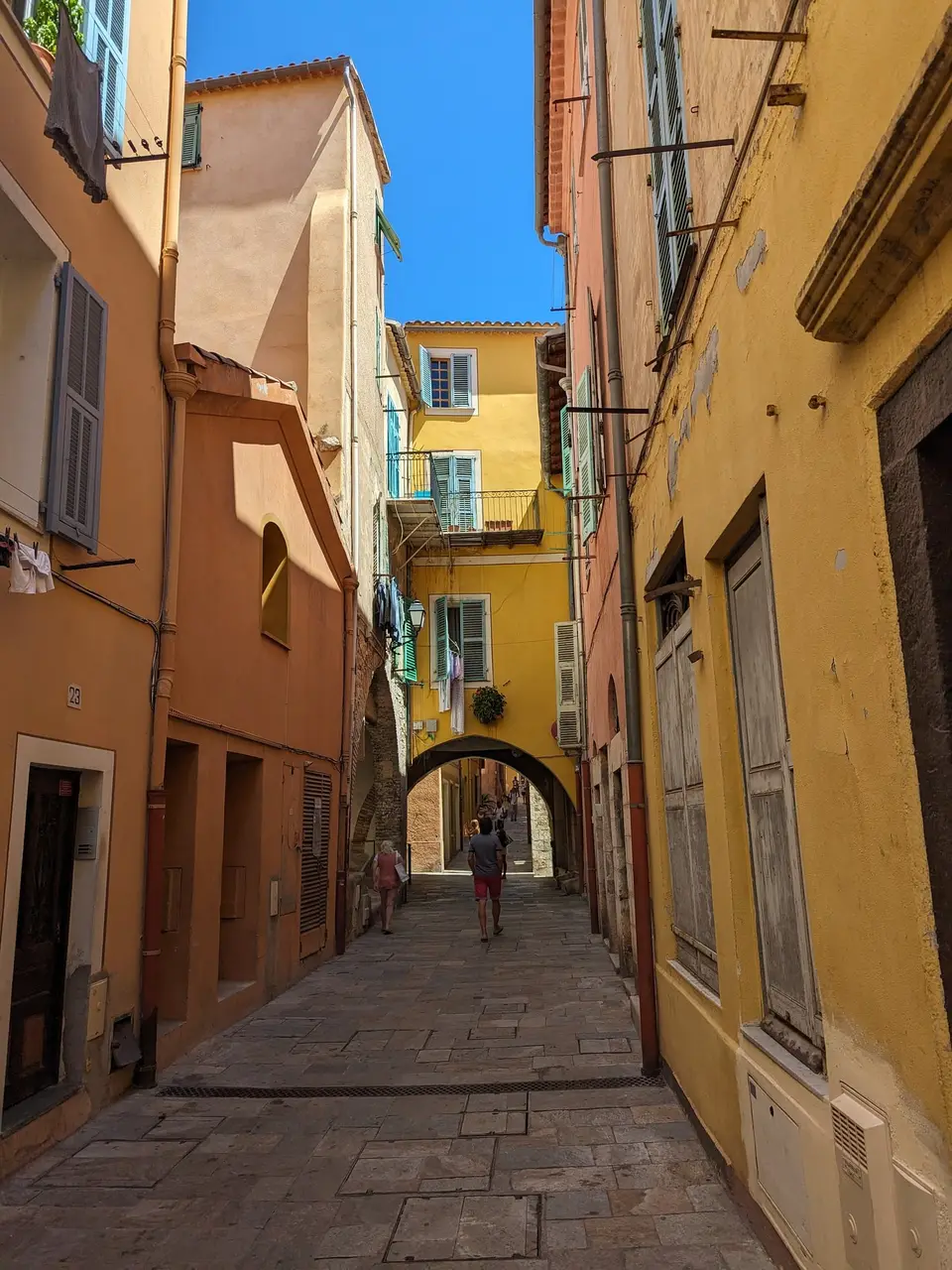
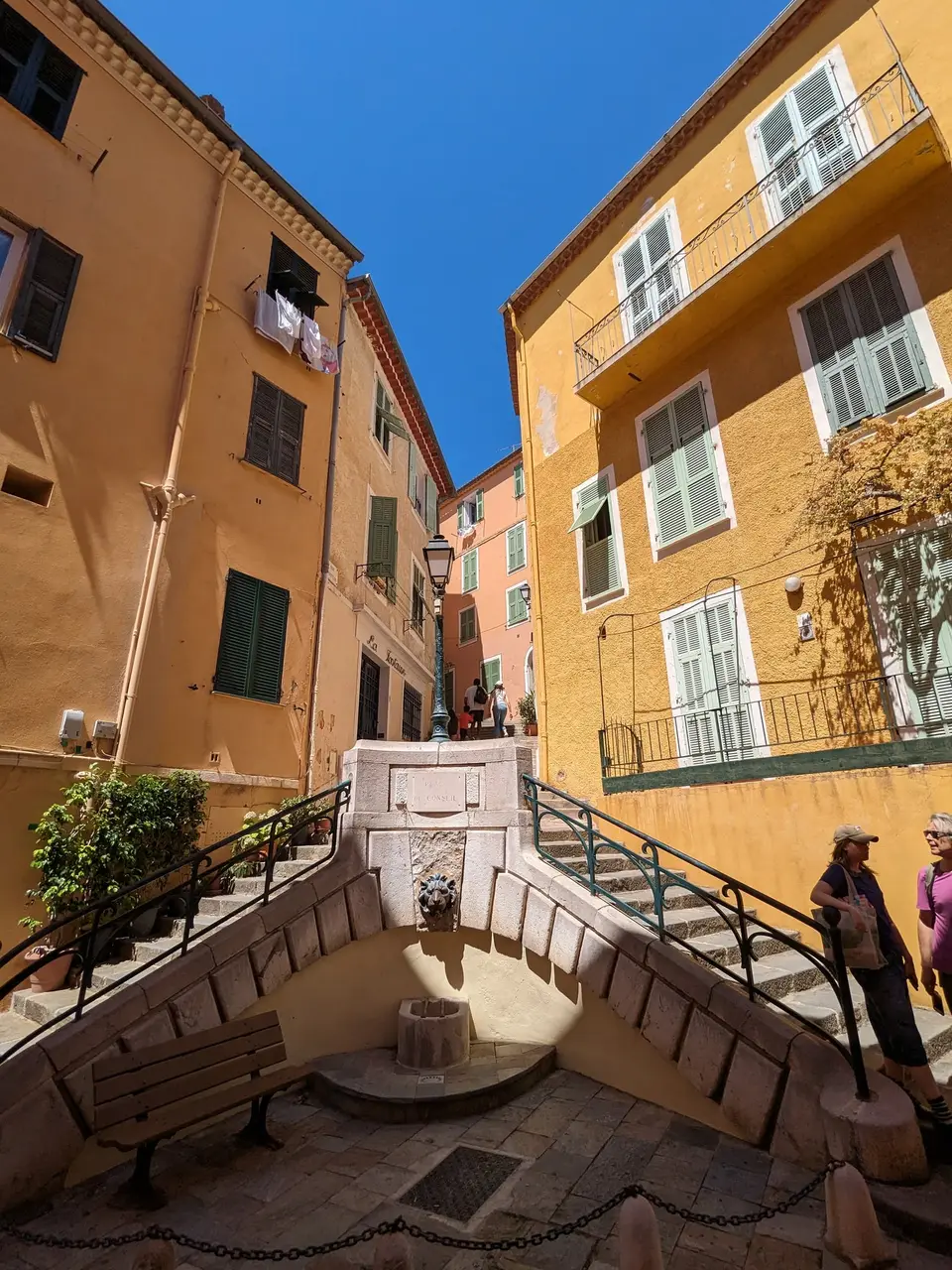
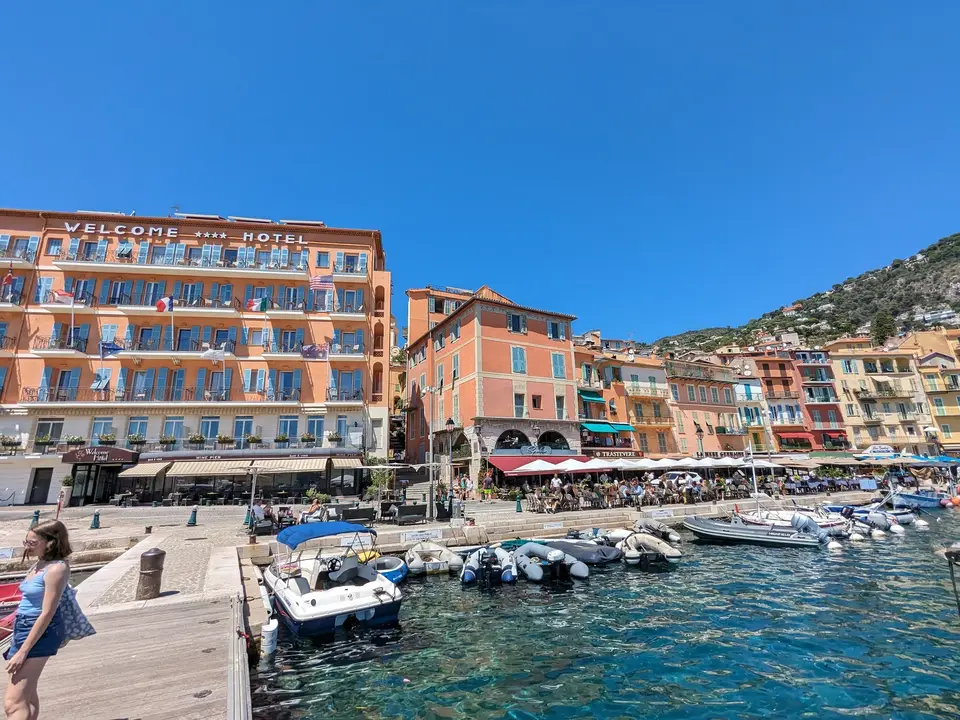
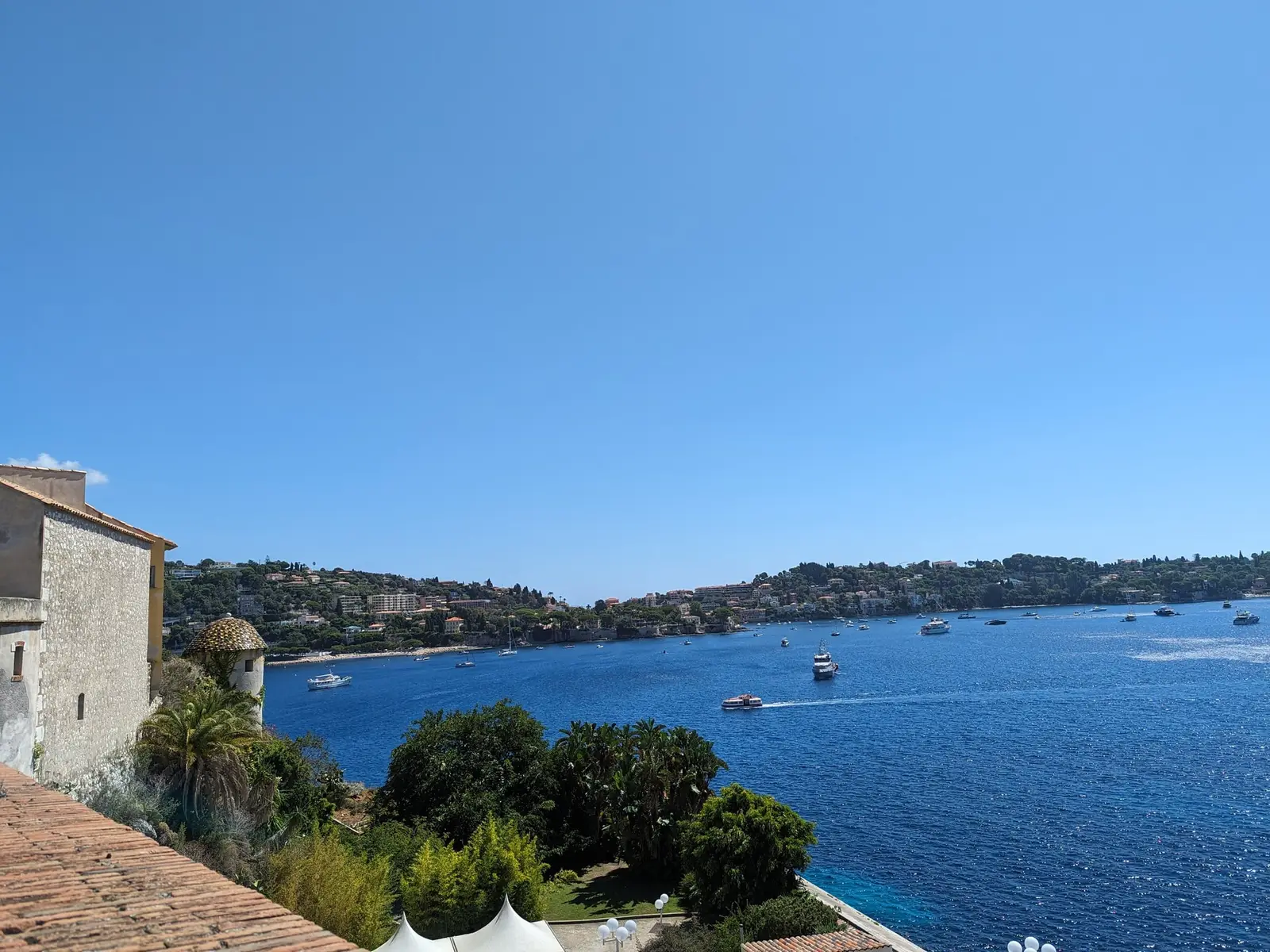
- Seven minutes from Nice by train, and it is the single loveliest thing on this coast: a deep natural bay, ochre and pink houses stacked above it, and almost no traffic.
- Walk the old town. Stepped lanes drop straight down to the water, and the Rue Obscure — a vaulted covered street from the thirteenth century — runs under the houses.
- The bay is deep enough for cruise ships to anchor in, which is why one appears in our photographs. It is also why it can be crowded in the middle of the day and empty by six.
- Free, all of it, apart from what you eat.
Nice — the old town, the square and the sea
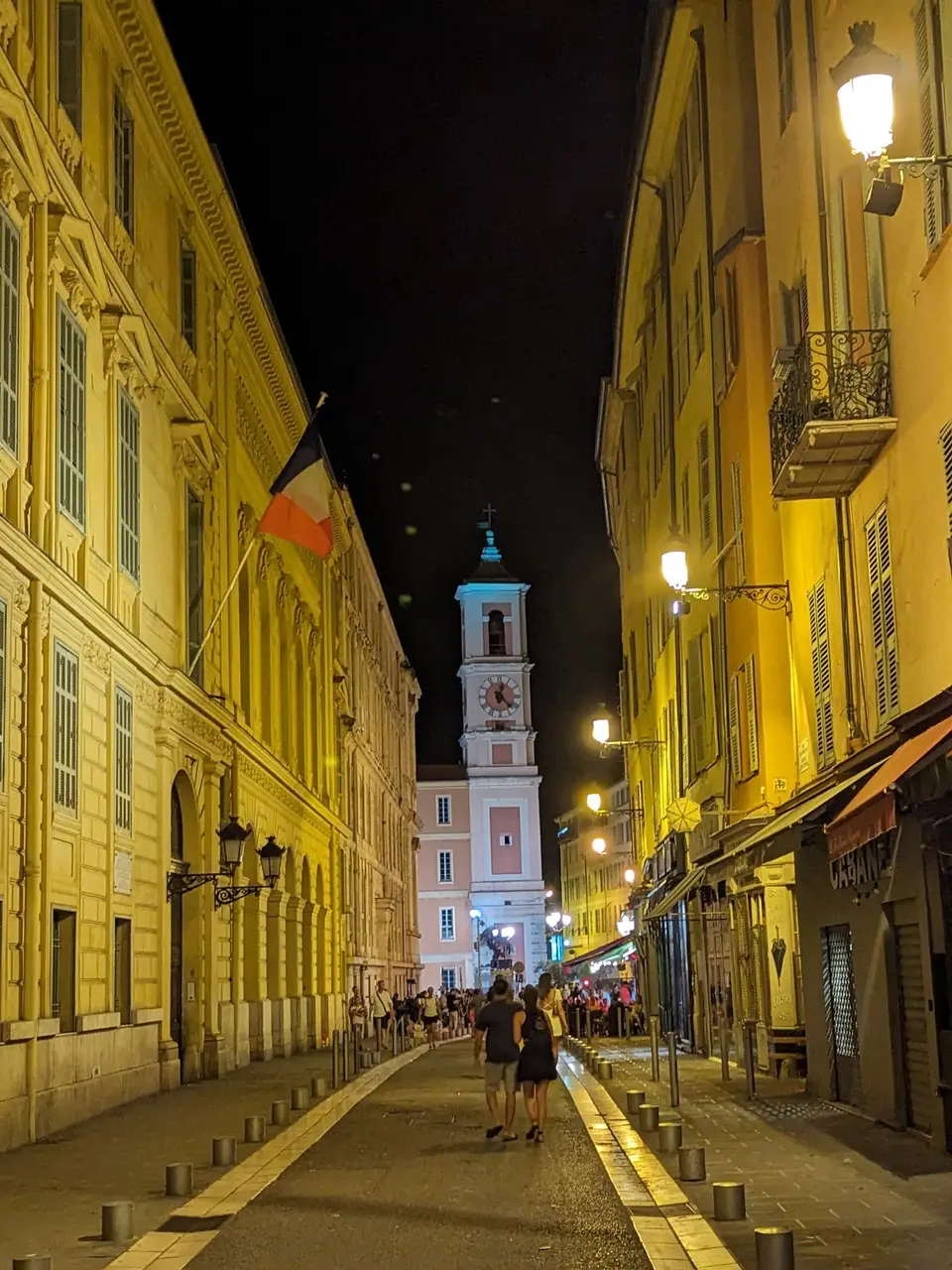
- Vieux Nice after dark is the best of it. Narrow lanes, ochre walls lit yellow, the clock tower above them — that is the photograph on this page and it costs nothing.
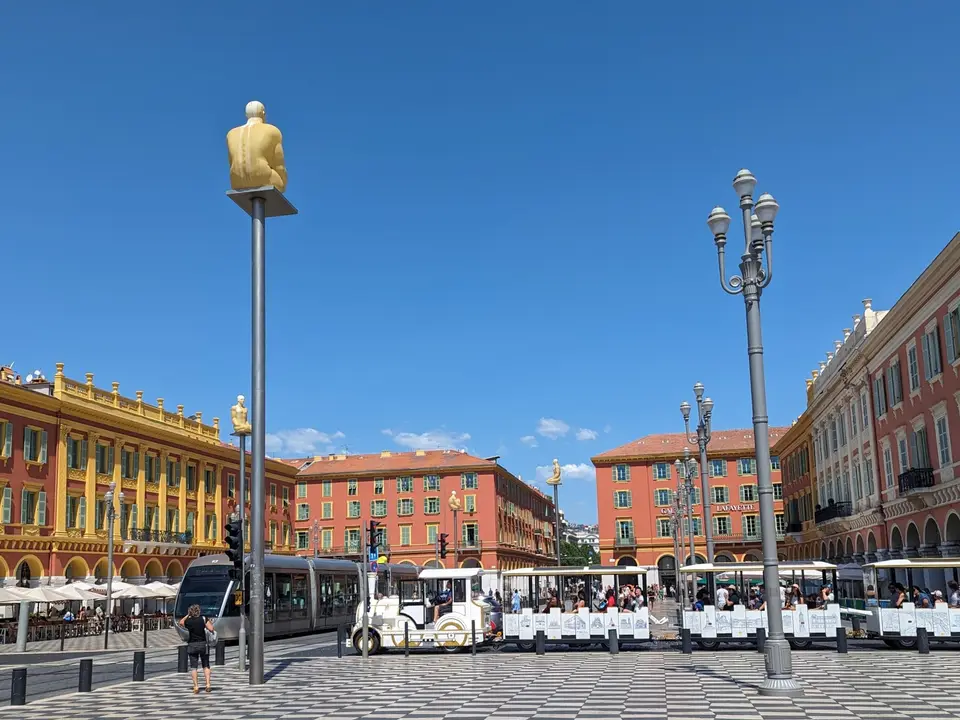
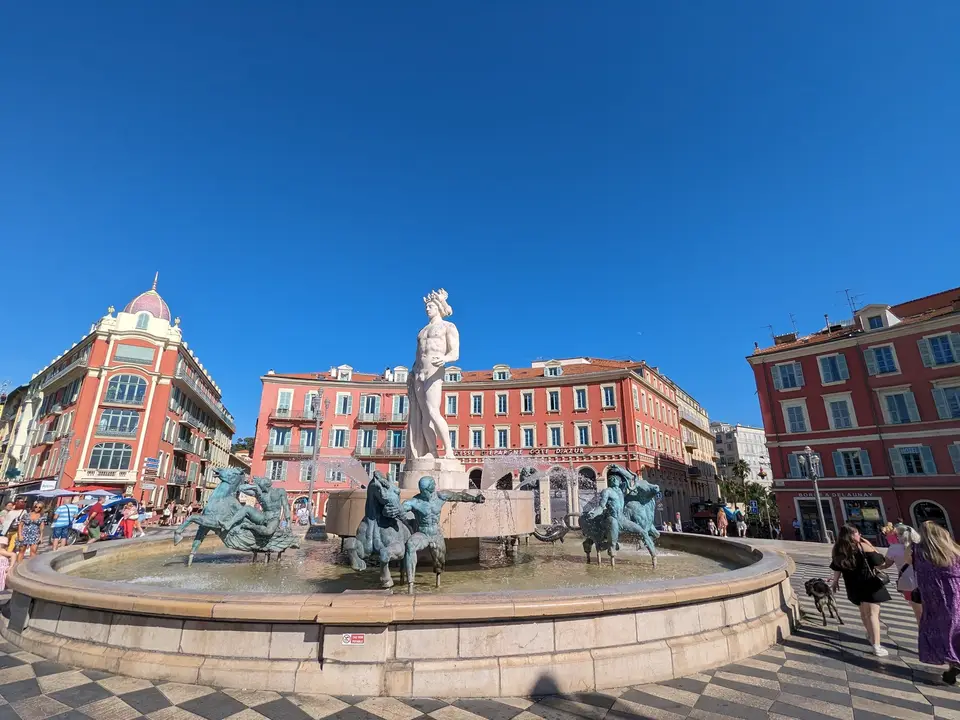
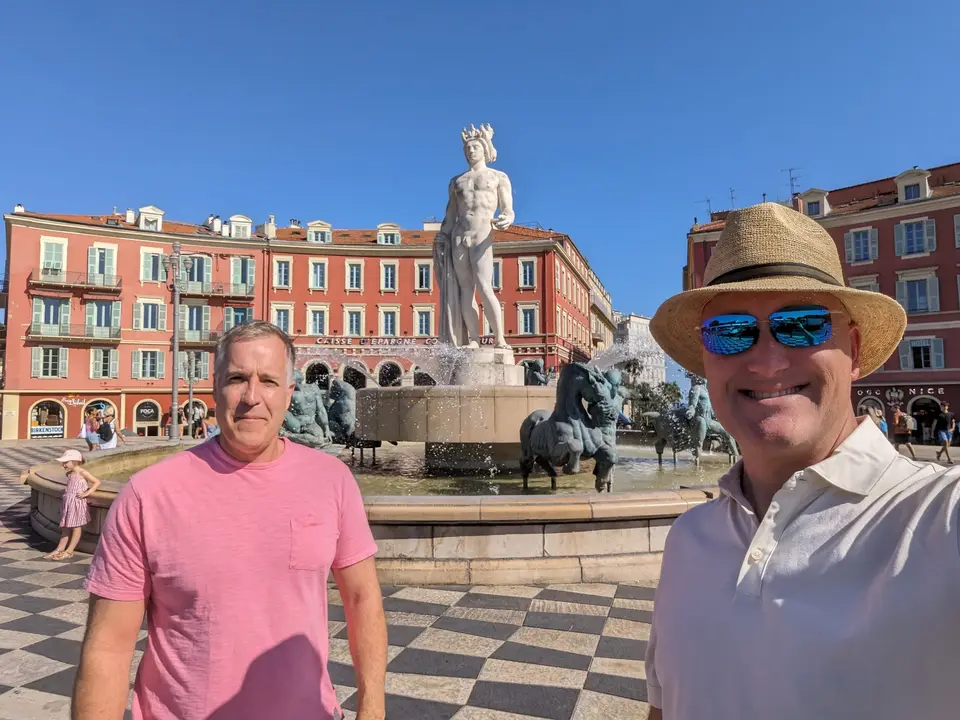
- Place Masséna with its red arcades and the chequerboard paving, and the fountain with the statues below it, is the center of the city and free to stand in.
- Castle Hill — there is no castle left, but there is the view back over the whole Baie des Anges and it is free to walk up.
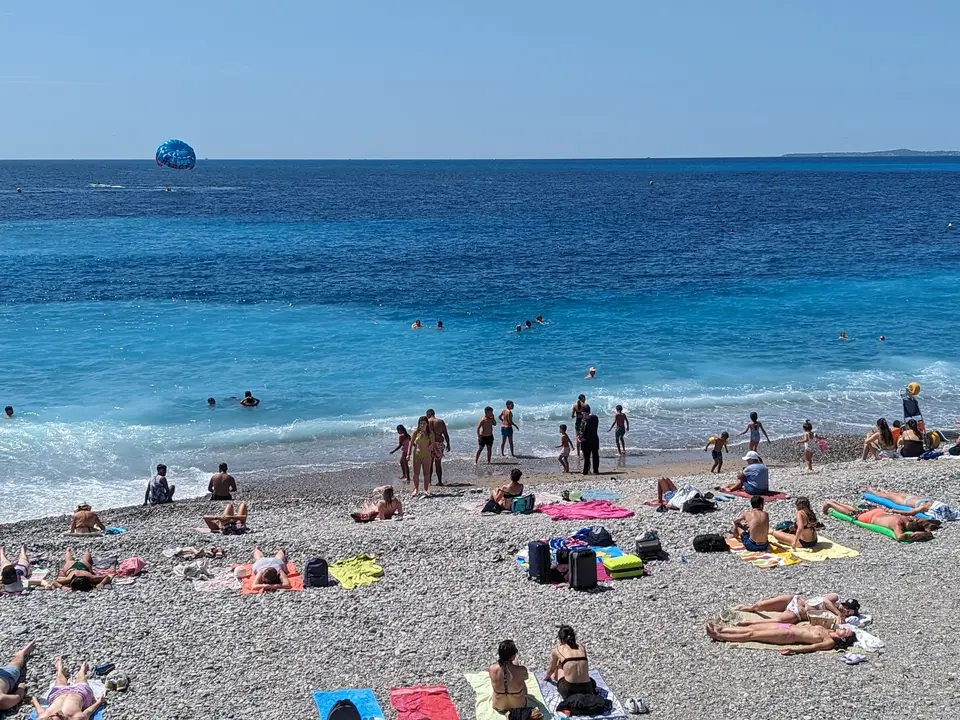
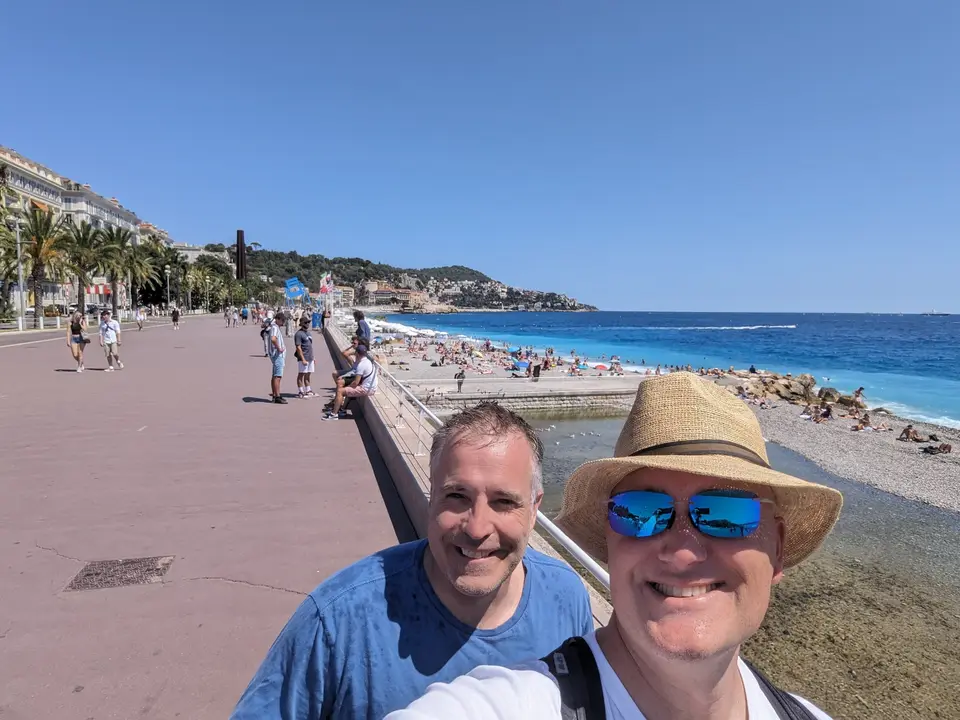
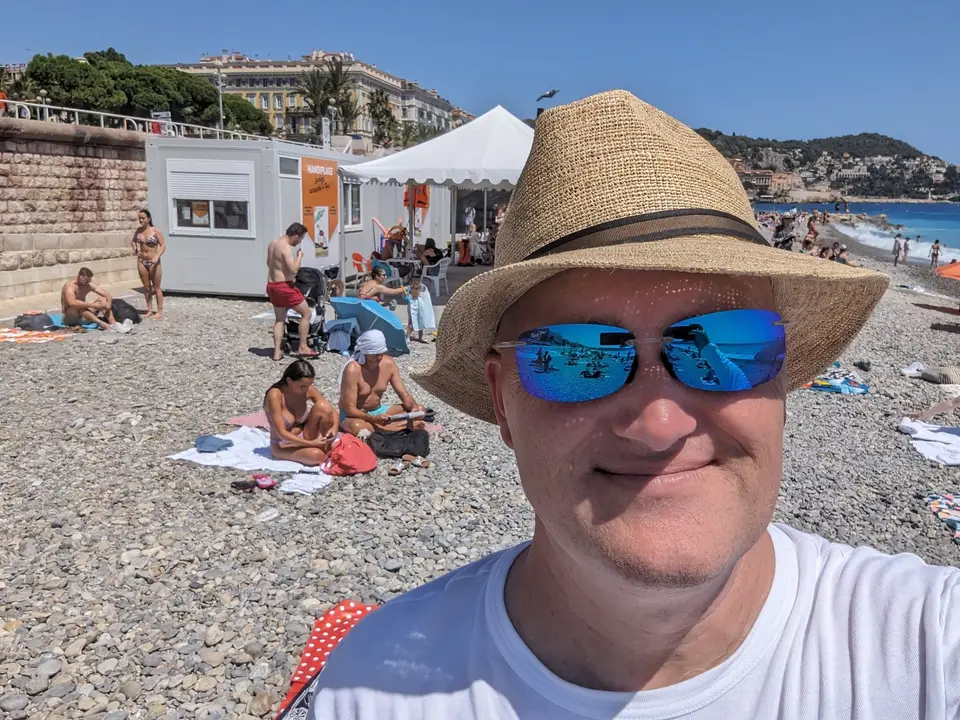
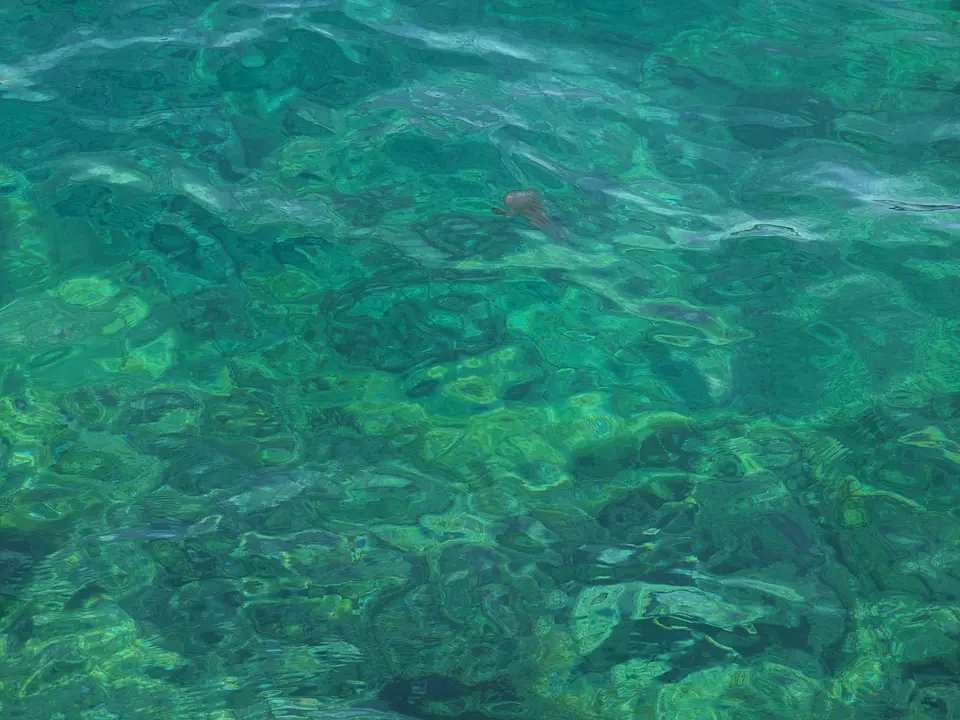
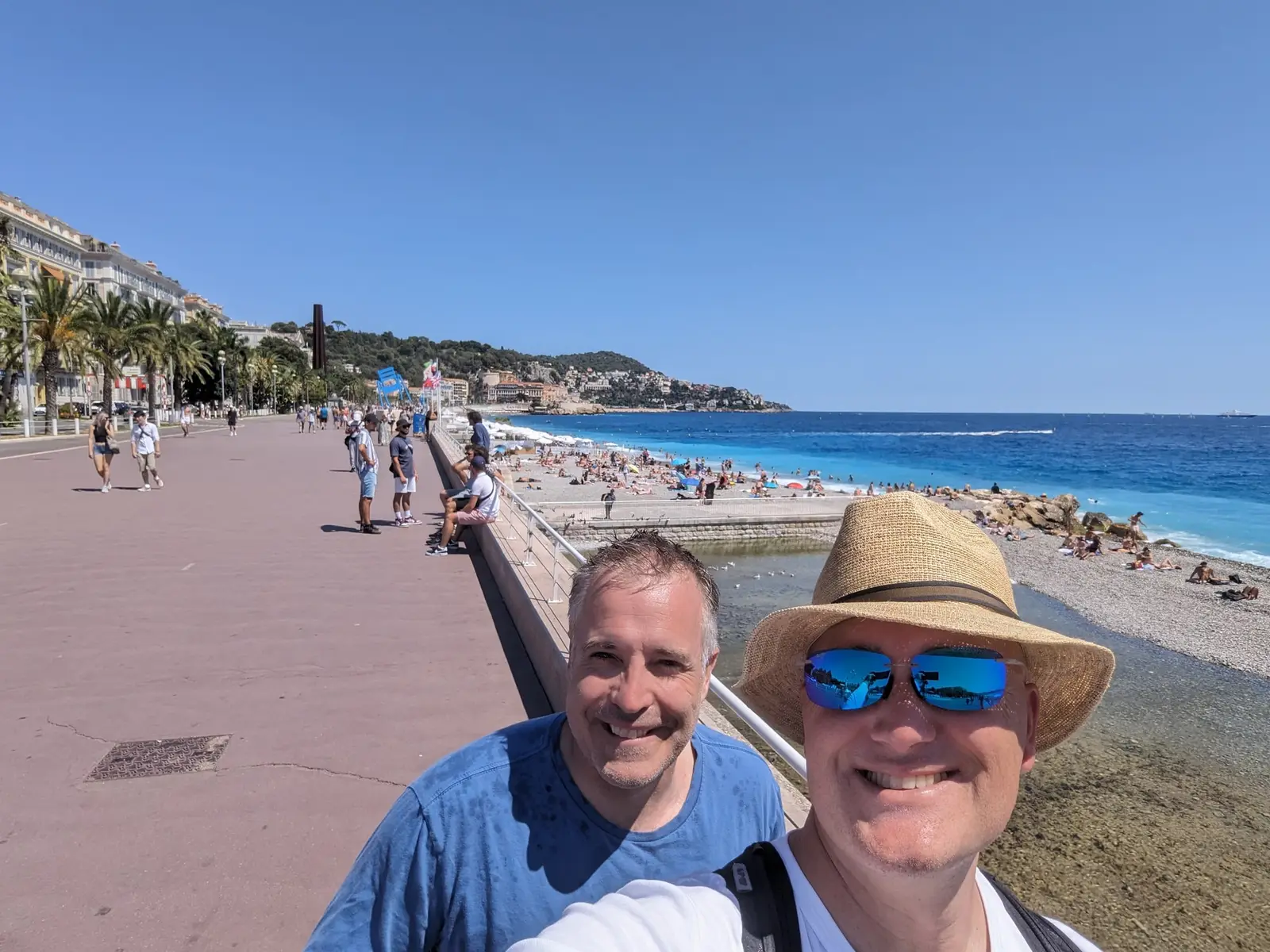
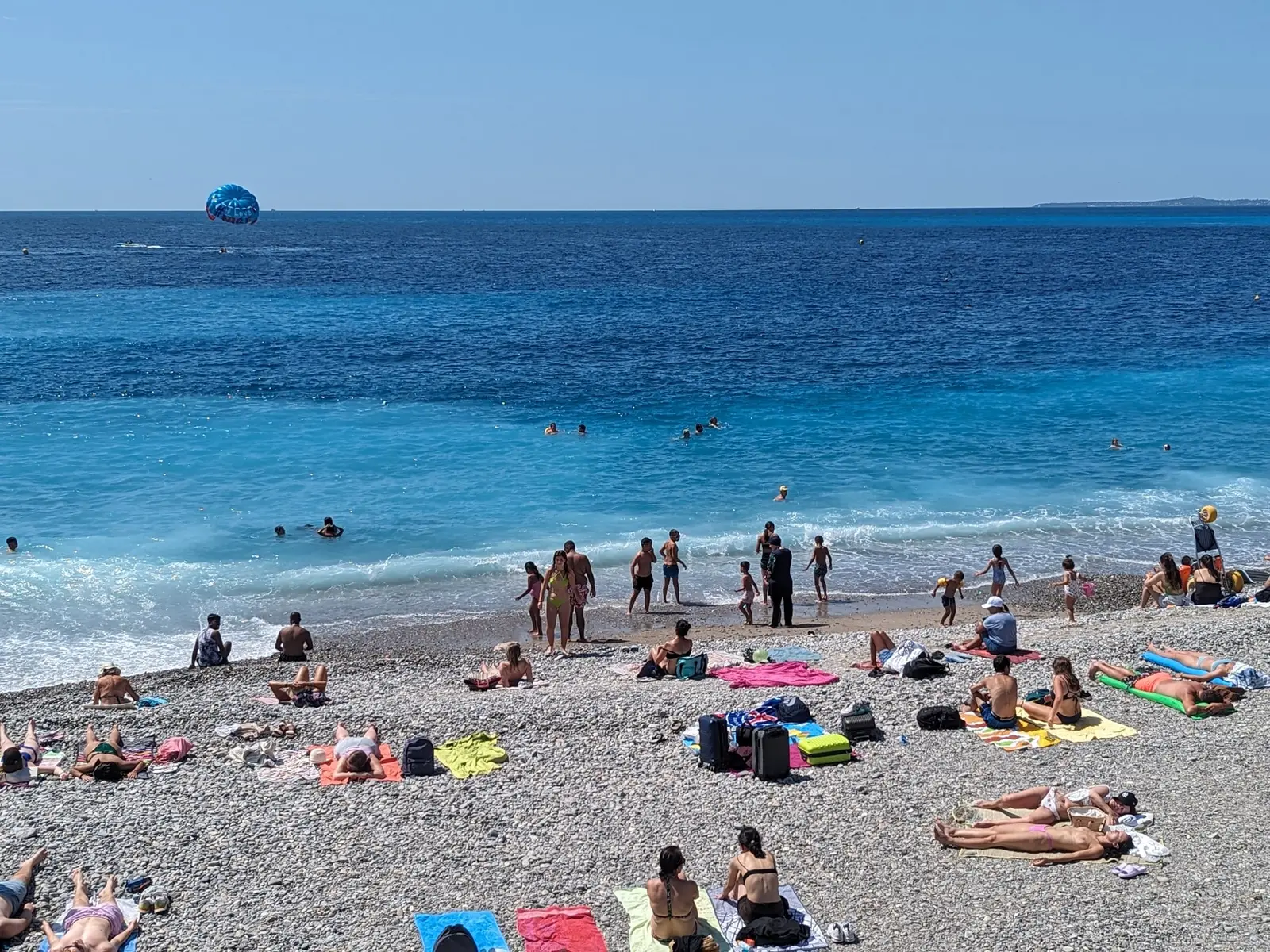
- The beach is pebbles, not sand. Bring something to sit on and shoes you can walk into the water in. The color of that water is not exaggerated in our photographs.
- Eat the socca in the old town — chickpea flatbread, cooked on a copper plate, sold by the slice, and the cheapest good thing on the Riviera.
When to come
- We went in late July and would not do that again by choice. It works — every photograph here is from it — but it is hot, the beaches are full, and Monaco in the afternoon is a line in the sun.
- May, June and September are the same coast with the sea still warm and half the people. This is the one guide on the site where our own dates are not the recommendation.
- Late May is Grand Prix week in Monaco. Unless that is the reason you are going, avoid it — the town is closed, fenced and expensive.
How long?
Two days does it properly, from a Nice base, and a third is only worth it if you want to push further along the line — Antibes, Cannes and Menton are all on the same railway and we have not been to any of them, so we are not going to tell you which. Northern Italy is also closer than people think: Genoa is under three hours from Nice by train, and we have written that up.