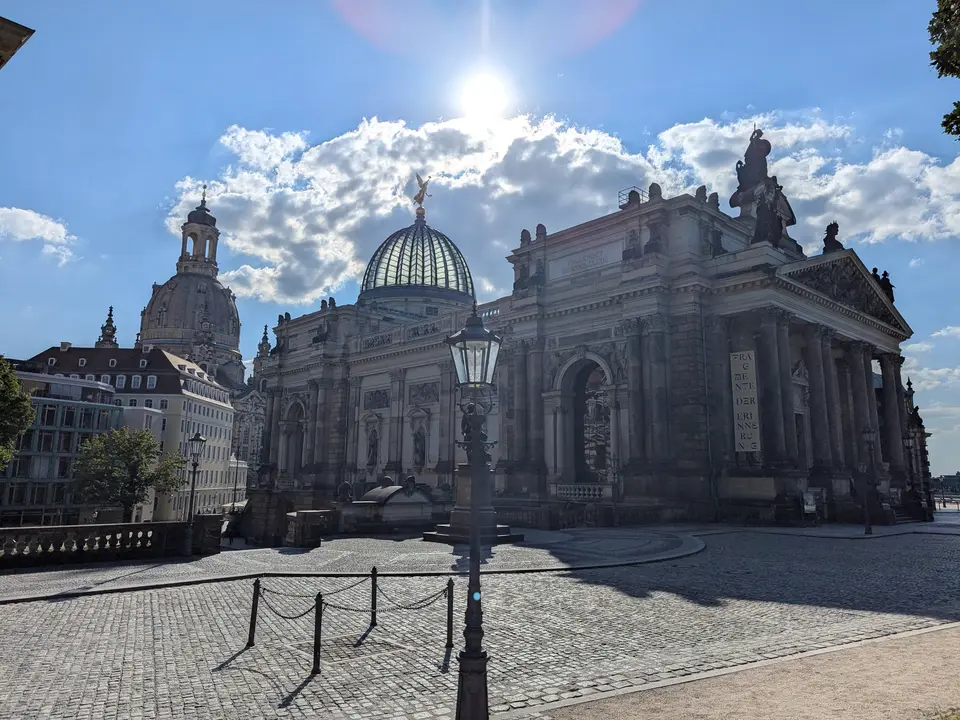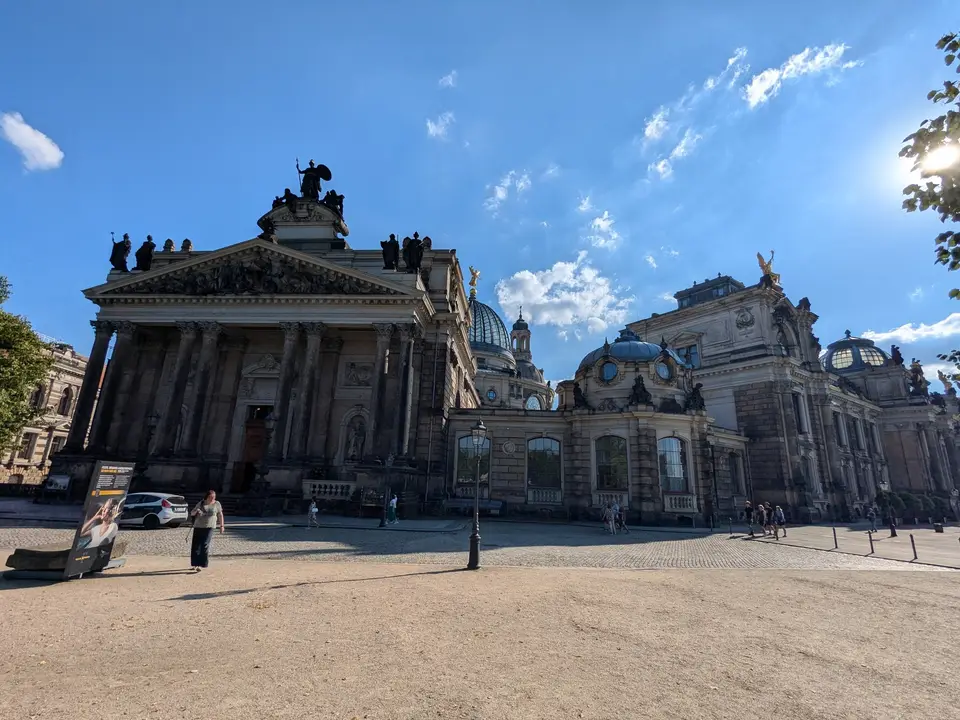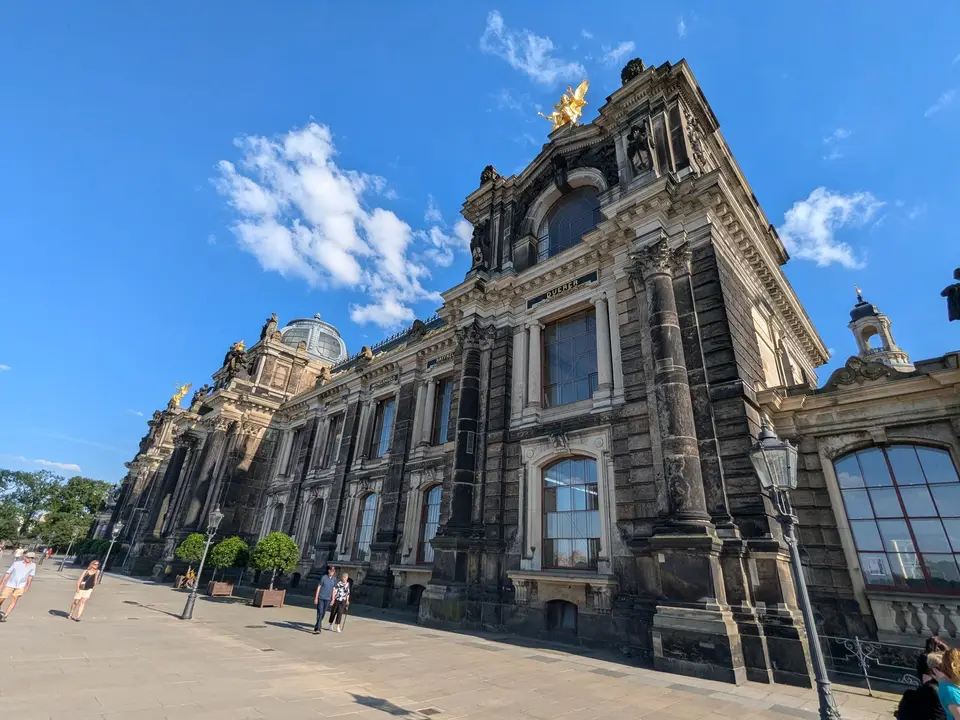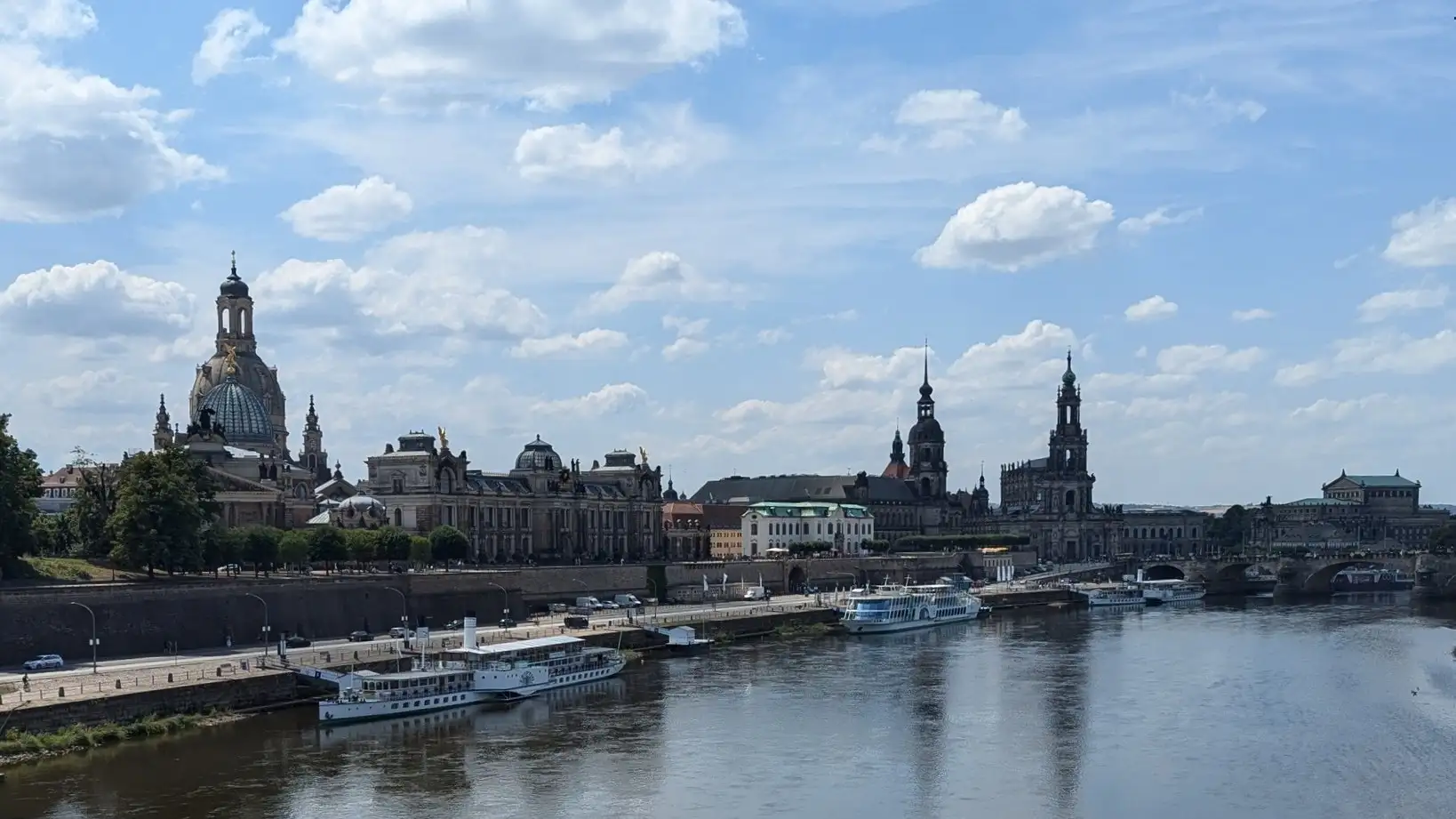
Before you go — look at the color of the stones
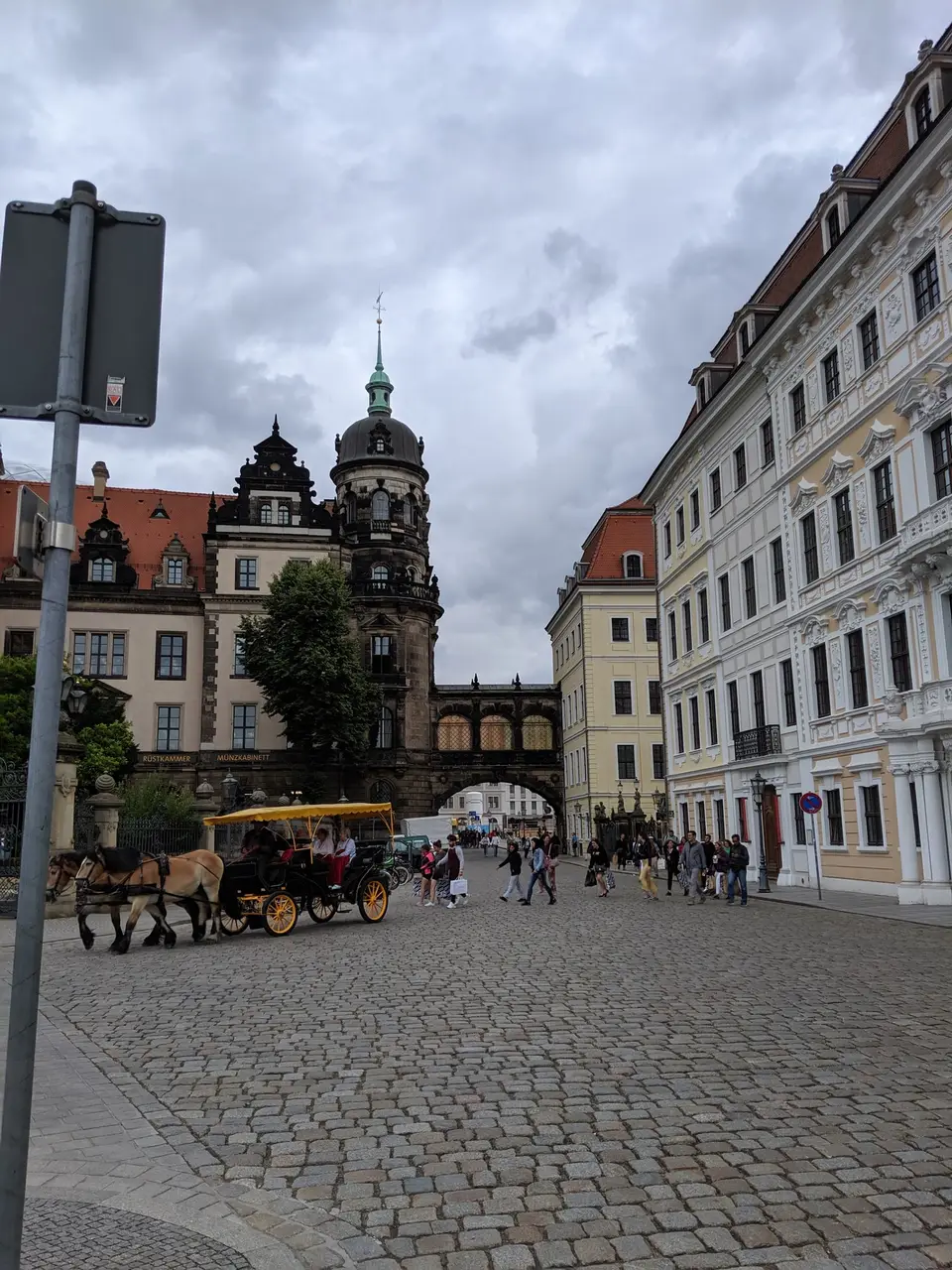
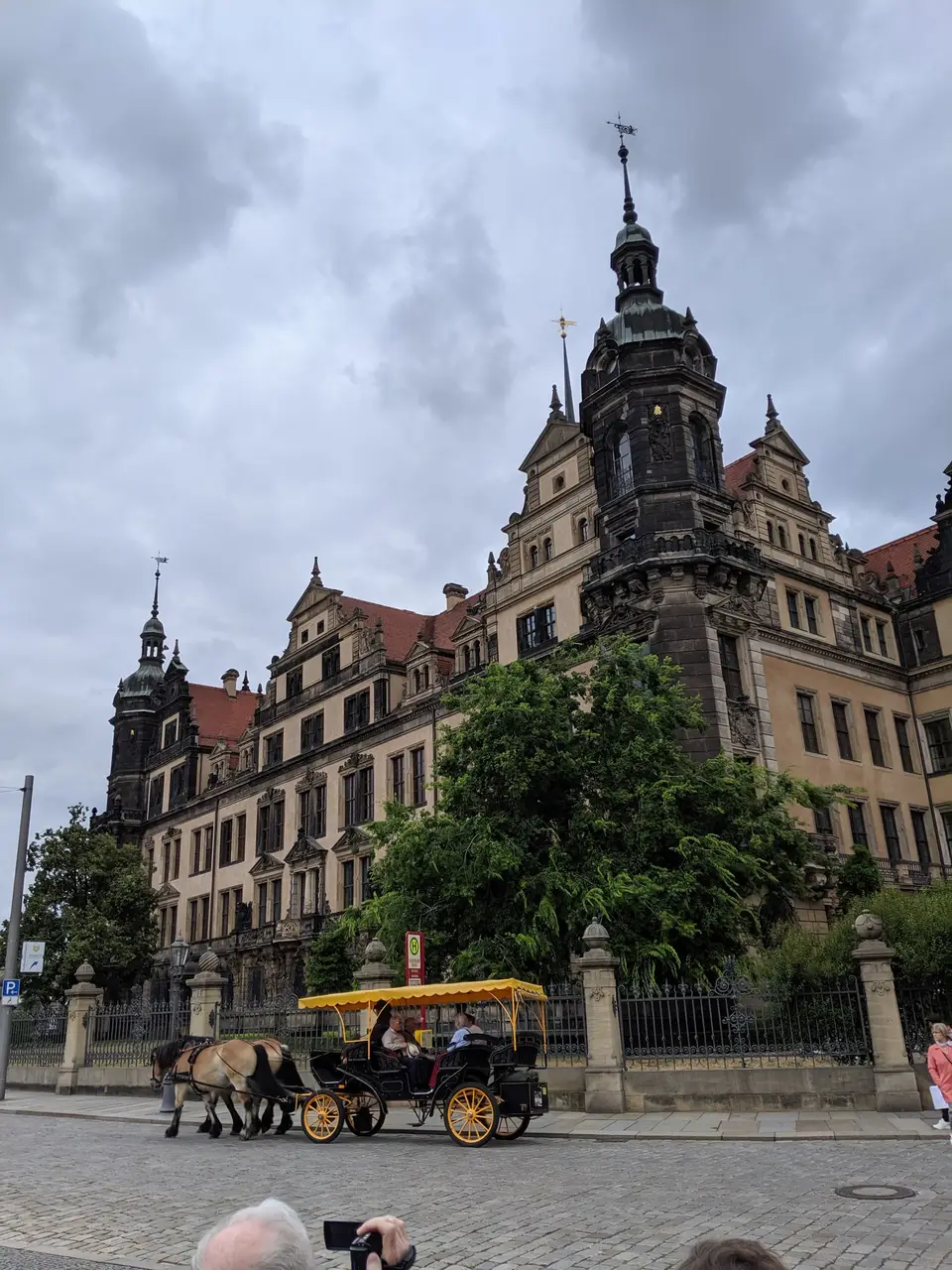
Dresden's old town was destroyed over three days in February 1945. What stands there now is partly original, partly rebuilt, and the city has gone out of its way to let you tell which is which. That is the thing to know before you arrive, because once you see it you cannot stop seeing it.
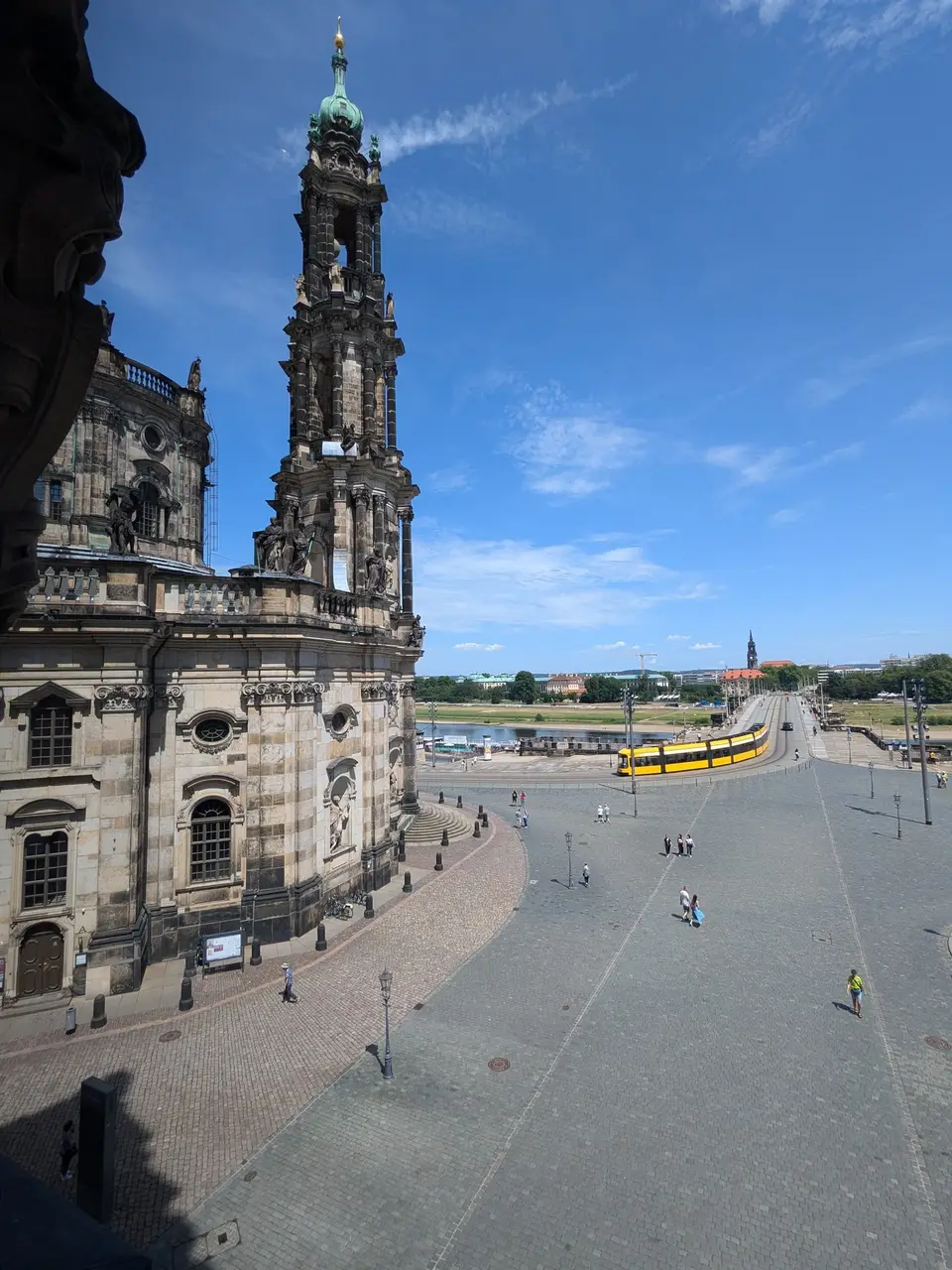
- The old town is small and walkable — the Frauenkirche, the Zwinger, the Hofkirche, the Semperoper and the Brühl Terrace are within ten minutes of each other.
- Two days is enough; we took three and did not regret it. Ours were 25 to 27 June 2024.
- Most of the outside costs nothing. The squares, the terrace above the Elbe, the Zwinger courtyard and the mural below are all free.
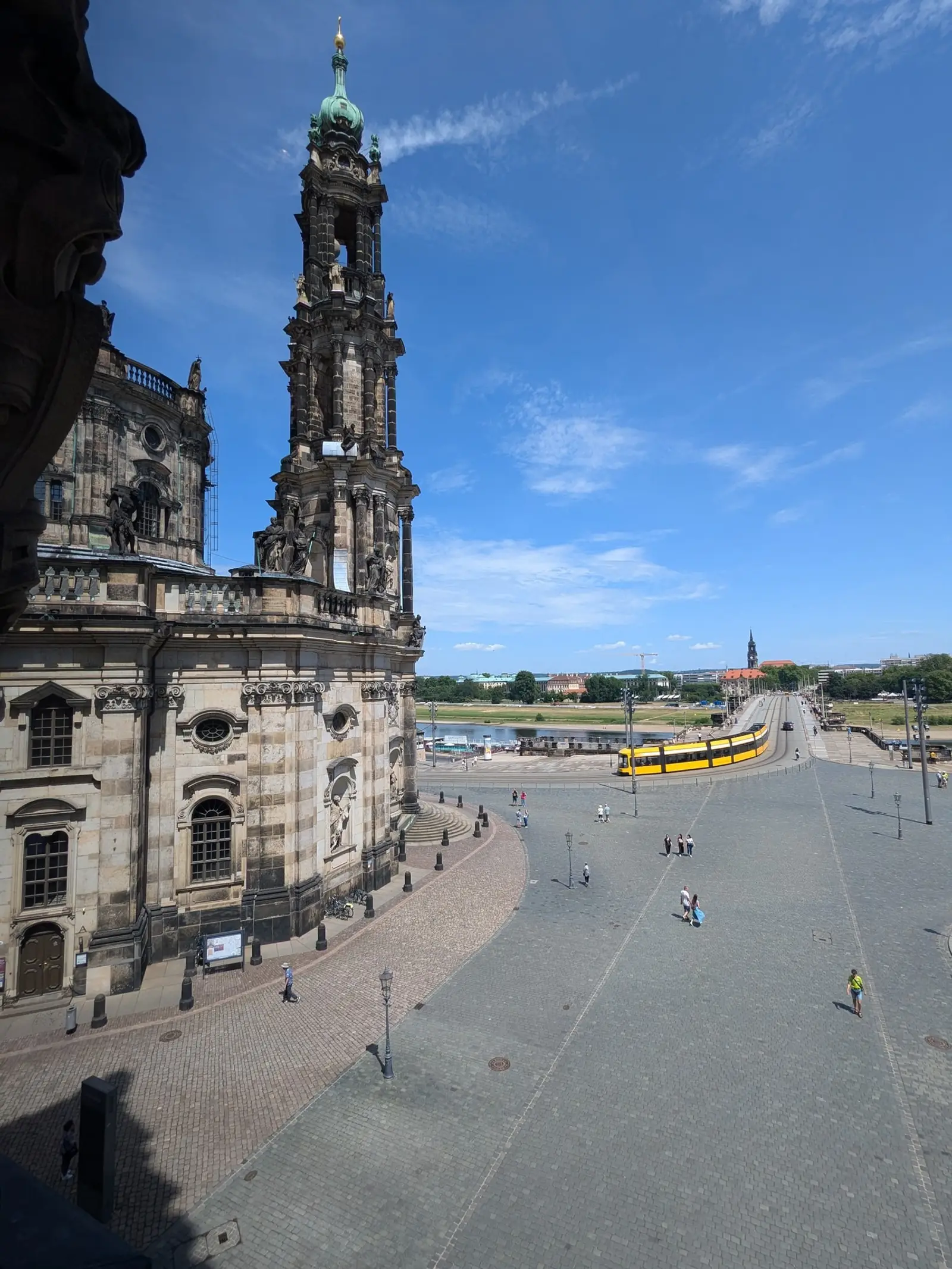
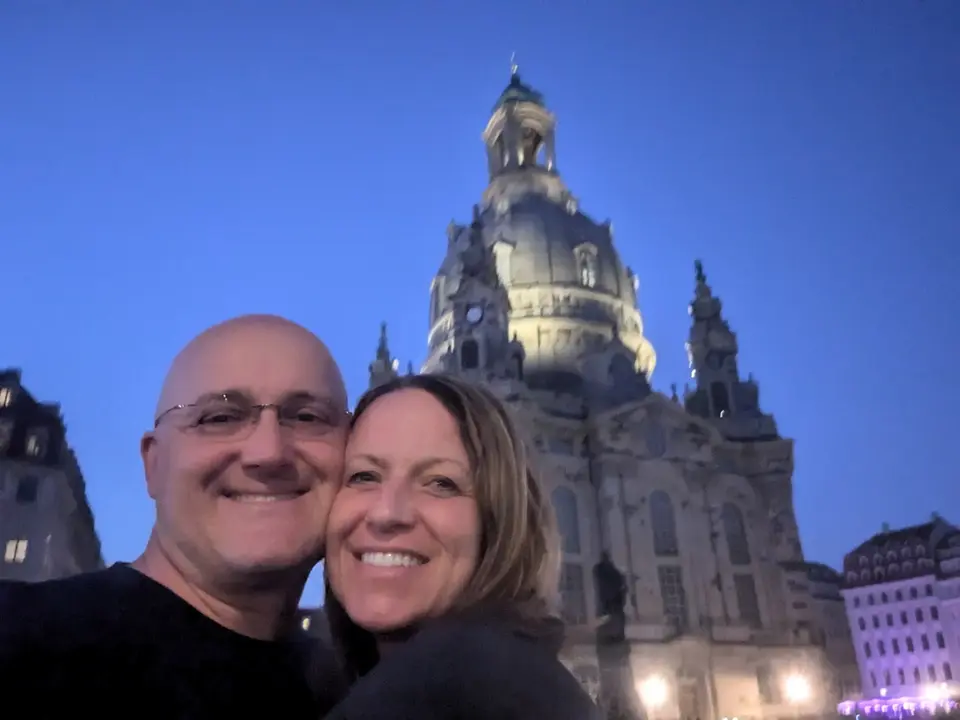
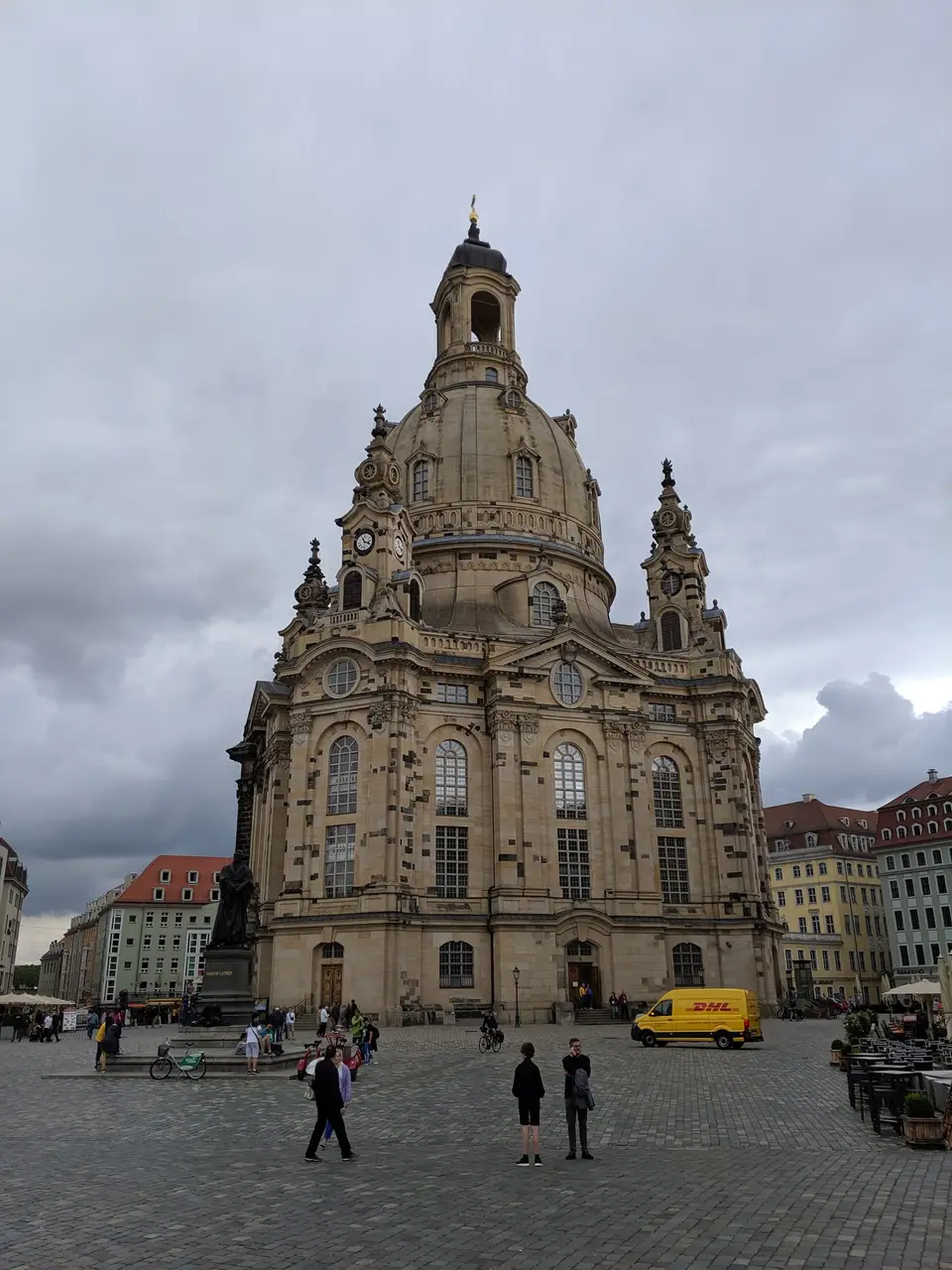
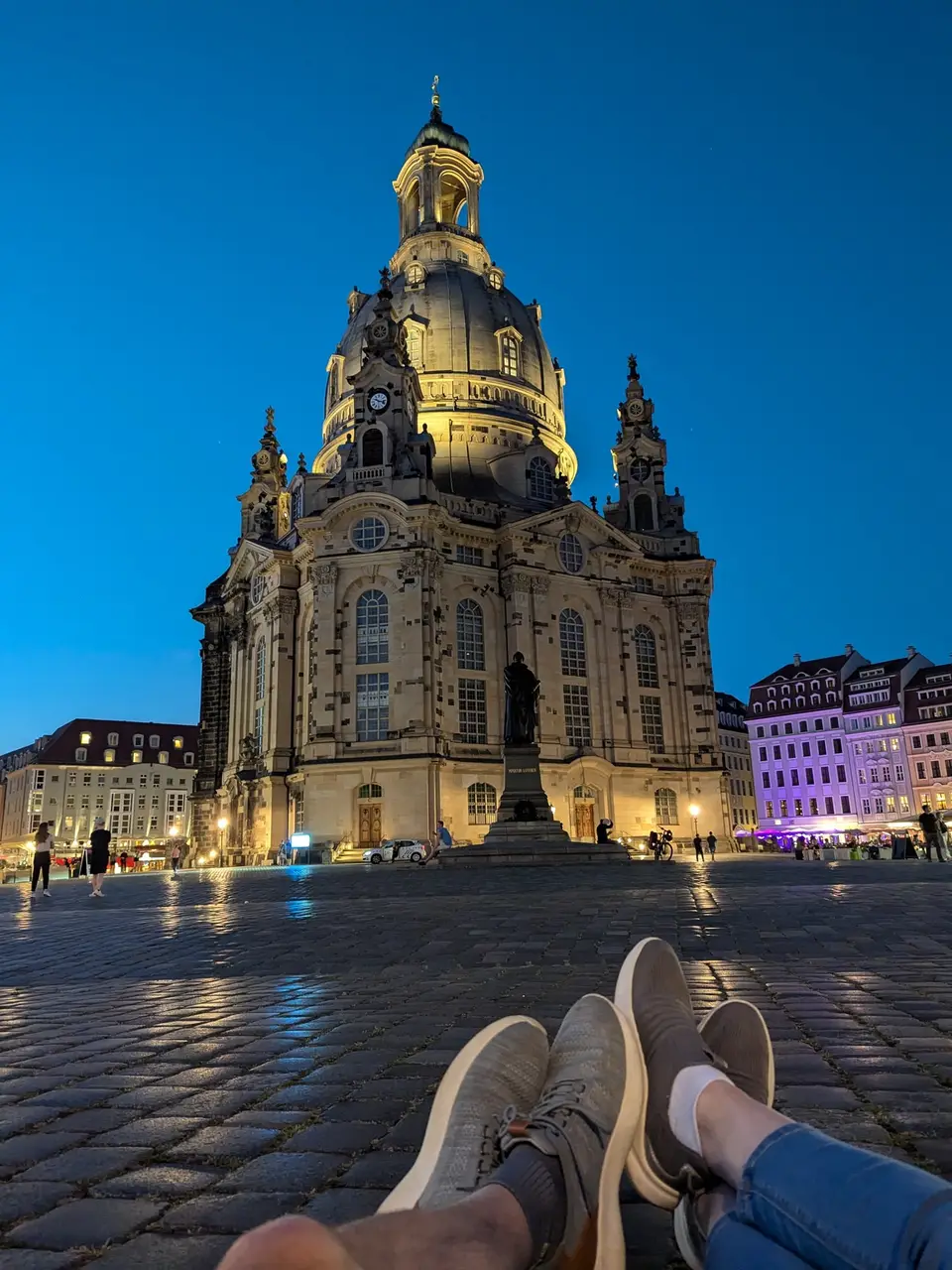
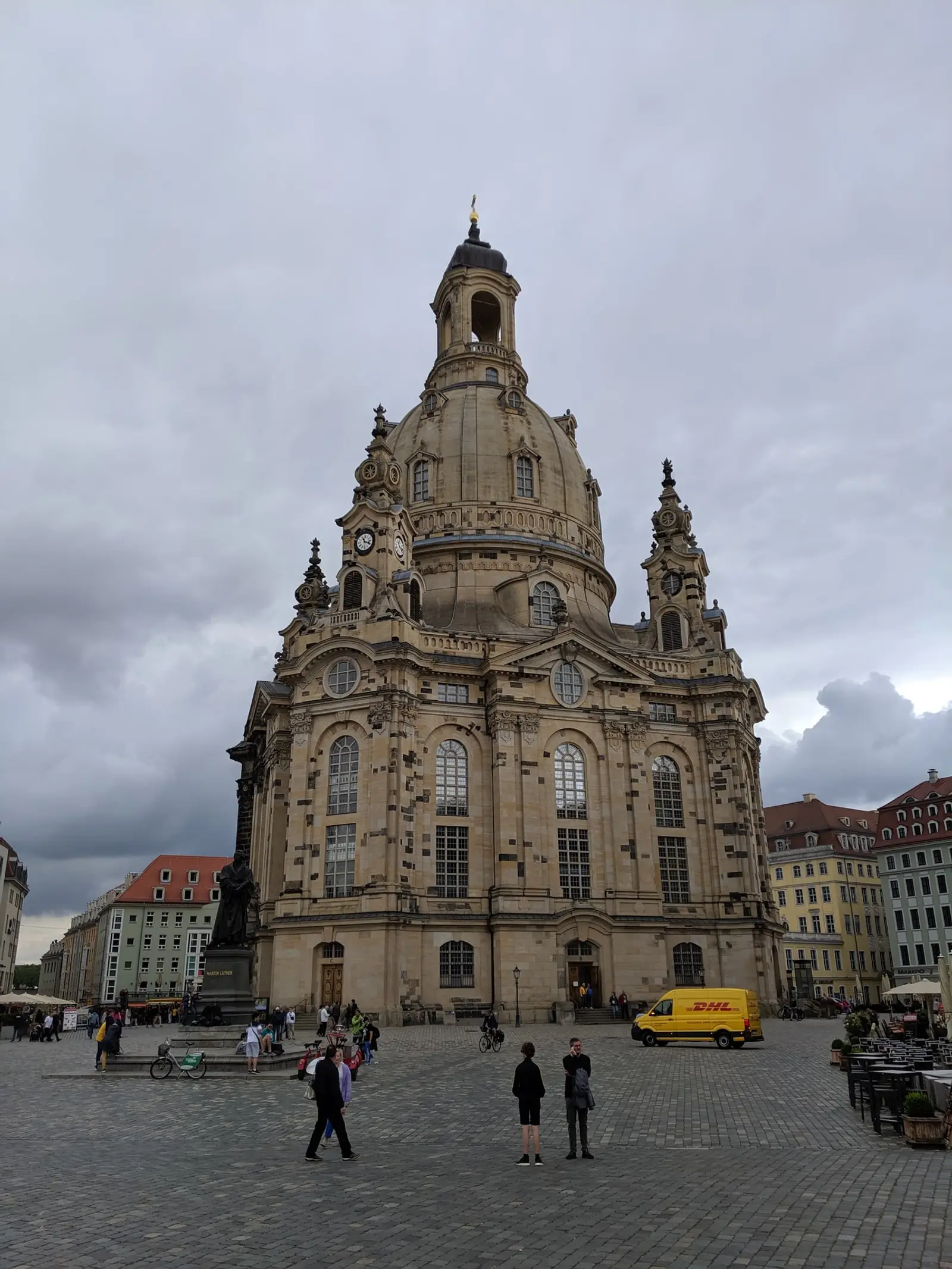
The Frauenkirche — and why the dark stones are left showing
This is the reason to come. The church collapsed two days after the bombing and the heap of stone was left where it fell for the next fifty years — through the whole of East Germany — as a war memorial. Rebuilding started in the nineties.
- It was reconsecrated on 30 October 2005, a year ahead of schedule and in time for the city's 800th anniversary.
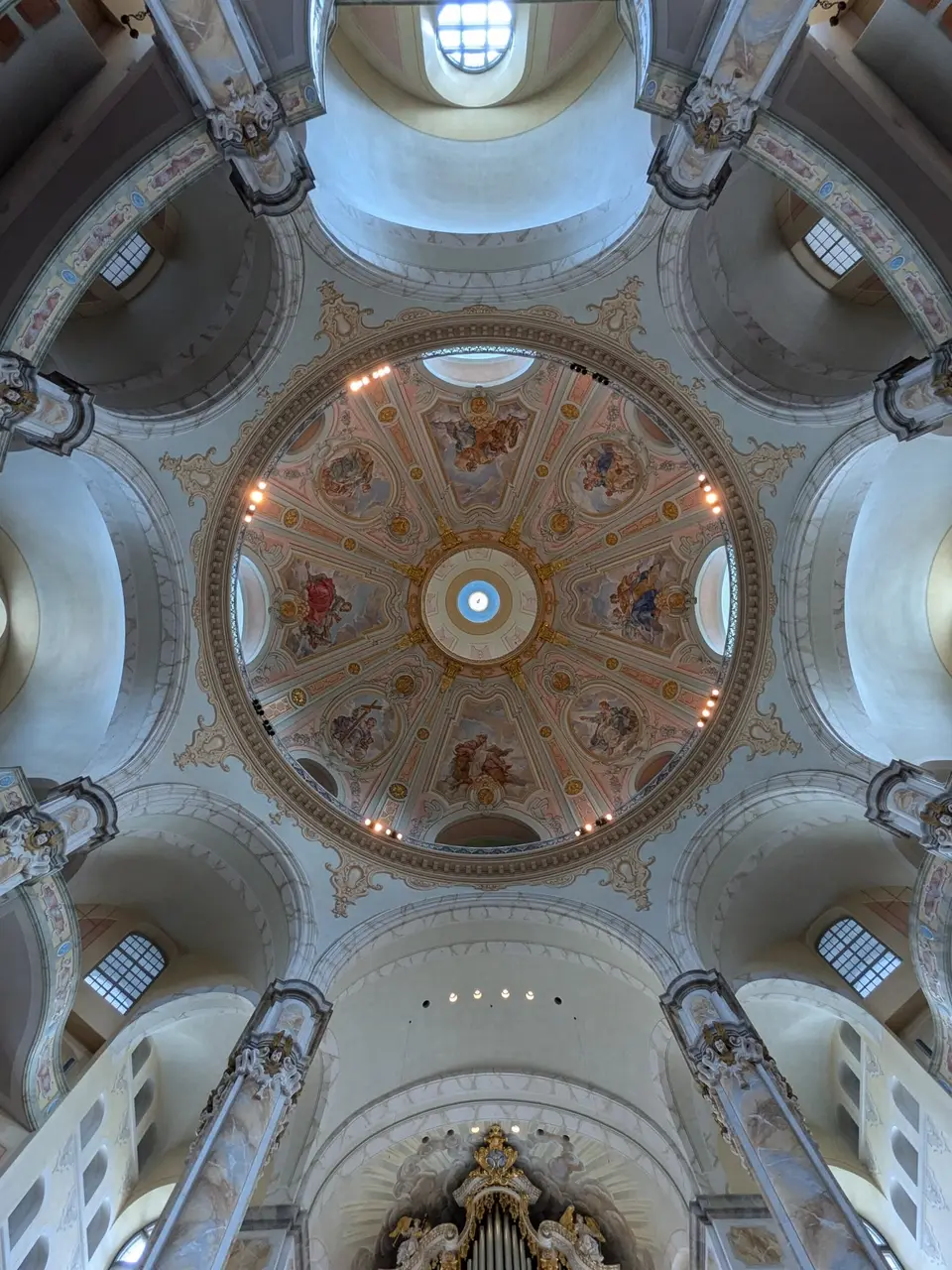
- Nearly 4,000 of the original stones went back into it, as close as possible to where they had been. They are the dark ones. The contrast was not tidied away — it was the point, and the foundation describes it as the scars of a healed wound.
- The gilded cross on the dome was made by a British silversmith, Alan Smith, whose father flew on the raid. It was paid for by British donations and the House of Windsor, and made using eighteenth-century techniques. That is not a legend attached to the building afterwards; it is documented by the foundation itself.
Visiting, and what it costs
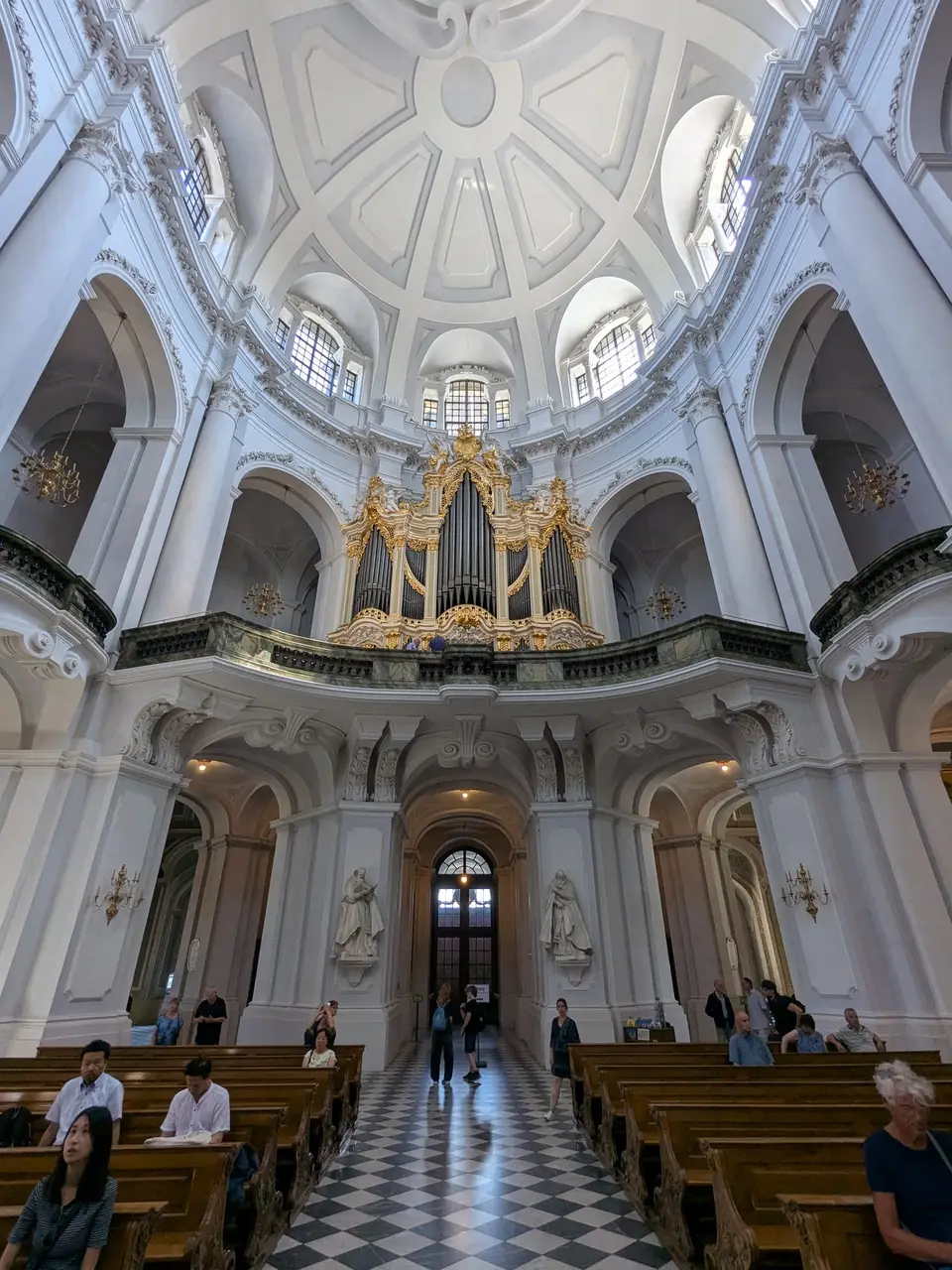
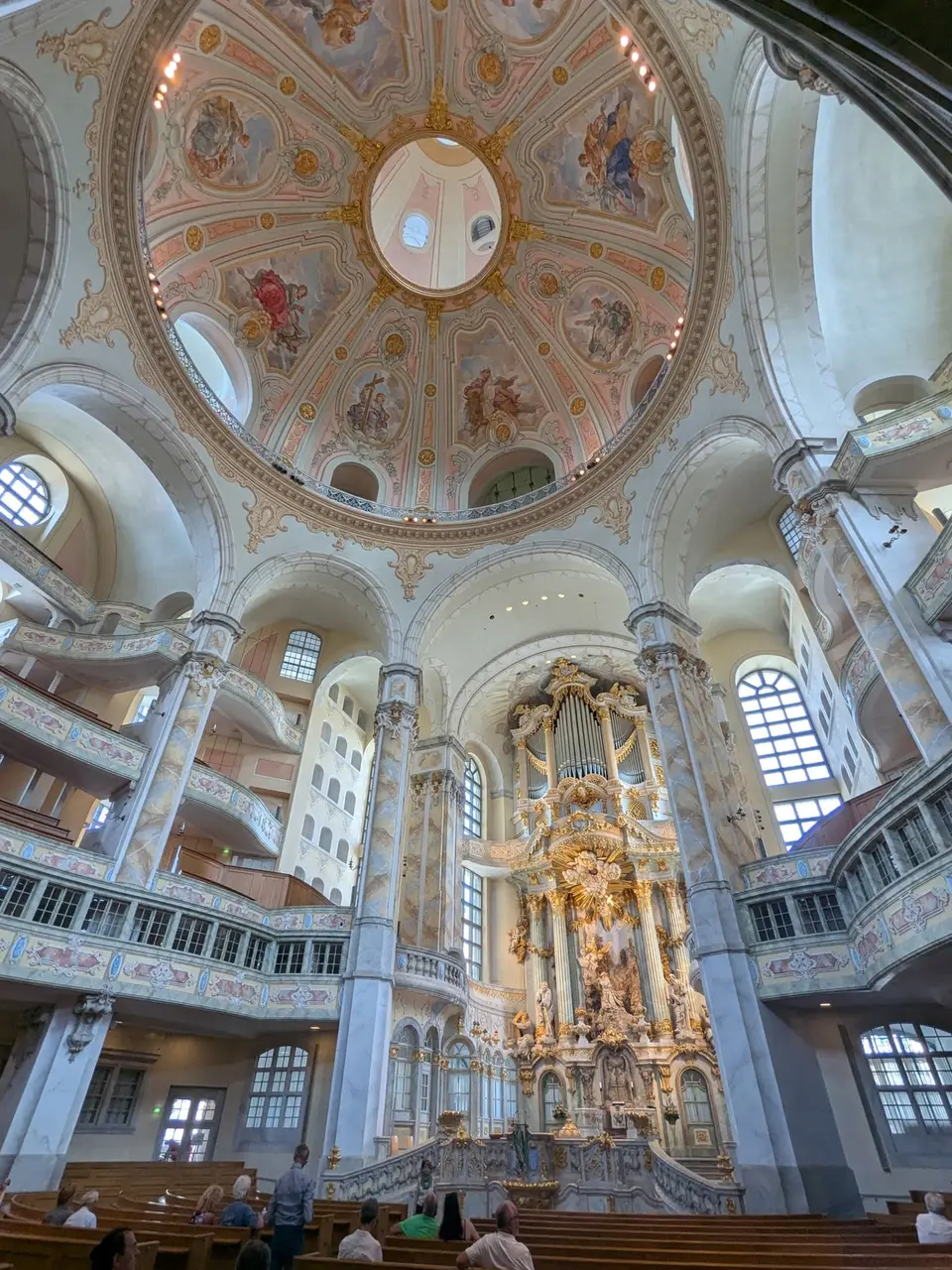
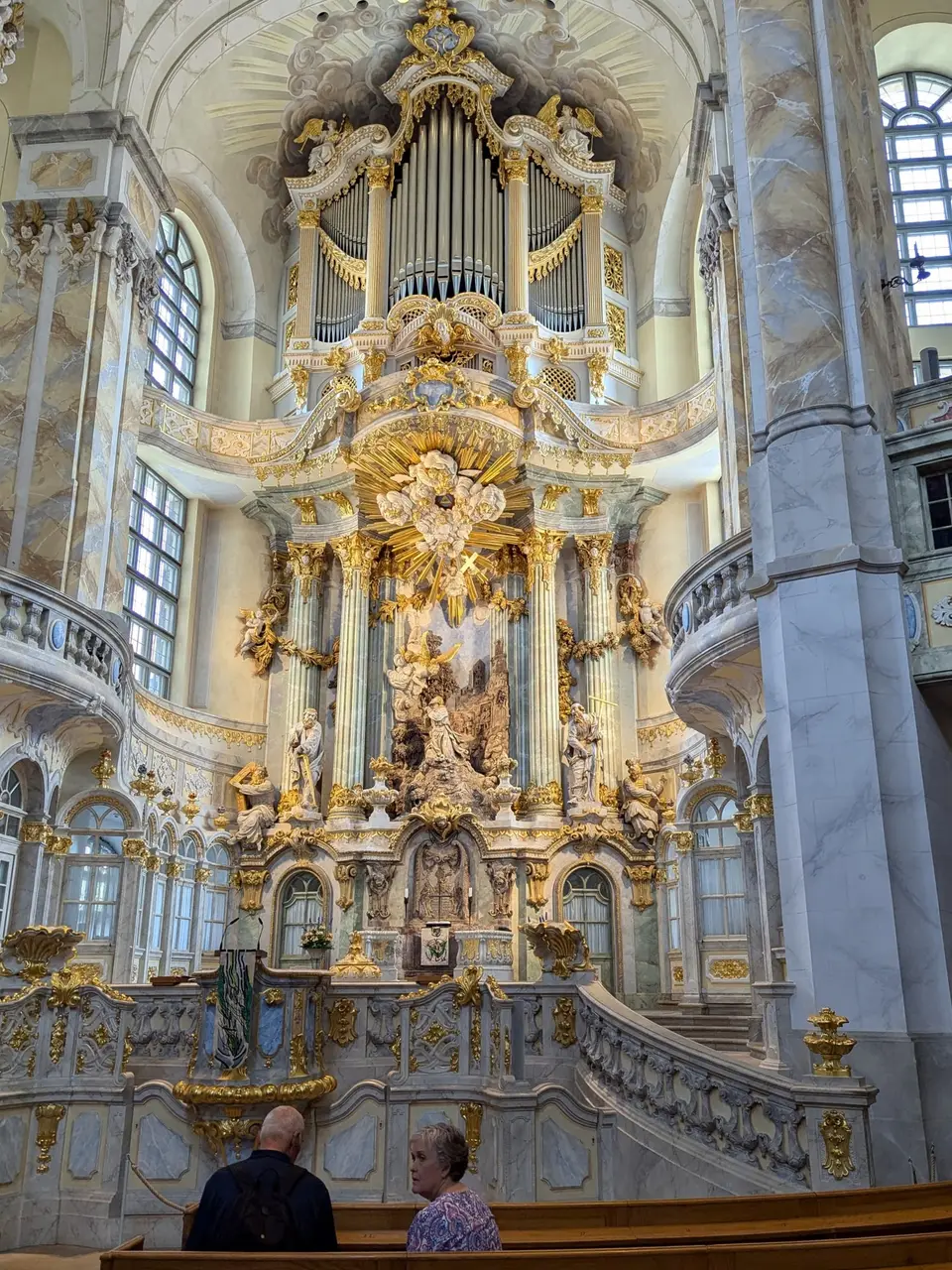
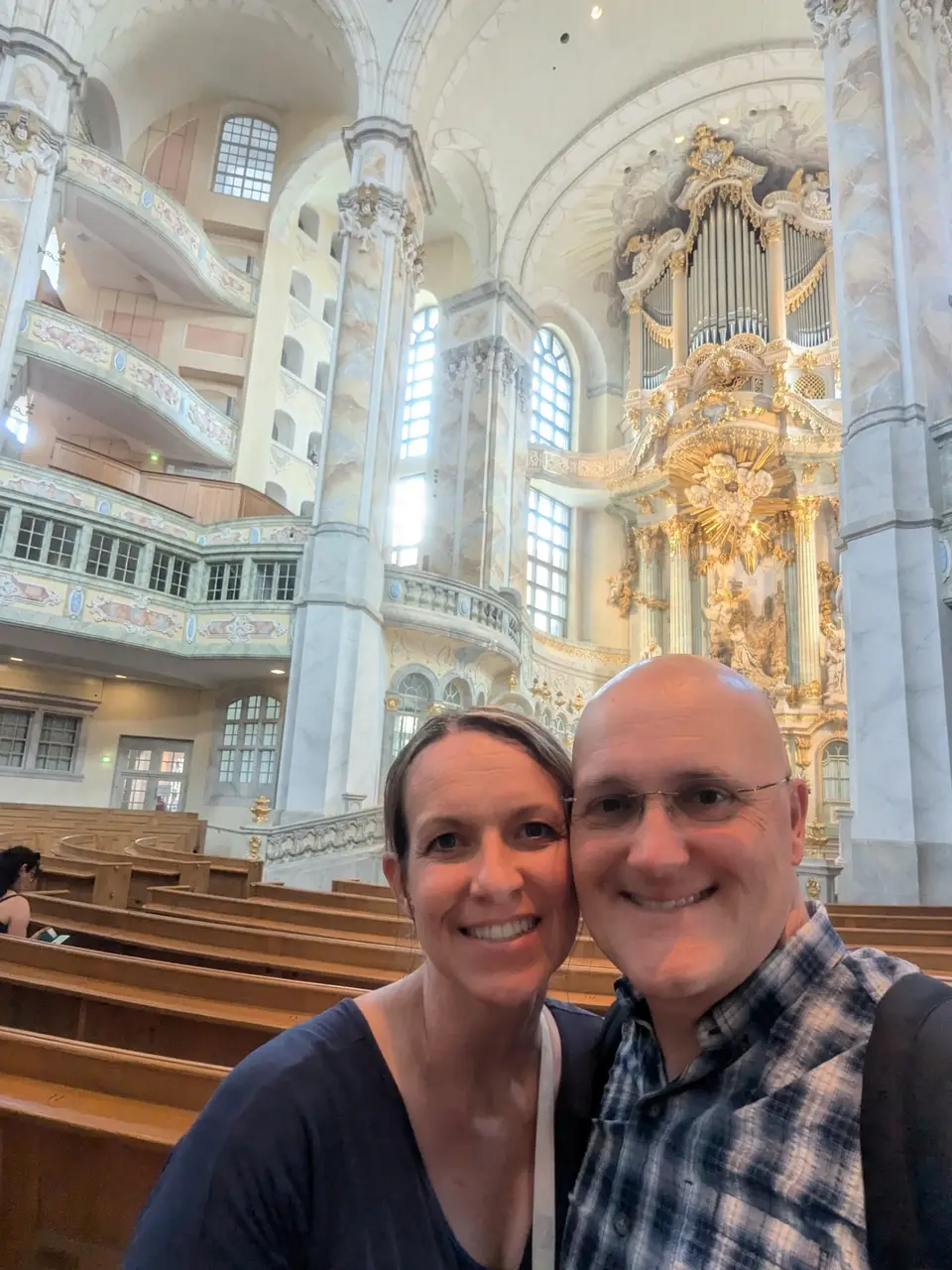
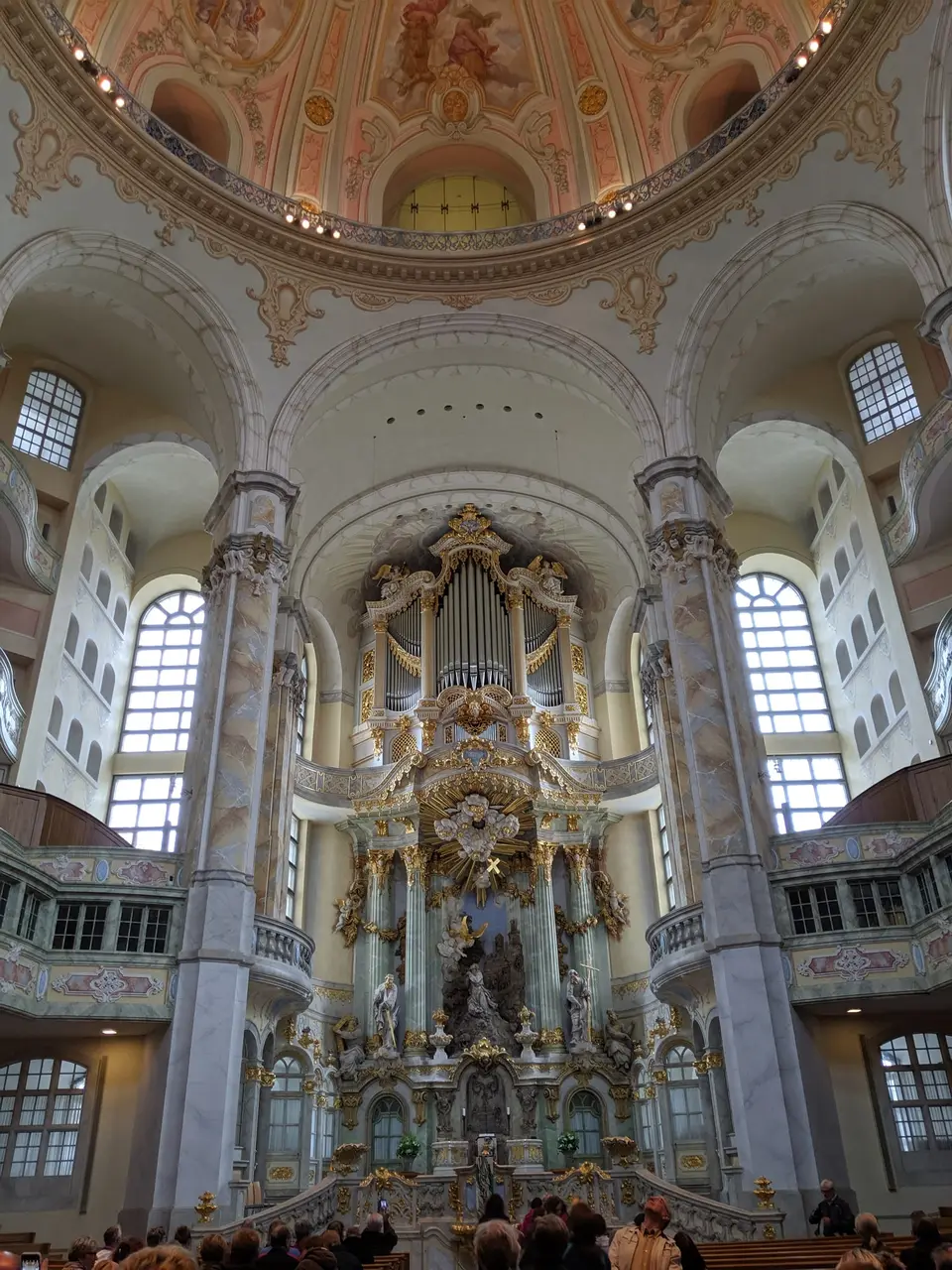
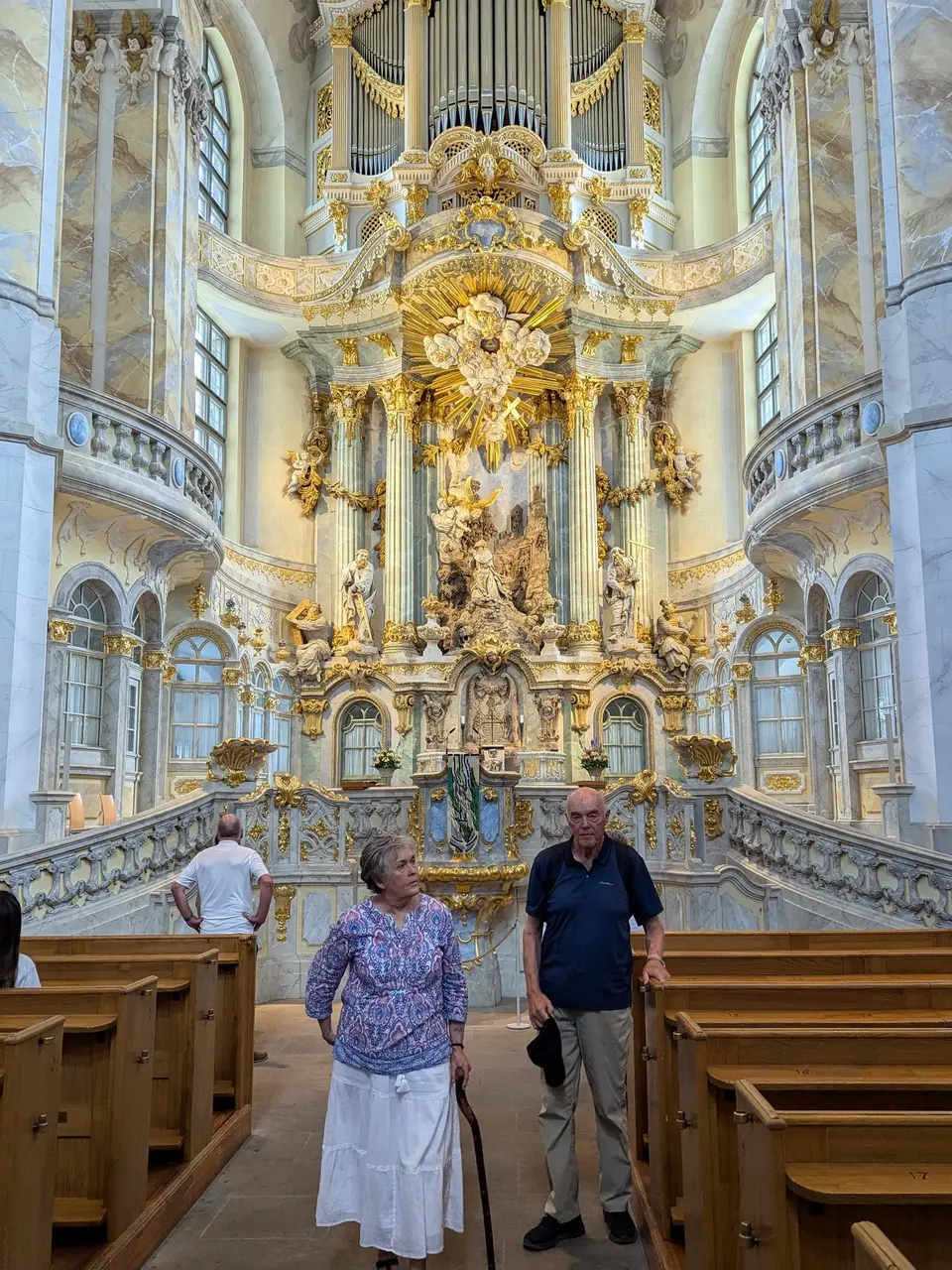
- Entry to the nave is free. There is a donation box and the foundation asks rather than charges. 8 of our 29 Dresden photographs are from inside it, and it is not what the outside prepares you for — white and gold and tiered like an opera house, because a Lutheran preaching church is built so everyone can hear.
- The dome climb is €12 (€7 reduced, which covers children from 6 to 16, students and pensioners; €24 for a family) — up to a platform 67 meters up, with the old town and the Elbe below. It was €8 a year ago, so budget from the new number.
- Most of the climb is not stairs. 174 steps take you to 29 meters, and after that it is the Wendelrampe — a stepless spiral ramp at a 14 percent gradient that circles the outer dome two and a half times, with two short flights at the top. Easier on the knees than a spiral staircase and considerably longer.
- Go shortly after it opens. Roughly 10am on weekdays, later at weekends and shorter on Sundays when services have the building. In summer the dome line runs 30 to 60 minutes by the middle of the day.
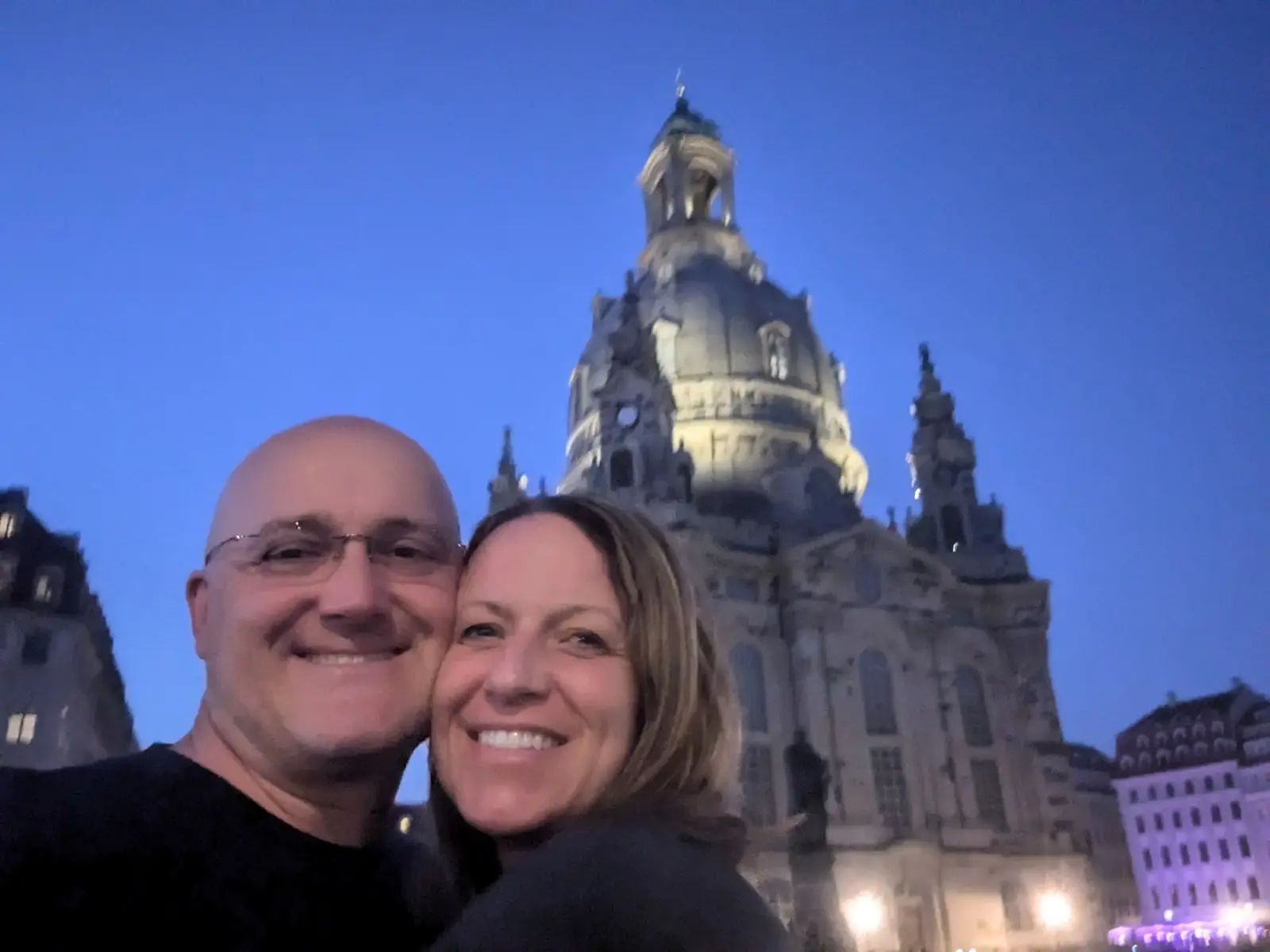
The Fürstenzug — 102 meters of porcelain that the fire did not touch
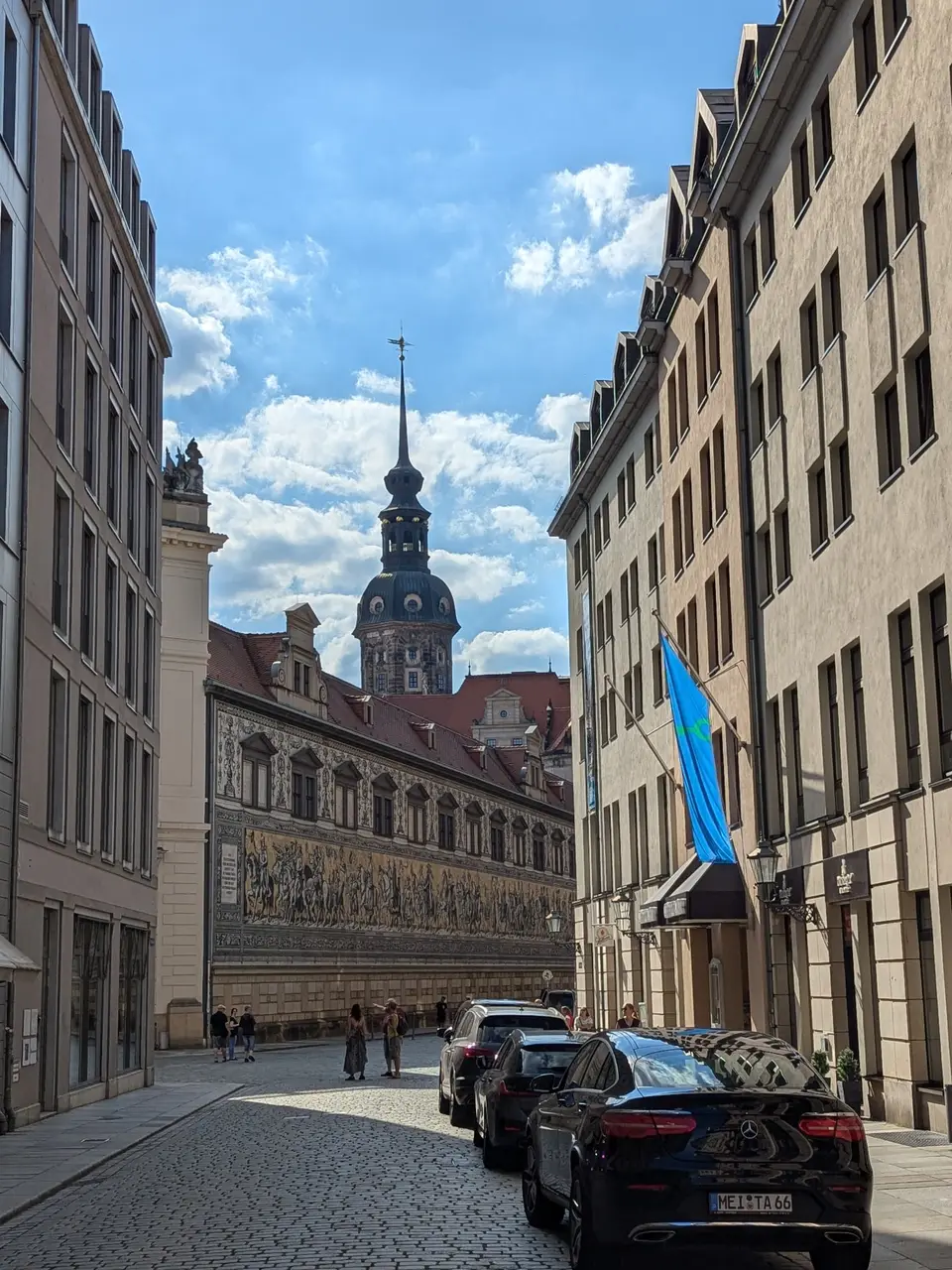
A hundred meters of wall on the side of the Stallhof carries a mounted procession of every ruler of Saxony. It is the largest porcelain artwork in the world: painted in the 1870s, then transferred onto about 23,000 Meissen tiles between 1904 and 1907 so that it would last.
Which is why it is still there. The tiles came through the February 1945 firestorm that levelled everything around them — the fired ceramic simply took the heat — and only a few hundred of the twenty thousand had to be replaced. It is free, it is outdoors, and it is the most extraordinary accident of survival in the city.
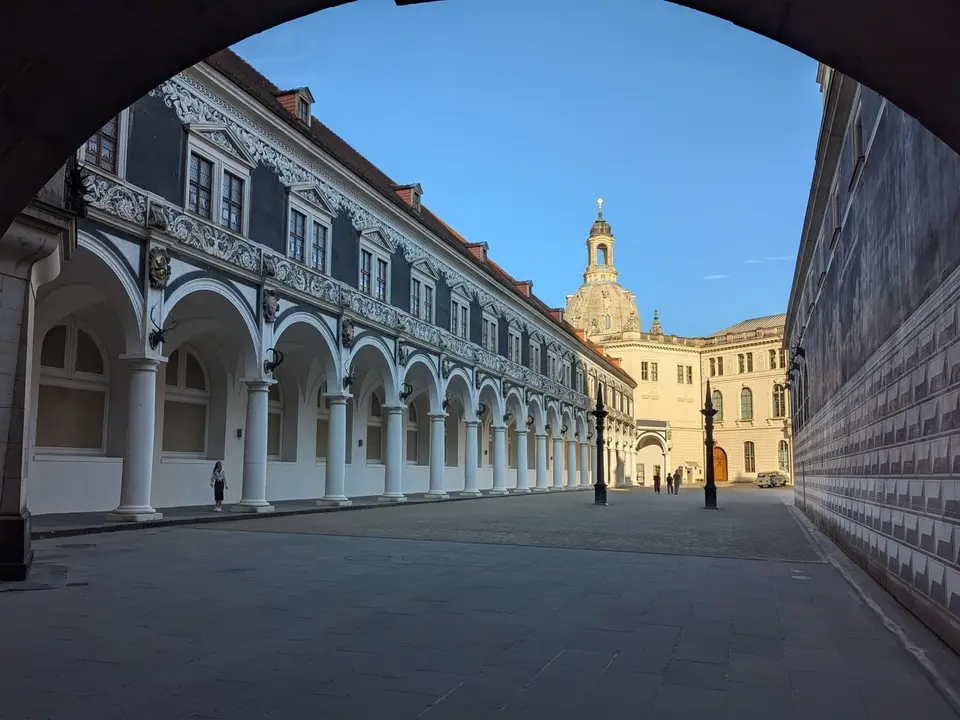
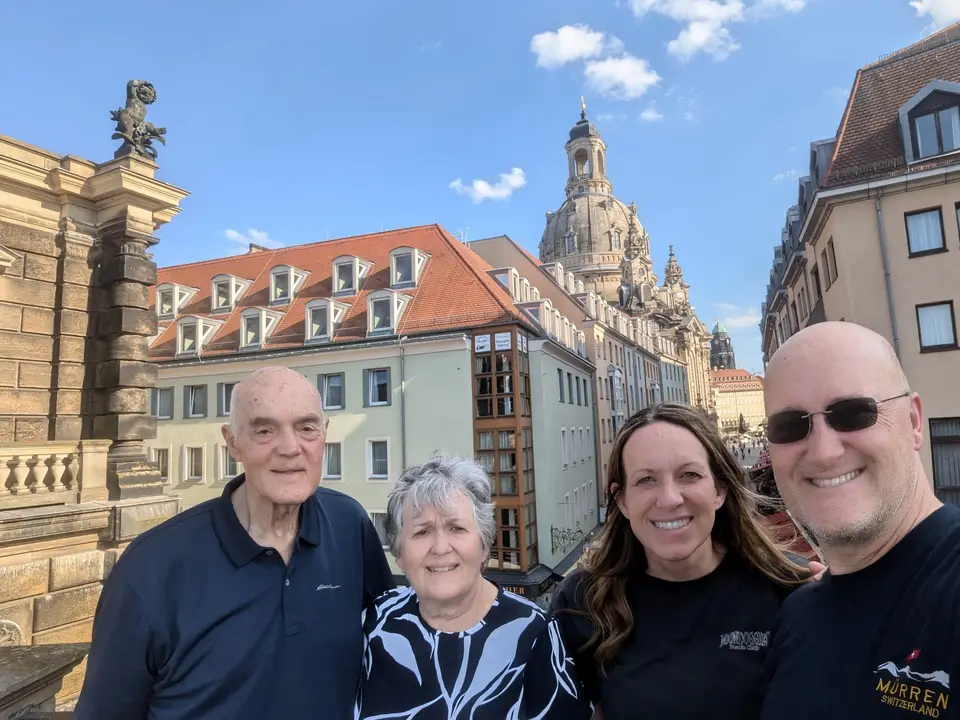
We do not have a photograph of it. We stood in the Stallhof arcade it is attached to and photographed the courtyard and the Frauenkirche beyond, and the mural itself is not in any frame. Mentioning it anyway because you should see it; saying so because the alternative is implying we did.
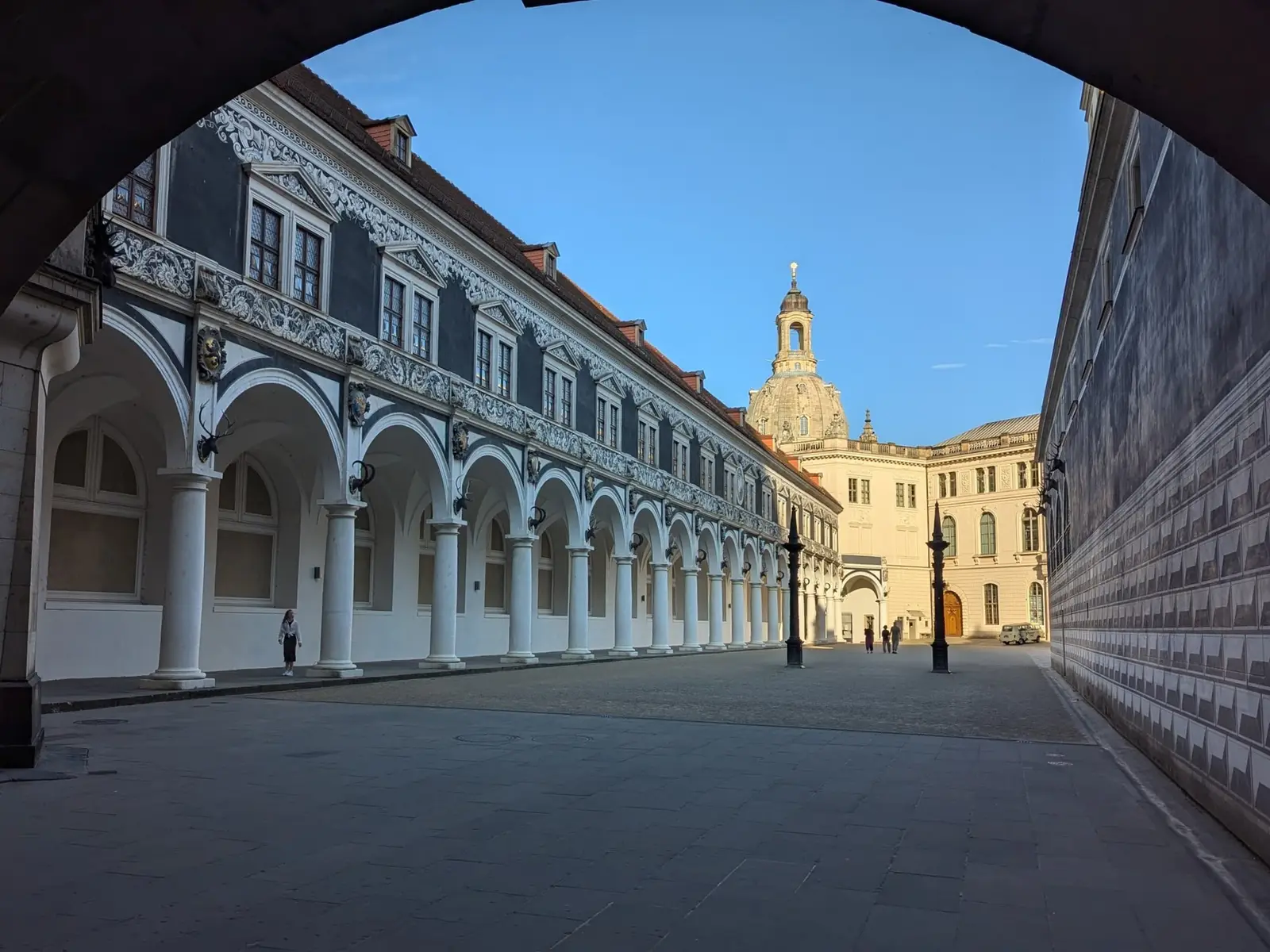
The rest of the old town
- The Brühl Terrace — the long raised walk above the Elbe, once called the balcony of Europe. Free, and the best place to understand the shape of the city.
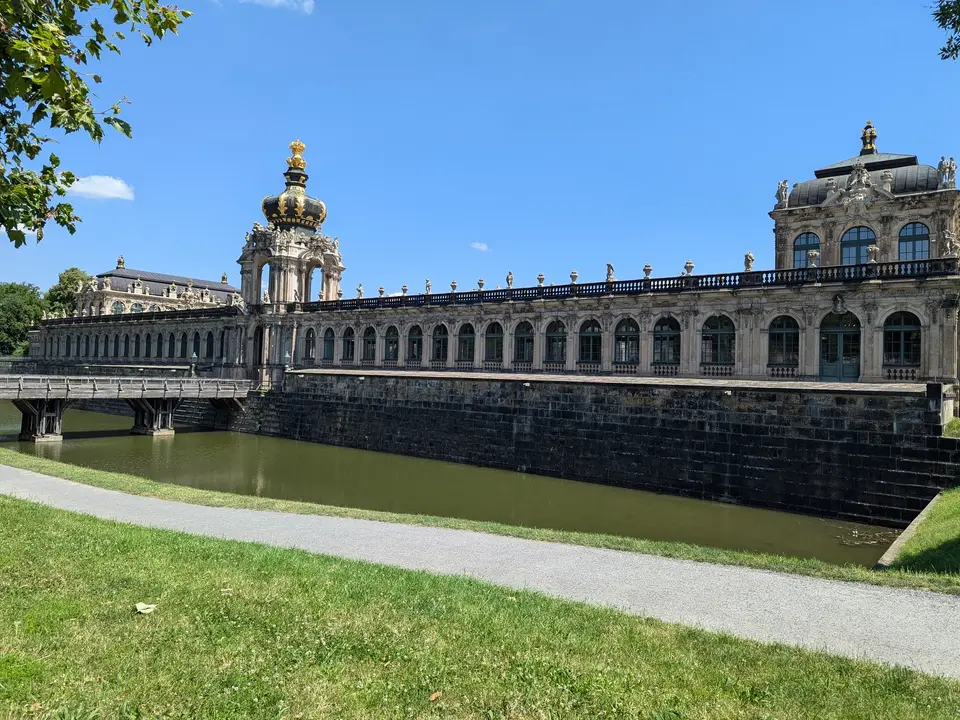
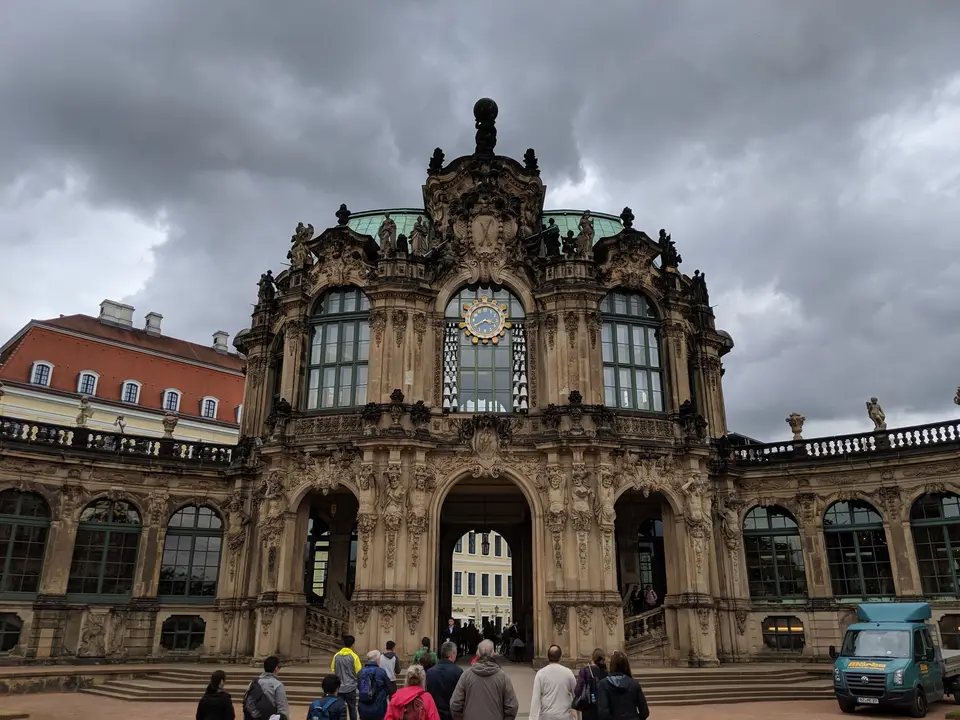
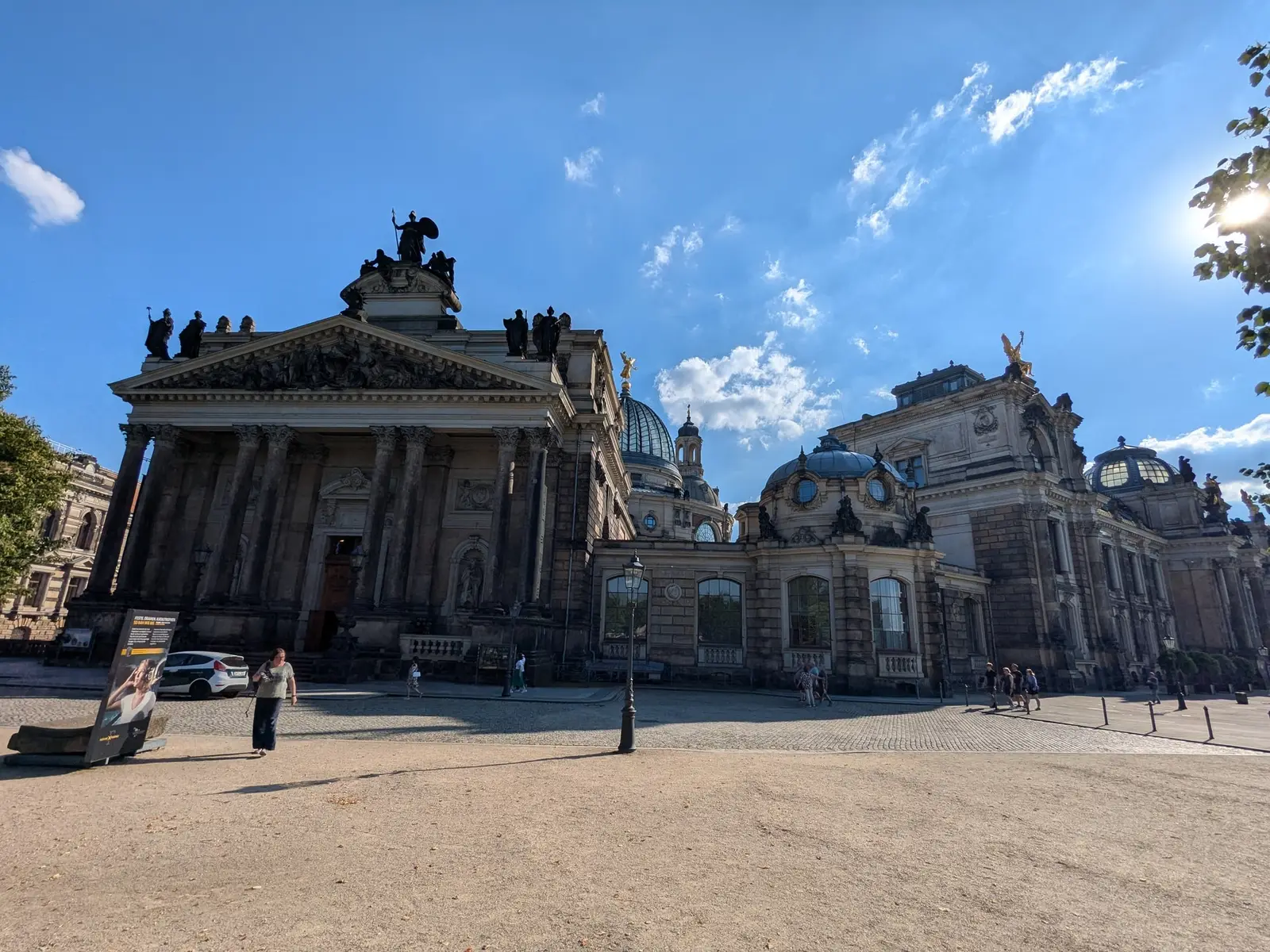
- The Zwinger, a baroque pleasure palace built round a courtyard. Walking the courtyard and the gallery is free; the museums inside it are ticketed.
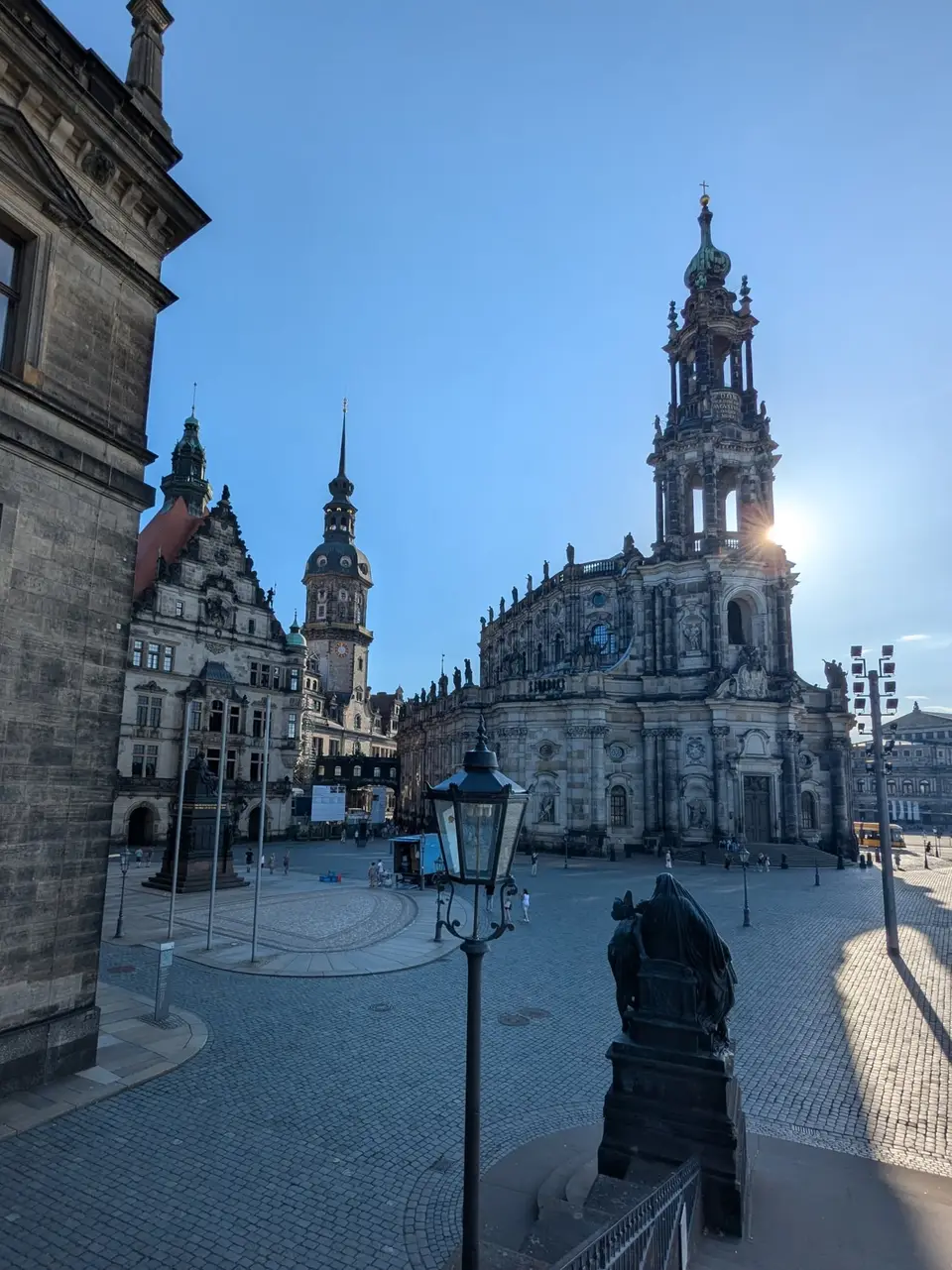
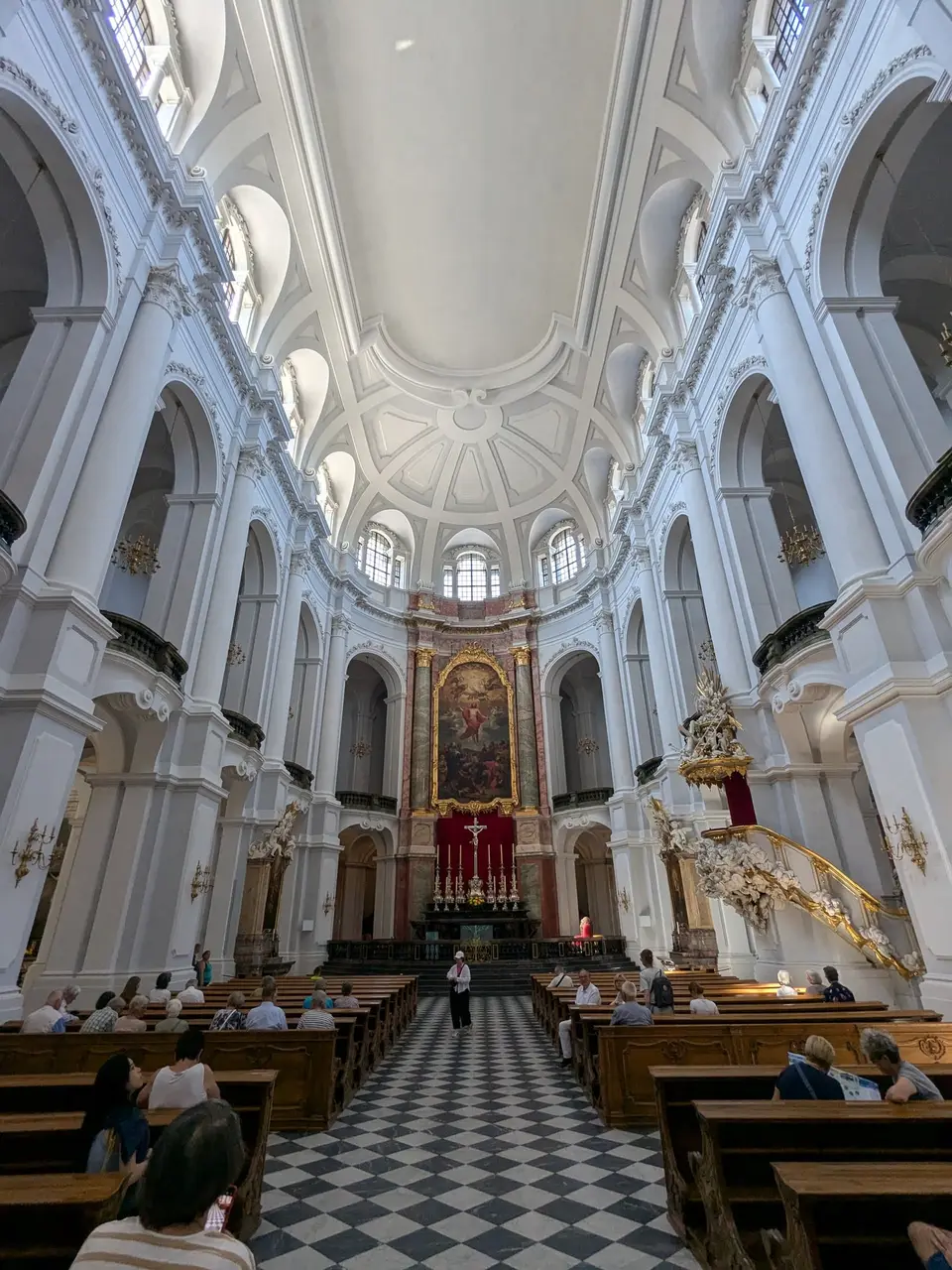
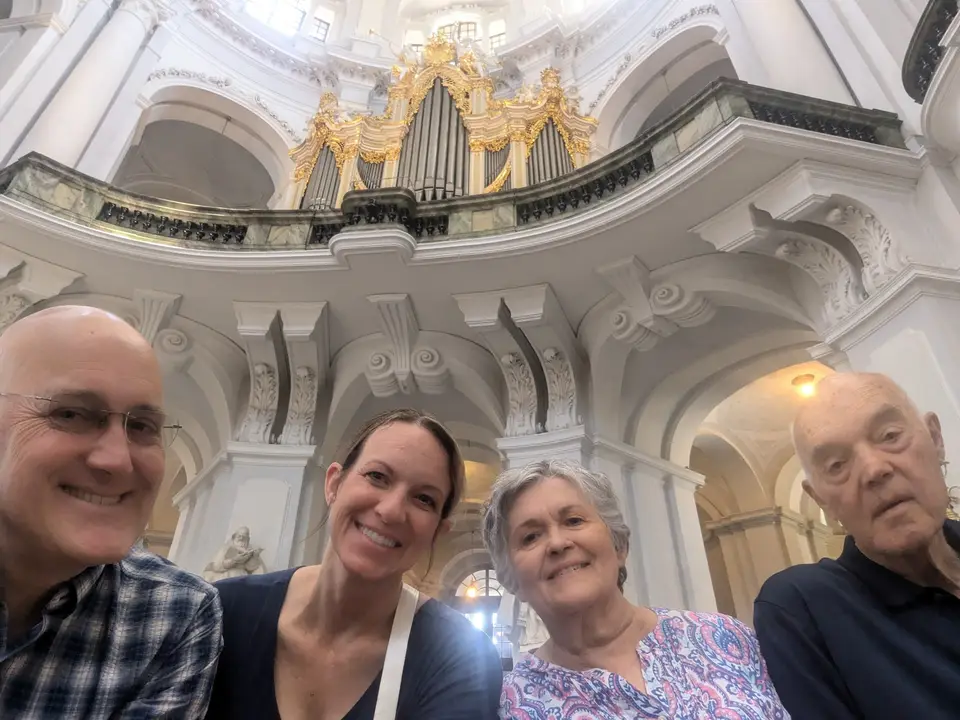
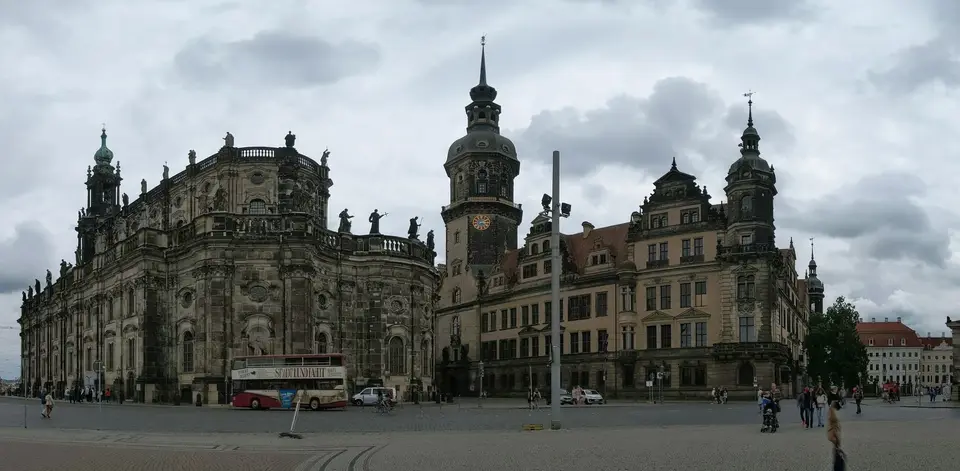
- The Hofkirche and the Semperoper on Theaterplatz, both rebuilt, both worth standing in front of.
- Cross to the Neustadt on the north bank for the photograph everybody takes of the old town skyline from across the water — and for a district that was not flattened and does not feel reconstructed.
When to come
- Late June is what our photographs are, and the long light on that sandstone is the argument for it.
- December for the Striezelmarkt, one of the oldest Christmas markets in Germany. We have not been in December, so that is information rather than a recommendation — our markets are elsewhere.
- 13 February is the anniversary of the bombing and the city marks it. If you are there then, it will not be an ordinary tourist day, and that is worth knowing in advance rather than discovering.
How long, and what it goes with
Two days. Dresden sits between Berlin and Prague — roughly two hours from each — which is where it really belongs on a trip: not as a destination on its own but as the stop that makes that stretch worth doing by train. We have written Prague up; Berlin we have not been to, and we are not going to pretend otherwise.
Prices, hours and the Frauenkirche facts on this page were checked on 17 September 2026 against frauenkirche-dresden.de, the operator's own site. The dome climb had moved since we wrote it — €8 to €12 — which is the argument for checking a page even when nothing on it looks like it would change.